Summary:
Most West Texas homeowners pay a $75 to $150 service call fee, plus roughly $50 to $130 per hour for a licensed electrician. The most common home repairs (outlets, switches, breakers, and light fixtures) usually land between $100 and $400 installed. Bigger jobs like panel upgrades or rewiring are priced as projects, not by the hour.
“How much is this going to cost me?” is the first question we hear on almost every call, and the honest answer is: it depends on what is wrong, how your home was wired, and how far along the problem is by the time a pro sees it. But “it depends” does not help you budget.
This guide lays out realistic 2026 price ranges for electrical work in Abilene, San Angelo, Midland, and Lubbock: hourly rates, service call fees, and installed prices for the repairs West Texas homeowners ask about every week, plus the factors that push a quote up or down, and the warning signs that a small repair is actually a bigger problem getting started.
Electrician Hourly Rates and Service Call Fees
Licensed electricians in West Texas typically charge one of two ways: time and materials (an hourly rate plus parts) or flat-rate pricing (one quoted price for the whole job). Either way, expect a service call or trip fee. It covers getting a licensed electrician and a stocked truck to your door, and it is often credited toward the repair if you approve the work.
| Charge | Typical range (2026) |
|---|---|
| Service call / trip fee | $75 to $150 |
| Standard hourly rate, licensed electrician | $50 to $100 |
| Master electrician or complex diagnostics | $90 to $130 |
| Emergency or after-hours call, first hour | $150 to $300 |
Emergency and after-hours work usually runs 1.5 to 2 times the standard rate. A 24/7 electrician is worth having saved in your phone before the night you actually need one.
What Common Electrical Repairs Cost
Here are installed price ranges for the repairs we see most often in West Texas homes:
| Repair | Typical installed price |
|---|---|
| Replace an outlet or switch | $85 to $200 |
| Install a GFCI outlet (kitchen, bath, outdoors) | $130 to $300 |
| Add a new outlet on an existing circuit | $150 to $350 |
| Replace a circuit breaker | $150 to $250 |
| Replace a light fixture | $100 to $250 |
| Install a ceiling fan (existing wiring) | $150 to $400 |
| Repair damaged or faulty wiring | $150 to $500 per run |
| Whole-home surge protection | $300 to $700 |
| Level 2 EV charger installation | $500 to $1,500 |
Every range assumes a licensed electrician doing the work with parts included and nothing unexpected behind the wall. The next section covers what changes that.
Adding motion-sensor or outdoor lights rather than replacing one? That is priced differently. See our security lighting cost guide.
Installing a Level 2 charger? The EV charger installation cost guide covers the circuit, the panel question and what a Tesla or other 48-amp unit really costs installed.
Need a 240-volt outlet for a dryer, range, welder, or plug-in charger? Our 240V outlet installation cost guide covers the price ranges and which outlet each appliance needs.
What Makes the Price Go Up (or Down)
The age of your home matters most. A lot of the housing in Abilene and San Angelo went up between the 1950s and 1970s, which means electricians here regularly run into aluminum branch wiring, undersized panels, and brittle cloth-insulated wire. Repairs on older systems take longer, and sometimes the wiring has to be brought up to code before the original problem can even be fixed.
- Access. A junction box in an open garage is quick; a wire run through a 130°F attic in July or a tight crawlspace is not.
- Permits and inspections. Larger jobs (new circuits, panel work, rewires) involve a permit and inspection, usually $75 to $300 depending on the city.
- Location. West Texas distances are real. Homes well outside town may carry a higher trip fee. Ask when you book.
- Bundling. The service call fee is paid once, so having three small fixes done in one visit is much cheaper than three separate appointments.
One more age-related note: if your home still has a Federal Pacific Stab-Lok or Zinsco panel, plan for replacement rather than repair. Many Texas insurers now decline or refuse to renew policies on homes that have them. Our panel upgrade cost guide covers what replacement runs in 2026.
When a Repair Is Really an Upgrade in Disguise
Some symptoms look like $150 repairs but are early warnings of a capacity problem:
- Breakers that trip again and again on the same circuit
- Outlet or switch plates that feel warm to the touch
- Lights that dim or flicker when the A/C or a big appliance kicks on
- Two-prong, ungrounded outlets through most of the house
- Any burning smell near the panel: stop and call someone the same day
When several of these show up together, the honest fix is usually the panel or the wiring, not another patch. As a benchmark, a panel upgrade in West Texas typically runs $1,300 to $3,800 depending on amperage and condition, and a whole-house rewire is priced by the size and age of the home (our rewiring cost guide lays out the published ranges). Priced next to a string of repeat service calls (and an insurance carrier that may walk away), the upgrade often wins.
Planning around outages instead? Our whole-house generator cost guide breaks down standby power prices the same way.
Why the Cheapest Quote Can Cost the Most
In Texas, most electrical work legally has to be done by a licensed electrician working under a licensed electrical contractor. A handyman price that skips licensing, permits, and insurance looks great on the day, and can void your homeowner’s coverage if that work later causes a fire or damage. We wrote up what unlicensed work really costs if you want the full picture.
Three red flags on any electrical quote: no state license number shown, cash-only pricing, and “we don’t need a permit for this” on a job that clearly needs one.
How to Keep Your Repair Bill Down
- Make a list. Bundle every small electrical annoyance into one service call: the trip fee is paid once.
- Describe the symptom precisely when you book, and send photos if you can. The right parts on the truck means no second visit.
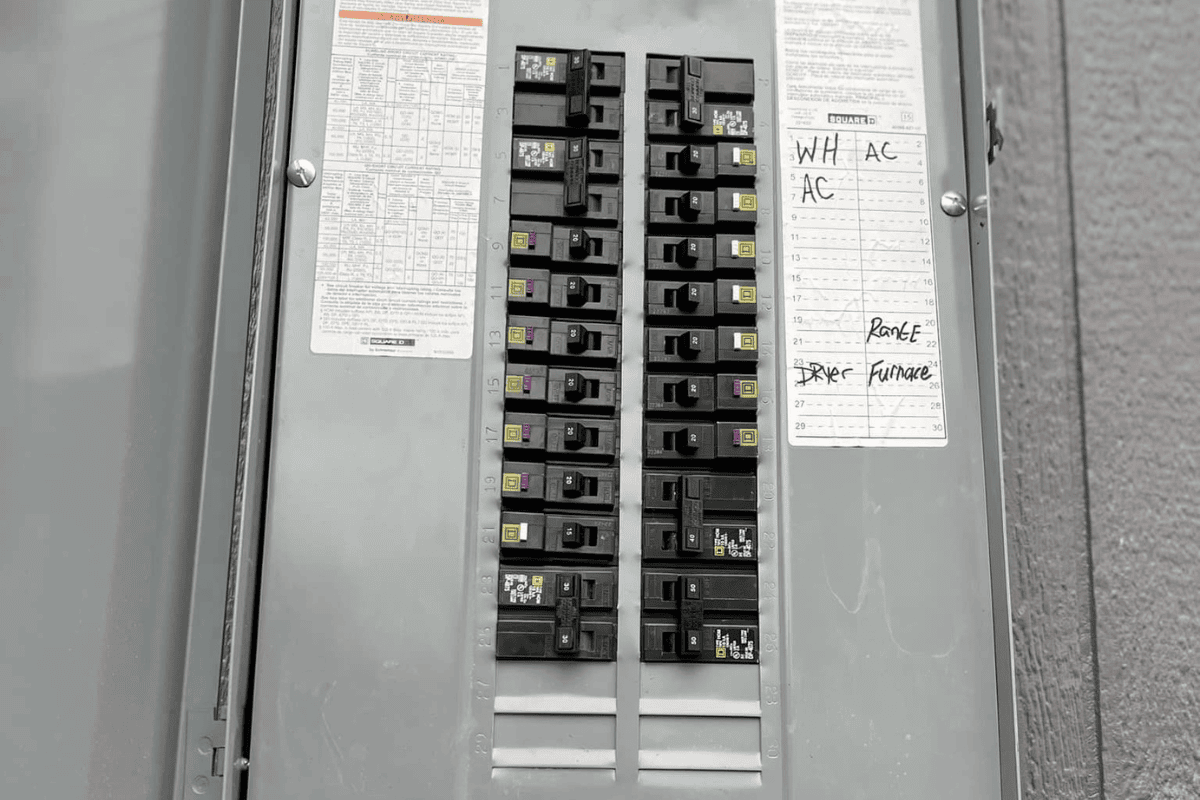
- Do not open the panel yourself. Resetting a breaker is fine; anything past the panel cover is not a DIY job, and insurance adjusters know the difference.
- Fix small problems early. A $150 outlet repair now beats a $500 wiring repair after it arcs.
- Ask about payment options. For bigger projects like panel upgrades or rewires, electrical financing options can spread the cost into monthly payments instead of one hit to savings.
What You’ll Pay in Abilene, San Angelo, Midland and Lubbock
The ranges in this guide hold across all four metros we serve, each with a local office:
- Electrical services in Abilene, TX: office at 500 Chestnut St, and the 1950s to 1970s housing stock that drives most of our panel and wiring work.
- Electrical services in San Angelo, TX: older central neighborhoods plus newer builds on the edges of town. For panel changes, rewiring, and additions, see our San Angelo electrical contractor page.
- Electrical services in Midland, TX: service upgrades for homes adding shop space and equipment.
- Electrical services in Lubbock, TX: Tech Terrace-era homes, student rentals, and fast growth toward Wolfforth.
Want a real number instead of a range? Call us any hour at (325) 442-5594 or request a free quote online and we will call you back with straight pricing before any work starts.
Frequently asked questions
How much does an electrician charge per hour in Texas?
Most licensed electricians in West Texas charge $50 to $130 per hour depending on experience and the complexity of the job, plus a service call fee of $75 to $150 that is often credited if you approve the repair.
Do electricians charge for estimates?
Quotes for defined projects like a panel upgrade or EV charger are usually free. Diagnosing a fault (finding why a circuit keeps tripping) is billed as a service call, since it is real troubleshooting work.
Why is my quote higher than the ranges in this guide?
The usual culprits are older wiring that needs code corrections, hard access, permit costs, or damage that spread further than the visible symptom. A good electrician will show you what they found before charging you for it.
Is it cheaper to hire a handyman for electrical work?
Up front, sometimes. But most electrical work in Texas legally requires a licensed electrician, and unpermitted work can void insurance coverage, which makes it the most expensive discount in the trades.
How much does it cost to fix flickering lights?
If it is one loose fixture or connection, typically $100 to $300 including diagnosis. If lights flicker across the whole house when appliances start, that points at the panel or service connection, and it is worth a professional look soon.
Can I finance a larger electrical repair?
Yes. Panel upgrades, rewires, and generator installs qualify for financing with approved credit, turning a $3,000 project into a predictable monthly payment.