Summary:
Most homeowners pay roughly $700 to $2,000 to have a Level 2 EV charger installed when the panel is close and has room, and $1,200 to $3,000 or more when the job needs new wiring, a long run to the garage, or a panel upgrade. Those are published national ranges for 2026. The charger itself is usually $300 to $1,000; the rest is the electrical work to get a 240-volt circuit to where you park.
An EV charger is one of the few electrical jobs where the price has almost nothing to do with the thing you are buying. Two houses can buy the same charger and get quotes $1,500 apart, because one has a 200-amp panel on the garage wall and the other has a 100-amp panel on the far side of the house.
This guide breaks the cost down the way an electrician prices it: the charger, the circuit, the distance, and the panel. Hooked Up Electric installs EV chargers across West Texas from offices in Abilene, San Angelo, Midland and Lubbock, so the examples lean toward what we see here: attached garages, detached shops, and older homes with panels that were never sized for a car.
EV Charger Installation Cost at a Glance
Typical 2026 prices from published national cost guides. Every figure assumes a licensed electrician doing the work.
| Item | Typical range (2026) |
|---|---|
| Level 2 charger, the unit itself | $300 to $1,000 |
| Electrician labor, straightforward Level 2 install | $400 to $1,200 |
| Level 2 installed, panel nearby with spare capacity | $700 to $2,000 |
| Level 2 installed, new wiring or a longer run | $1,200 to $3,000 |
| Dedicated 240-volt circuit only (for a plug-in charger) | $250 to $900 |
| Running power to a detached garage or shop | $10 to $25 per foot |
| Panel upgrade, 100 amp to 200 amp | $2,200 to $3,800 |
| Permit and inspection | $50 to $200 each |
The charger and labor rows come from Angi and HomeGuide’s 2026 cost guides; the panel row is from our own West Texas panel upgrade cost guide. Treat all of them as budgeting numbers. A firm price needs someone to look at your panel and measure the run.
Level 1 vs Level 2: What You Actually Get for the Money
Level 1 is the cord that comes with the car, plugged into an ordinary 120-volt outlet. It adds roughly 3 to 5 miles of range per hour, which is fine for a plug-in hybrid or a short daily commute. If the outlet is already in the garage, the cost is zero. If you need a new dedicated outlet, expect about $150 to $350.
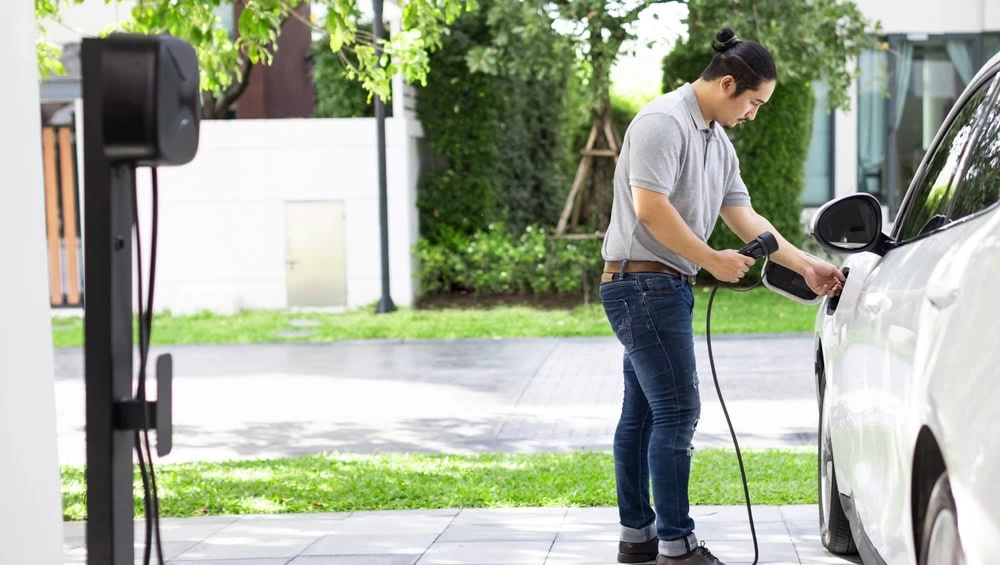
Level 2 runs on 240 volts, the same as an electric dryer, and adds roughly 20 to 40 miles of range per hour depending on the charger’s amperage and the car. This is what most EV owners end up with, because it turns an overnight plug-in into a full battery. It needs its own circuit, a breaker sized for it, and either a heavy-duty outlet or a hardwired connection. That electrical work is where the money goes, and our 240V outlet cost guide breaks it down.
Level 3 (DC fast charging) is commercial equipment at commercial prices and is not something you put in a house.
One number worth knowing: Angi puts a full charge at home at roughly $2.50 to $14 in electricity, against $12 to $24 at a public station. For anyone driving every day, the Level 2 install usually pays for itself in the fuel it replaces, though how fast depends on your rate and your mileage.
What Moves the Price Up (or Down)
- Distance from the panel. The single biggest factor. A charger on the wall next to the panel is a short job. A charger across the house, or in a detached shop, means conduit, cable and sometimes a trench.
- Amperage. A 48-amp charger needs a 60-amp circuit and heavier wire than a 32-amp charger on a 40-amp circuit. Bigger is not always better: a 32-amp charger fills most batteries overnight and is easier on a smaller panel.
- Hardwired or plug-in. A plug-in charger uses a NEMA 14-50 outlet, which is a little cheaper and lets you take the charger with you. Hardwired is required for most 48-amp units and is the tidier, more weather-resistant option outdoors.
- Indoor or outdoor. Outdoor installs need weatherproof boxes and fittings, and in West Texas the charger itself should be rated for heat and dust.
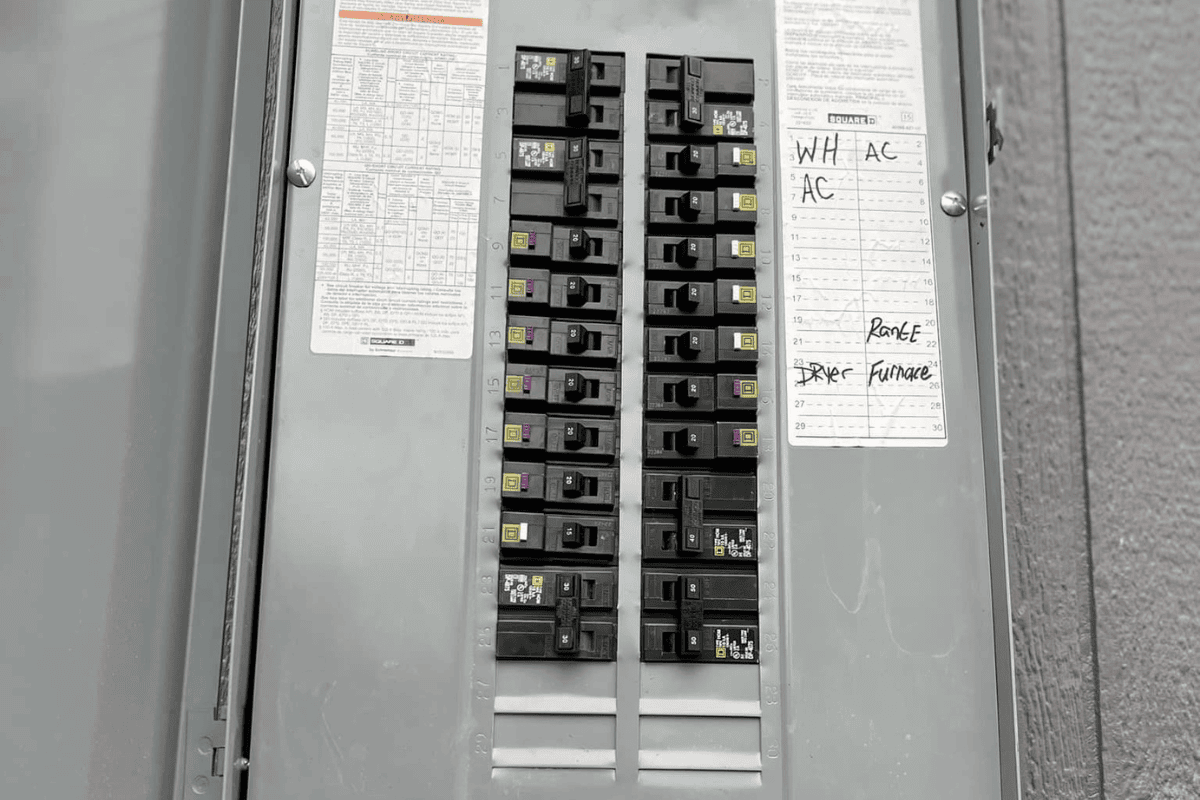
- The panel. If there is no room for a new two-pole breaker, or the service is 100 amps and already loaded, the job grows. The next section covers this.
- Permits. A new 240-volt circuit normally needs a permit and inspection. The fee is small; the point is that the work is checked.
If you also park an RV at home, the same kind of 240-volt circuit can sometimes serve both. This guide to 50 amp RV outlets at home is worth reading before you decide where the outlet goes.
The Panel Question: Can Your House Take a Charger?
This is the part that turns a $1,000 job into a $4,000 job, and it is worth understanding before you buy a charger.
A Level 2 charger is a continuous load. A 48-amp unit pulls 48 amps for hours at a time, on top of the air conditioner, the water heater, the range and the dryer. On a 200-amp panel that is normally fine. On a 100-amp panel, which is what many older Abilene, San Angelo and Lubbock homes still have, it often is not. An electrician does a load calculation to find out, and there are three outcomes:
- Room to spare. Add a two-pole breaker, run the circuit, done. This is the $700 to $2,000 job.
- Tight but workable. Install a smaller charger (32 amps rather than 48), or a load-management device that pauses charging when the rest of the house is busy. Cheaper than a panel upgrade and often all you need.
- No room. The panel is full or the service is too small, and the honest answer is a panel upgrade. Our panel upgrade cost guide puts a 100-to-200-amp upgrade at $2,200 to $3,800 in West Texas. It is a big number, but it also fixes the tripping breakers and adds capacity for the next twenty years.
If a quote includes a panel upgrade, ask why. Sometimes it is necessary. Sometimes a 32-amp charger would have done the job for a third of the price.
Tesla Wall Connector, Plug-in Chargers and Other Brands
The brand of charger changes the unit price more than the installation price. HomeGuide lists the Tesla Wall Connector at about $420 to $650 for the unit and $1,400 to $3,200 installed, which is in line with other 48-amp hardwired chargers. Non-Tesla cars can use a Tesla connector with the right adapter, and most newer chargers ship with both plug types, so buy for the amperage and features you want rather than the badge.
A plug-in charger on a NEMA 14-50 outlet is the budget route: the electrician installs the outlet and circuit, and you plug the charger in yourself. It also means the outlet is still useful if you change cars or move. The trade-off is a 40-amp maximum and one more connection point, which matters in a dusty outdoor spot.
Rebates and Tax Credits in 2026: What Is Left
The federal Section 30C credit, which covered 30% of a home charger and its installation up to $1,000, ended for property placed in service after June 30, 2026, according to Kiplinger’s reporting on the 2025 federal tax law. If you had a charger installed before that date and have not filed yet, ask your tax preparer about it. For installs from July 2026 onward, we are not aware of a federal credit.
Texas has no statewide rebate for home chargers that we know of. Some municipal utilities and electric cooperatives run their own Level 2 charger rebates (Austin Energy is the best-known example), and programs come and go, so it is worth a call to your own utility before you buy. In our area that means AEP Texas for most of Abilene and San Angelo, Oncor in Midland, and Lubbock Power & Light in Lubbock, or your co-op if you are rural. We can point you in the right direction, but the utility is the source of truth.
EV Charger Installation in Abilene, San Angelo, Midland and Lubbock
The ranges in this guide apply across all four areas we serve. Each city page has local detail:
- Electrical services in Abilene, where many homes near downtown still run on 100-amp panels
- Electrical services in San Angelo
- Electrical services in Midland
- Electrical services in Lubbock
Want a real number instead of a range? Call us any hour at (325) 442-5594 or request a free quote. Tell us the car or charger you have in mind, where you park, and where your panel is, and we will set up a time to look at it and give you a firm price. If you are budgeting for other electrical work at the same time, our West Texas electrician cost guide covers the rest.
Frequently asked questions
How much does it cost to install a Level 2 charger at home?
Published 2026 guides put a straightforward Level 2 installation at about $700 to $2,000 including the charger, and $1,200 to $3,000 or more when new wiring, a long run to the garage, or a panel upgrade is involved. The charger itself is usually $300 to $1,000 of that.
Can I install an EV charger myself?
Plugging a charger into an existing 240-volt outlet is fine. Installing the circuit, breaker and outlet or hardwiring the unit is licensed electrical work in Texas and normally needs a permit. It is also the part that causes fires when it is done wrong.
Does a 100-amp panel support an EV charger?
Sometimes. It depends on what else the house runs. A load calculation will show whether a 32-amp charger fits, whether a load-management device solves it, or whether the panel needs upgrading. Do not assume you need the upgrade until someone has done the math.
Is the federal EV charger tax credit still available?
Based on current reporting, no. The Section 30C credit ended for property placed in service after June 30, 2026. Check with your tax preparer if your installation was completed before that date.
How long does an EV charger installation take?
Most straightforward installs are done in a few hours. A long run to a detached shop, or a panel upgrade, can take a day or more, and the permit and inspection add calendar time even when the work itself is quick.
Can I finance an EV charger installation?
Yes. A charger installation, especially one that includes a panel upgrade, can be financed along with other electrical work. Our financing page explains the options.