Summary:
Published 2026 cost guides put a 240-volt outlet at about $175 to $300 for a simple job, and $250 to $800 when a new circuit has to be run from the panel. Adding a dedicated circuit is listed at $250 to $900 installed. Where your job lands depends on how far the outlet is from the panel, the amperage, whether the panel has room for a new breaker, and whether the outlet needs GFCI protection or a permit. These are national ranges for budgeting, not a quote.
Dryers, ranges, electric vehicle chargers, welders, hot tubs, and some air conditioners all run on 240 volts, and none of them will plug into a standard wall outlet. Getting a 240-volt outlet where you need it can be a quick swap at the panel or a new circuit run across the house, and the price follows the work.
This guide lays out what the major national cost guides say a 240V outlet costs in 2026, why their numbers differ, which outlet type each appliance needs, and the code rules that apply in Texas. Hooked Up Electric is a licensed Texas electrical contractor with offices in Abilene, San Angelo, Midland, and Lubbock. The prices below are published ranges to help you budget. To get a real number, an electrician has to see your panel and the route to the outlet.
240V Outlet Installation Cost at a Glance (2026)
Typical prices from published national cost guides. Every figure assumes a licensed electrician doing the work.
| Item | Published range | Source |
|---|---|---|
| 240V outlet, simpler job | $175 to $300 (about $220 on average) | Angi |
| 240V outlet, Dallas average | about $227 ($180 to $309) | Angi |
| 240V outlet including a new circuit from the panel | $250 to $800 | HomeGuide, Forbes Home |
| Dedicated circuit, installed | $250 to $900 | HomeGuide |
| The receptacle itself | under $10 to about $35 | Angi, HomeAdvisor |
| 120/240V circuit breaker | about $45 | Angi |
| Electrician labor | $50 to $150 per hour | Angi (HomeGuide: $50 to $130) |
| Trip fee | $100 to $200 | HomeGuide |
| Permit for an outlet job | $50 to $350 | HomeGuide (HomeAdvisor: $50 to $100) |
Why the ranges differ: the guides are pricing different jobs. Angi’s lower figure most likely reflects simpler installs, such as an outlet close to the panel or one replacing an existing 240V outlet. HomeGuide and Forbes Home price the more common case, where a new breaker goes in the panel and new wire is run to the outlet. The outlet itself is cheap. Labor, wire, and the breaker are where the money goes.
If your panel is full or too small for another 240V circuit, that is a separate job. Our panel upgrade cost guide covers the West Texas ranges.
What Changes the Price of a 240V Outlet
- Distance from the panel. An outlet on the other side of the wall from the panel needs a few feet of wire. One in a detached garage or shop may need a long run, and sometimes a trench.
- Amperage. A 50-amp outlet for a range or EV charger needs heavier wire and a larger breaker than a 30-amp dryer outlet, so it costs more per foot to run.
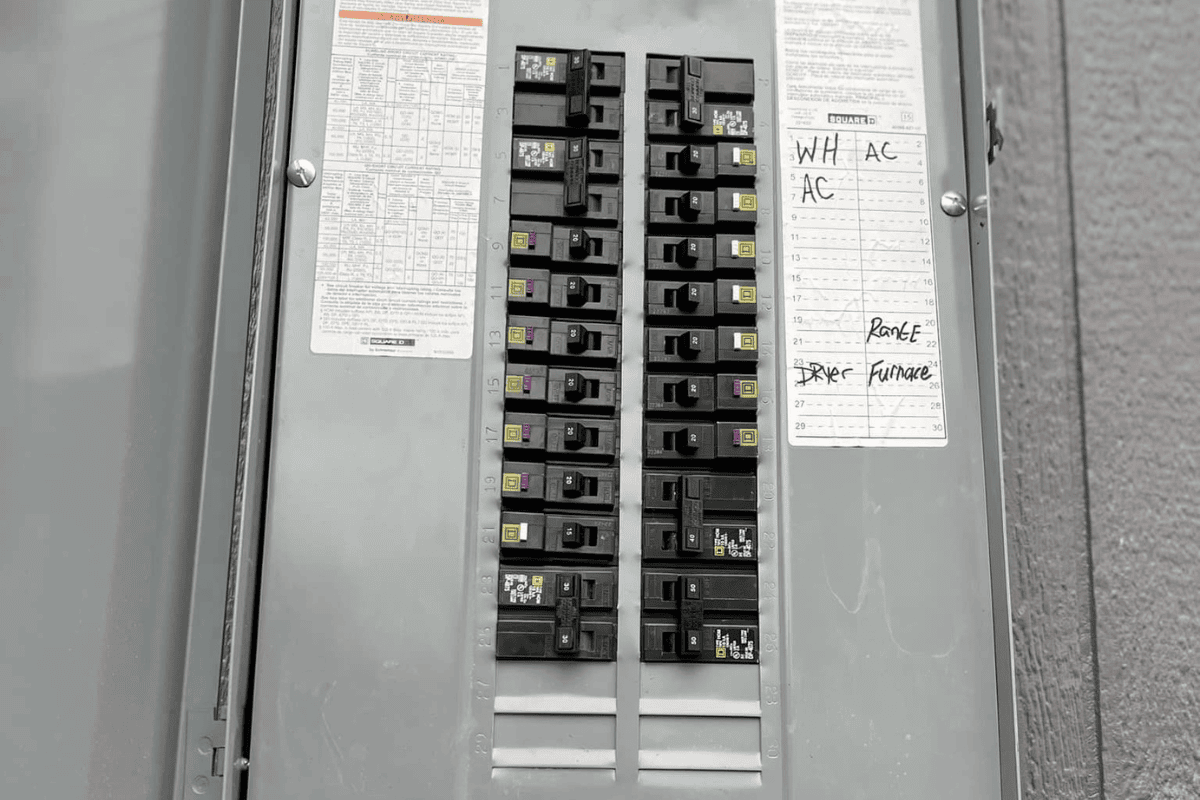
- Room in the panel. A 240V circuit uses a double-pole breaker, which usually takes two slots. If the panel is full, or the load calculation shows it cannot carry the new circuit, that has to be solved first.
- GFCI protection. Some 240V outlets now need GFCI protection under the electrical code (see below), and a 240V GFCI breaker costs more than a standard one.
- How the wire gets there. An open attic or crawl space makes the run quick. Finished walls, a slab foundation, or a two-story route take longer, and wall repair may be extra.
- Indoor or outdoor. An outdoor outlet needs a weather-rated box and cover.
- Permit and inspection. A new circuit is the kind of work many cities require a permit for, and the fee is part of the job.
Which 240V Outlet Does Your Appliance Need?
240V outlets come in different shapes so that the wrong appliance cannot be plugged into the wrong circuit. These are the common ones in homes:
| Use | Common outlet | Rating |
|---|---|---|
| Electric clothes dryer | NEMA 14-30 (4-prong) | 30 amps |
| Electric range or cooktop | NEMA 14-50 (4-prong) | 50 amps |
| Plug-in Level 2 EV charger | Often NEMA 14-50 | 50 amps |
| Larger RV (50-amp service) | NEMA 14-50 | 50 amps |
| Home arc welder | Often NEMA 6-50 | 50 amps |
Always check the appliance manual or the plug before the outlet goes in. Two common mix-ups:
- The 30-amp RV outlet is not a 240V outlet. The TT-30 outlet used by smaller RVs runs on 120 volts. Wiring one with 240 volts can damage the RV’s electrical system. For more on RV hookups, see this guide to 50 amp RV outlets at home.
- An EV charger may be better hardwired. Many Level 2 chargers can either plug into a 14-50 outlet or be wired directly. Our EV charger installation cost guide covers both options and what each costs.
Code Rules That Affect a 240V Outlet in Texas
The Texas Department of Licensing and Regulation (TDLR) adopted the 2023 edition of the National Electrical Code as the statewide standard, effective September 1, 2023. Cities can make local amendments, so the exact rules and permit process depend on where you live.
The change homeowners notice most is GFCI protection. Since the 2020 edition, the code has required GFCI protection for receptacles rated up to 250 volts in certain dwelling locations, including garages, outdoors, laundry areas, and basements. In older editions, GFCI rules covered only standard 125-volt outlets. In practice, a new 240V outlet in a garage, outside, or in a laundry room may need a GFCI breaker, which raises the cost of the job.
Texas also requires electrical contractors to put their license number on proposals, invoices, and written contracts. If a quote for electrical work does not show one, ask why.
3-Prong vs 4-Prong Dryer Outlets
Older homes often have a 3-prong dryer outlet (NEMA 10-30). That design used the neutral wire as the ground, which the National Electrical Code allowed for dryers and ranges until the 1996 edition. New installations now use the 4-prong NEMA 14-30, which has a separate ground.
If your house has a 3-prong outlet, it was likely legal when it went in. The question usually comes up when a new dryer arrives with a 4-prong cord. You have two options:
- Change the cord on the dryer to match the existing 3-prong outlet, following the dryer manufacturer’s instructions.
- Update the outlet to 4-prong, which means running a ground to it. If the panel is close and the route is easy, this is one of the simpler 240V jobs. If not, it is priced like a new circuit.
Either way, never remove the ground prong or modify a plug to make it fit.
How a 240V Outlet Installation Works
- Panel check. The electrician confirms there is space for a double-pole breaker and that the service can carry the new load.
- Route and quote. You agree on where the outlet goes and how the wire gets there, and you get a price to approve before any work starts.
- Permit, where your city requires one.
- Install. A new breaker goes in the panel, wire is run to the outlet location, and the correct outlet for your appliance is installed, with GFCI protection where the code calls for it.
- Test and inspect. The voltage and connections are tested, and the work is inspected where required.
For smaller electrical jobs, our guide to what electrical work costs in West Texas covers typical prices for outlets, switches, and service calls.
Frequently Asked Questions About 240V Outlet Costs
How much does it cost to install a 240V outlet?
Angi puts a 240V outlet at $175 to $300, about $220 on average. HomeGuide and Forbes Home put it at $250 to $800 when a new circuit has to be run from the panel. Distance from the panel, amperage, and panel space decide where your job falls.
How much does a 240V dryer outlet cost?
A dryer usually needs a 30-amp NEMA 14-30 outlet, and it is priced within the same published ranges. Replacing an outlet on an existing dryer circuit near the panel tends to sit at the lower end. Running a new circuit to a laundry room on the far side of the house costs more, and the outlet may need GFCI protection.
Can I install a 240V outlet myself?
Texas licenses electricians through TDLR, and many cities require electrical work to be permitted and done by a licensed contractor. Check your city’s rules before you start. A 240V circuit carries a serious shock and fire risk if it is wired wrong, so this is a job for a licensed electrician.
Does a 240V outlet need GFCI protection?
Sometimes. Since the 2020 National Electrical Code, receptacles up to 250 volts in garages, outdoors, laundry areas, and basements of homes need GFCI protection. Texas uses the 2023 edition as its statewide standard, and cities can amend it, so the electrician doing the work will know what your city enforces.
Do I need a permit to add a 240V outlet?
Often, yes, because it usually means a new circuit. HomeGuide lists permits for outlet work at $50 to $350, and HomeAdvisor at $50 to $100. The licensed contractor doing the job normally pulls the permit.
Can my panel handle a new 240V circuit?
It needs room for a double-pole breaker, usually two open slots, and enough capacity for the new load. An electrician checks both before quoting. If the panel is full or undersized, see our panel upgrade cost guide.
Ready for a real number? Call 325-442-5594 or request a free quote. We work out of offices in Abilene, San Angelo, Midland, and Lubbock, and larger projects may qualify for financing.
Sources: Angi, 240V outlet installation cost (updated July 2026) and Dallas cost page; HomeGuide, electrical outlet installation cost (updated August 2025); Forbes Home, outlet installation cost (updated July 2024); HomeAdvisor, outlet installation cost (updated June 2026); TDLR electrical compliance guide; IAEI Magazine, GFCI protection and the 2020 NEC.