Summary:
Published 2026 cost guides put a whole-house rewire at roughly $2 to $5 per square foot when the old wiring is easy to reach, which is about $3,000 to $7,500 for a 1,500 square foot home, and $5 to $17 per square foot ($10,000 to $30,000 typical) for older homes where walls have to be opened. Where your house lands depends on its age, how the wiring can be reached, and whether the panel has to be upgraded at the same time. These are national ranges for budgeting, not a quote.
Rewiring is the electrical job homeowners dread most, because it sounds like tearing the house apart. Often it is not that. Plenty of homes need a few circuits replaced, some dedicated circuits added, and the old two-prong outlets dealt with, not a full rewire from the panel out.
This guide lays out what the major national cost guides say a rewire costs in 2026, why their numbers disagree so much, and what actually moves the price on a real house. Hooked Up Electric is a licensed Texas electrical contractor with offices in Abilene, San Angelo, Midland, and Lubbock. The prices below are published ranges to help you budget. To get a real number, an electrician has to see the house.
Rewiring Cost at a Glance (2026)
Typical prices from published national cost guides. Every figure assumes a licensed electrician doing the work.
| Job | Published range | Source |
|---|---|---|
| Whole-house rewire, wiring easy to reach | $2 to $5 per sq ft | Angi ($2 to $4), HomeAdvisor ($3 to $5) |
| Whole-house rewire, older home with walls opened | $5 to $17 per sq ft ($10,000 to $30,000 typical) | HomeGuide |
| 1,000 sq ft home | $3,000 to $5,000 | HomeAdvisor |
| 1,500 sq ft home | $4,500 to $7,500 | HomeAdvisor |
| 2,000 sq ft home | $6,000 to $10,000 | HomeAdvisor |
| 3,000 sq ft home | $9,000 to $15,000 | HomeAdvisor |
| Knob and tube replacement | $12,000 to $35,000 | HomeGuide |
| Add a dedicated circuit | $250 to $900 | HomeGuide |
| Replace an outlet | $80 to $200 | HomeGuide |
| Replace a GFCI outlet | $90 to $200 | HomeGuide |
| Install a new outlet | about $215 on average | HomeAdvisor |
| Electrical permit | $250 to $900 | HomeGuide, HomeAdvisor |
| Electrical inspection | $100 to $200 | HomeGuide |
Why the spread is so wide: the guides are measuring different jobs. The lower per-square-foot numbers describe rewiring where the electrician can pull new wire through the attic or crawl space with little wall damage. HomeGuide’s higher range covers older homes where walls and ceilings have to be opened and patched. Angi and HomeAdvisor also show a much lower “normal range” of about $600 to $2,600 based on projects their users report. That sits far below their own per-square-foot math for a whole house, so it most likely reflects partial jobs. Do not budget a full rewire off it.
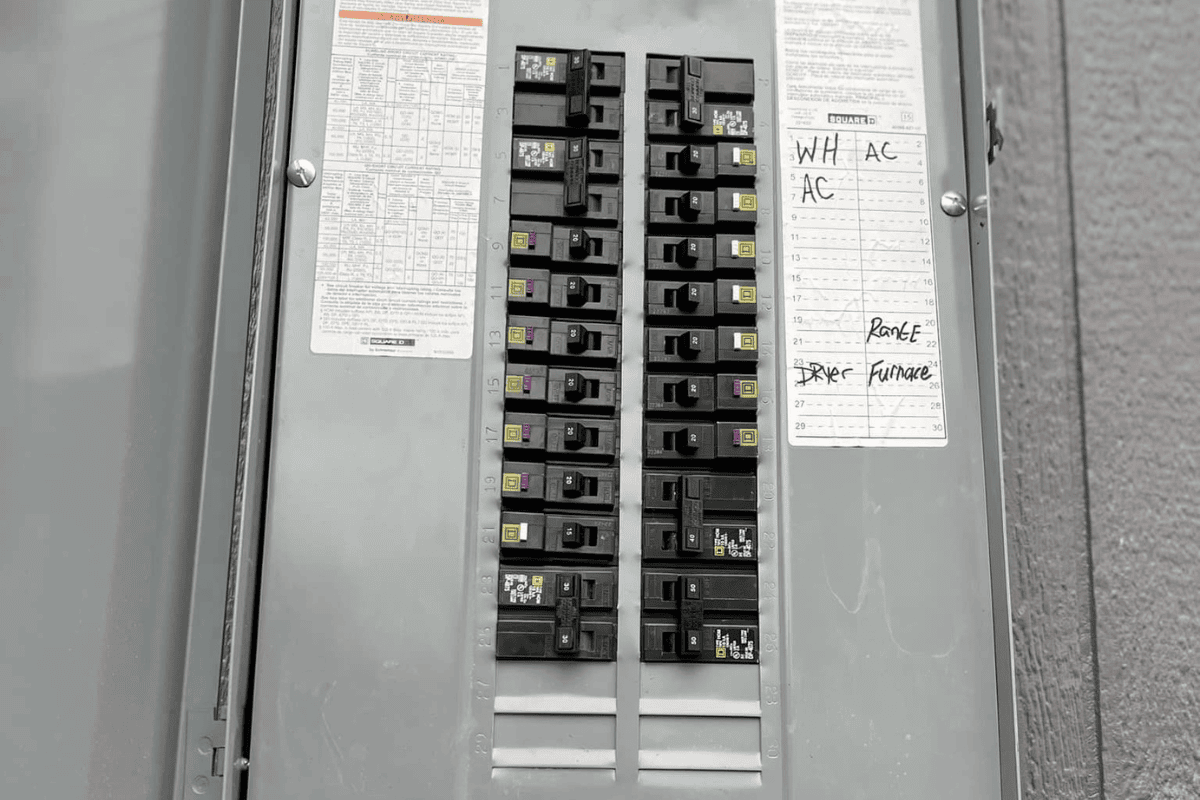
If the panel has to be replaced as part of the job, add that separately. Our panel upgrade cost guide covers the West Texas ranges.
What Drives the Price of a Rewire
- Size and number of openings. Every outlet, switch, and fixture is a connection that has to be rewired, so a larger house with more rooms costs more.
- How the wiring can be reached. An open attic above and a crawl space below make runs fast. If your house sits on a slab with no crawl space, more of the work goes through the attic and the walls, which takes longer.
- Wall and ceiling type. Drywall is quicker to open and patch than plaster. Angi lists opening and repairing walls at $4 to $8 per square foot on top of the wiring itself.
- What is behind the walls. Knob and tube, aluminum branch wiring, cloth-insulated cable, and old do-it-yourself splices all add time, because they have to be found and removed safely.
- The panel. New circuits need somewhere to land. An old, full, or undersized panel often has to be replaced first.
- Permits and inspection. Rewiring is normally permitted work, and the fees are part of the job.
- Whether the house is occupied. Working around furniture and keeping power on to part of the house each day takes more time than rewiring an empty home during a remodel.
Full Rewire or Partial Rewire?
A full rewire replaces every branch circuit in the house. A partial rewire replaces only the circuits that are failing or unsafe, or adds new ones where the old system falls short. For a lot of homes, partial is the right answer:
- Replacing a few circuits that overheat, trip, or were spliced badly by a previous owner
- Adding dedicated circuits for an air conditioner, kitchen appliances, a shop, or an EV charger, instead of rewiring everything
- Dealing with two-prong outlets by running grounded circuits to the rooms that need them, or by fitting labeled GFCI outlets where running a ground is not practical
- Rewiring one area during a remodel, while the walls are already open
The key is testing first. An electrician should check the condition of the existing wiring, the grounding, and the panel before recommending a full rewire. If you are told you need one, ask what was tested and why a partial job would not do.
For smaller jobs, our guide to what electrical work costs in West Texas covers typical prices for outlets, switches, and service calls.
Signs Your West Texas Home May Need Rewiring
Age alone does not mean a house needs rewiring, but these are the signs that it is worth having the wiring checked:
- Breakers that trip often, especially when the air conditioner or a large appliance starts
- Lights that dim or flicker when something else turns on
- Outlets or switch plates that feel warm, show scorch marks, or buzz
- A burning or hot plastic smell with no obvious source
- Two-prong outlets through most of the house
- Aluminum branch wiring, which was used in some homes built between 1965 and the mid 1970s
- Knob and tube or cloth-insulated wiring in the attic
- Additions, garages, or shops that were wired by a previous owner
- A home inspector or insurer has flagged the wiring or the panel
A burning smell, a hot outlet, or sparking is not a wait-and-see problem. Turn off that circuit at the panel and call an electrician. For more on the warning signs, read 5 warning signs your home needs an electrical inspection and what an electrical home inspection checks.
Aluminum Wiring: Repair or Replace?
According to the U.S. Consumer Product Safety Commission (CPSC publication 516, Repairing Aluminum Wiring), aluminum branch wiring was installed in some homes, additions, and rewired circuits between 1965 and the mid 1970s. The CPSC reports that homes built before 1972 and wired with aluminum are 55 times more likely to have one or more connections reach fire hazard conditions than homes wired with copper.
The CPSC describes two permanent fixes:
- Replace the aluminum wiring with copper. This removes the root cause, and it is priced like any other rewire.
- Repair every connection with a COPALUM crimp, which joins a short copper pigtail to the aluminum wire. Where COPALUM is not available, the CPSC names the AlumiConn connector as the next best alternative.
Connection repairs are priced by the number of outlets, switches, and fixtures rather than by square foot, so the total depends on the house. Either way, this is work for a licensed electrician, not a weekend project.
How Long a Rewire Takes and What to Expect
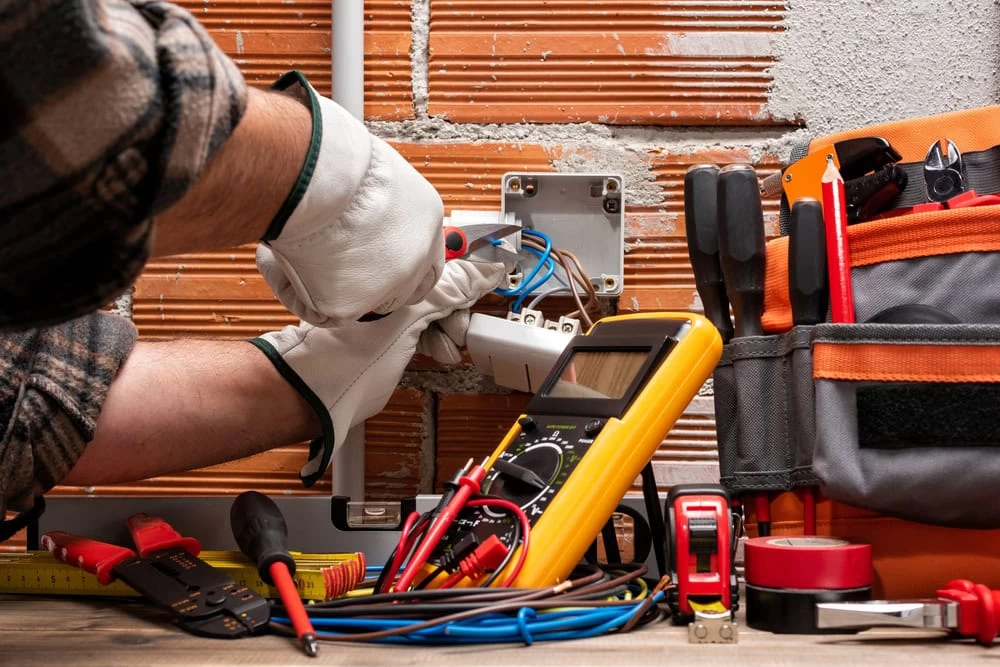
HomeGuide puts a whole-house rewire at 3 to 10 or more days, depending on the size and age of the home and how complex the job is. A typical project runs like this:
- Inspection and testing of the existing wiring and panel
- A written plan and quote, including which circuits change and whether the panel does
- Permit, where the job requires one
- New wire pulled room by room, with power kept on to parts of the house where possible
- Connections, testing, and inspection
- Wall and ceiling patching, which some electricians include and others leave to a drywall contractor, so ask who does it
Many families stay in the house during a rewire, with power off to one area at a time. If the project is bigger than you planned for, ask about financing options when you get the quote.
Frequently Asked Questions About Rewiring Costs
Straight answers to the questions we hear most about rewiring costs.
How much does it cost to rewire a 1,500 square foot house?
Using the per-square-foot figures published by Angi and HomeAdvisor, a 1,500 square foot home works out to roughly $3,000 to $7,500 when the old wiring can be reached from the attic or crawl space. HomeGuide’s range for the same size, which reflects older homes where walls have to be opened, is $7,500 to $25,500. An electrician has to see the house to tell you which end you are on.
Can I rewire one part of the house at a time?
Yes. Many homes only need a few circuits replaced, dedicated circuits added for the air conditioner, kitchen, or shop, or the ungrounded outlets dealt with. A partial rewire is often the better value, as long as an electrician has tested the rest of the system first.
Do I need a permit to rewire a house?
In most places, yes. Rewiring is the kind of work cities typically require a permit and inspection for, and the licensed electrical contractor doing the job normally pulls it. National cost guides put electrical permits at $250 to $900, and HomeGuide lists an electrical inspection at $100 to $200.
How long does it take to rewire a house?
HomeGuide puts it at 3 to 10 or more days, depending on the size and age of the home and how complex the job is. A partial rewire can take a day or two.
Is a GFCI outlet a fix for two-prong outlets?
It is an accepted option, not a full fix. The electrical code allows a GFCI outlet to replace a two-prong outlet on a circuit with no ground wire, as long as it is labeled that there is no equipment ground. It adds shock protection, but it does not create a ground, so some electronics and surge protectors will still not be properly protected.
Should I upgrade my panel when I rewire?
Often, yes. If the panel is old, full, or one of the brands home inspectors commonly flag, it usually makes sense to replace it while the electrician is already rewiring, because the new circuits have to land somewhere safe. Our panel upgrade cost guide covers what that adds.
Ready for a real number? Call 325-442-5594 or request a free quote. We work out of offices in Abilene, San Angelo, Midland, and Lubbock, and larger projects may qualify for financing.