A Homeowner’s Guide to Electrical Inspections in Abilene & West Texas
Why Electrical Home Inspections Are Crucial
Whether you’re buying a house, selling one, or maintaining the home you already live in, an electrical inspection is one of the most overlooked ways to protect your family and your budget. A licensed electrician verifies that your electrical system is safe, up to code, and ready for the load a modern household actually puts on it.
In West Texas the case is stronger than in most places. A large share of homes around Abilene and the Big Country were built in the 1950s through the 1970s, when a 60-amp panel and two-prong outlets were considered plenty. Those systems were never designed for today’s air conditioning, kitchen appliances, and home electronics. Insurance companies have noticed too: many Texas insurers now ask about the age and condition of a home’s electrical system before writing or renewing a policy, and some decline homes with known problem panels outright.
When should you schedule one? Before you close on a home purchase, before a remodel or major appliance addition, after a lightning strike or storm damage, when breakers trip repeatedly, or any time a home passes the 25-year mark without an inspection on record.
The Home Inspection Checklist
An inspector from Hooked Up Electric works through a detailed checklist that covers every part of your system:
- Service entrance and meter: the condition of the mast, weatherhead, and grounding system
- Electrical panel: brand, age, capacity, signs of overheating or corrosion, and double-tapped breakers
- Branch wiring: the type and condition of the wiring behind your walls, whether copper, aluminum, or old cloth-insulated cable
- Outlets and switches: grounding, polarity, wear, and GFCI protection where code requires it
- Smoke and carbon monoxide detectors: placement and function
- Visible code issues: junction boxes without covers, exposed splices, and overloaded circuits
The goal is to catch hazards before they become failures, not to hand you an inflated repair list. You get a clear picture of what’s safe, what needs attention now, and what can wait.
How Long It Takes and How to Prepare
For an average single-family home, a thorough electrical inspection typically takes one to two hours; larger properties and older homes with additions can take longer. You don’t need to do much to get ready, but a little preparation helps: make sure the electrical panel and attic or crawl-space access are reachable, jot down anything you’ve noticed (flickering, warm outlets, breakers that trip), and have questions ready, a good inspector is happy to walk you through what they’re seeing as they go.
Assessing the Electrical Panel
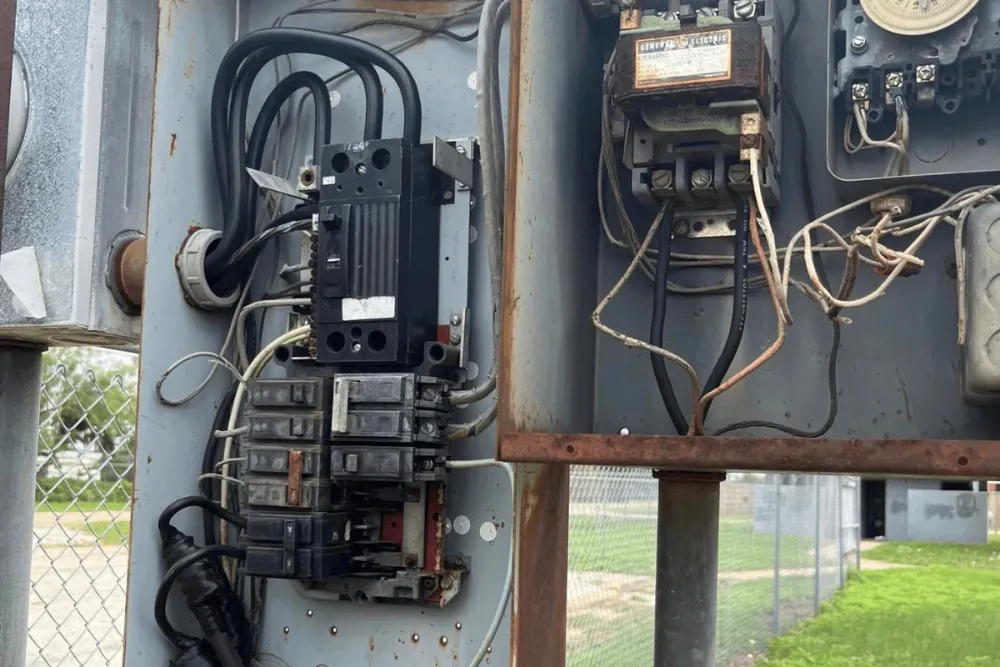
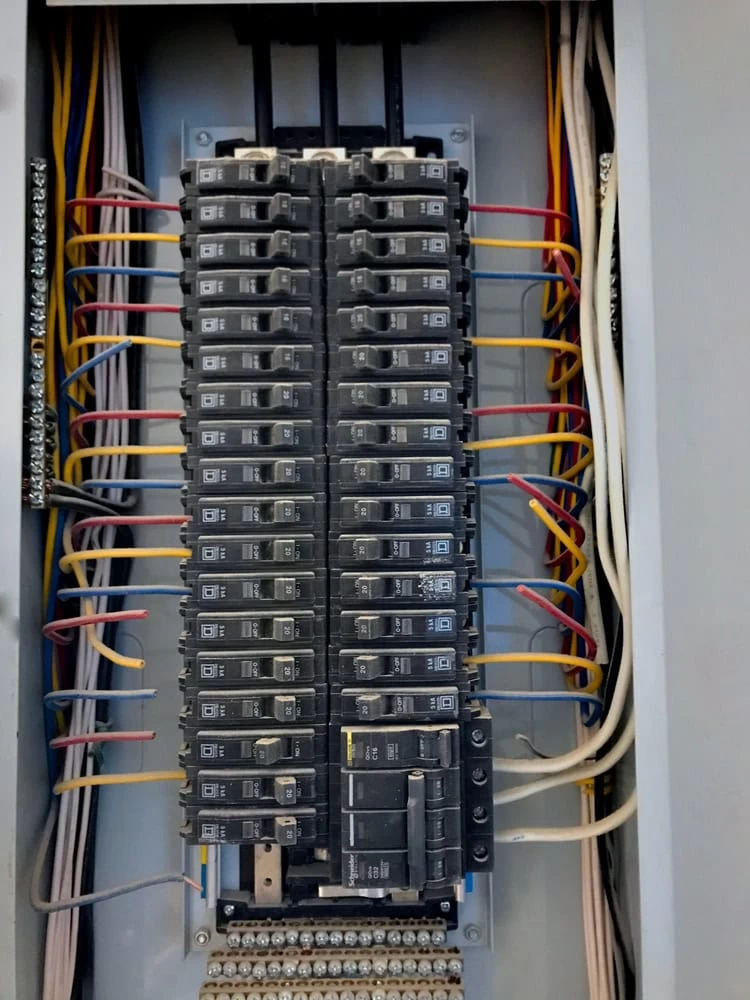
The panel gets the closest look because it’s where the most serious problems live. Your inspector checks capacity, breaker condition, and workmanship, and looks for the two brands every Texas electrician knows on sight. Federal Pacific (FPE) and Zinsco panels, installed in millions of homes from the 1950s through the early 1980s, have documented failure histories, and a growing number of insurers will not renew coverage on homes that still have them.
If your panel is undersized, damaged, or one of those legacy brands, we’ll tell you plainly and price the fix up front. Our guide to electrical panel upgrade costs in West Texas breaks down what a replacement actually runs and why.
Take your electrical systems to the next level with Hooked Up Electric
Inspecting Circuit Breakers and Wiring
Wiring problems are the quiet ones. You usually can’t see them, and they cause a large share of house fires. Your inspector checks accessible wiring for wear, corrosion, undersized conductors, and amateur repairs, and tests breakers to confirm they trip the way they should.
Two things come up again and again in West Texas homes. First, aluminum branch wiring, used widely from about 1965 to 1973: its connections loosen over time and need specific rated connectors, not just tightening. Second, storm-related surge damage, lightning and grid fluctuations are hard on breakers and sensitive electronics, which is why we often recommend whole-home surge protection on older systems.
Testing Outlets and Switches
Outlets and switches are small, but they tell an inspector a lot. Each accessible outlet is tested for correct grounding and polarity; warm faceplates, discoloration, and loose connections all point at bigger problems upstream. Older homes around Abilene often still have two-prong ungrounded outlets, we’ll explain your options, from grounded circuits to GFCI protection, and where today’s electrical code requires GFCI outlets: kitchens, bathrooms, garages, laundry areas, and outdoors.
Post-Inspection: What Comes Next?
After the inspection you receive a written report that separates findings into three plain categories: safety hazards that need prompt attention, code issues worth correcting, and recommendations that can wait. No scare tactics, just what we found, photos where they help, and a written price for anything you want fixed.
The same Hooked Up Electric team that inspects your home can handle any repair it turns up.
Frequently Asked Questions
How long does an electrical home inspection take?
Most single-family homes take one to two hours. Larger homes, older homes, and properties with outbuildings or additions can take longer.
How much does an electrical inspection cost?
Published 2026 cost guides put a standard electrical inspection at about $100 to $200. Our electrical inspection cost guide breaks down the ranges by inspection type. Your exact price depends on the size and age of the home, so we give you a price up front before any work begins. Call 325-442-5594 and we’ll give you a price over the phone.
Do I need an electrical inspection before buying an older home?
We strongly recommend it for any home built before 1980. That era of housing is where Federal Pacific and Zinsco panels, aluminum branch wiring, and ungrounded outlets show up, all things a standard home inspection can flag but not fully evaluate.
What happens if the inspection finds problems?
You get a prioritized written report and a written quote for any repairs, with no obligation. Safety hazards are explained clearly so you can decide what to fix and when.
Don’t wait for a small issue to become a big one. Call 325-442-5594 to schedule your electrical home inspection today.