Summary:
Published 2026 cost guides put ceiling fan installation at about $150 to $360 when a fan or light fixture is already wired in that spot. Angi’s average is $253, and This Old House puts it at about $250. A fan in a new location that needs new wiring runs about $400 to $1,000, according to HomeGuide. Add the fan itself, which starts around $50 and runs into the hundreds for large, outdoor-rated, or smart models. These are national ranges for budgeting, not a quote. Ceiling height, attic access, and whether a new circuit is needed decide where your job lands.
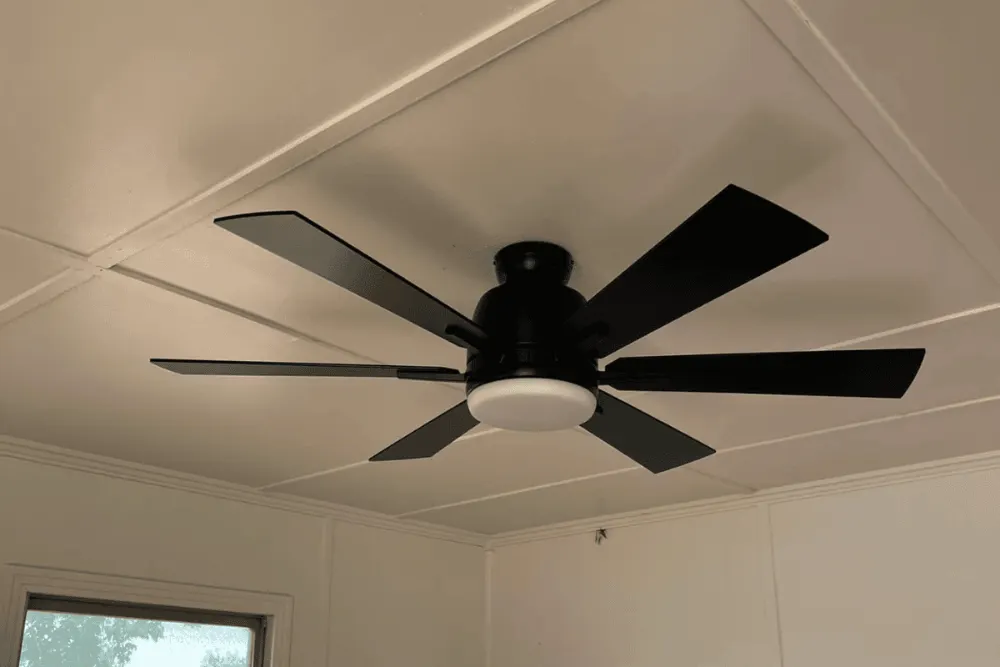
In West Texas a ceiling fan is not decoration. It is the cheapest way to make a room feel cooler through a long summer, and the U.S. Department of Energy says a ceiling fan lets you raise the thermostat setting about 4 degrees with no reduction in comfort. The job itself is usually quick when the wiring is already there, and a half day when it is not.
This guide lays out what the major national cost guides say ceiling fan installation costs in 2026, what separates a $150 swap from a $1,000 job, and what a licensed electrician actually does on the visit. Hooked Up Electric is a licensed Texas electrical contractor with offices in Abilene, San Angelo, Midland, and Lubbock. The prices below are published ranges to help you budget. For a real number, call and tell us about the room.
Ceiling Fan Installation Cost at a Glance (2026)
Typical prices from published national cost guides, fan not included unless stated.
| Item | Published range | Source |
|---|---|---|
| Replace a fan or light fixture on existing wiring (installed, fan included) | $150 to $500 | HomeGuide |
| Typical installation, national | $146 to $360 (average $253) | Angi |
| Typical installation, national | $100 to $600 (average about $250) | This Old House |
| Labor only, replacement | $100 to $300 | HomeGuide |
| Electrician hourly rate | $50 to $130 per hour | Angi |
| New fan where no fixture existed (new wiring, installed) | $400 to $1,000 | HomeGuide |
| New wiring to the fan location | $200 to $400 and up | HomeGuide |
| New circuit, if the existing one is full | $150 to $600 | Angi, HomeGuide |
| Wall switch, dimmer, or smart control | $50 to $200 extra | HomeGuide |
| Extended downrod for a high ceiling | $10 to $75 | HomeGuide |
| Permit, where one is required | $20 to $100, plus $25 to $75 for the inspection | Angi |
| Standard fan (unit only) | $50 to $300 | HomeGuide, This Old House |
| Outdoor wet-rated fan (unit only) | $150 to $1,200 | This Old House |
| Smart fan (unit only) | $120 to $1,000 | This Old House |
| Running cost | about $2 to $5 a month at 8 to 12 hours a day | HomeGuide |
Why the ranges differ: a like-for-like swap uses the wiring, switch, and box that are already there. A fan in a new spot needs a cable run from a switch or a nearby circuit, a box that is rated to hold a fan, and sometimes a new breaker. Guides also differ on whether the fan is included in the figure, so compare the installed totals with the fan price you have in mind.
Replacing a Fan vs. Adding One Where There Was Nothing
- Replacing an existing fan. The cheapest case. The wiring, the switch, and usually a fan-rated box are already in place. The electrician removes the old fan, checks the box and its support, hangs the new fan, balances it, and tests the light and speed controls.
- Replacing a light fixture with a fan. Often close in price, with one catch: the box behind a light fixture is usually not rated to carry a fan. The National Electrical Code requires a box that is listed and marked for ceiling fan support (NEC 314.27(C)), and fans over 70 pounds have to be supported independently of the box. Swapping in a fan-rated box or a brace that spans the joists adds parts and time.
- A fan where there was nothing. This is the $400 to $1,000 case in HomeGuide’s figures. New cable has to get from a switch or a circuit to the middle of the ceiling. With attic access above the room that is a reasonable job. On a slab house with no attic above, or in a finished second floor ceiling, the cable has to be fished through walls, which is where the hours go.
- More than one fan. Guides price per fan. Doing several in one visit saves the trip, but each fan still needs its own box check, mount, and wiring.
What Changes the Price in West Texas
- Ceiling height. Vaulted and high ceilings need an extended downrod ($10 to $75, HomeGuide), a taller ladder or a lift, and more time. An angled ceiling also needs a sloped-ceiling mount.
- Attic access and slab foundations. Many homes in Abilene, San Angelo, Midland, and Lubbock sit on slabs, so the only way to a new ceiling location is through the attic. A tight attic with blown insulation or a second floor over the room adds labor.
- Switch wiring. One switch for both fan and light is the simple case. A separate fan switch and light switch, a dimmer, or a smart wall control means more wiring or a control kit ($50 to $200 extra, HomeGuide).
- Outdoor and porch fans. A covered patio fan has to be damp-rated, and one that can get wet has to be wet-rated. The fan costs more and the box and wiring have to suit the location.
- A full panel. A fan draws little, so a new circuit is rare, but an older 100-amp panel with no free spaces may need a tandem breaker or a subpanel first. Our panel upgrade cost guide covers that.
- Permits. A like-for-like swap on existing wiring usually does not need a permit. New circuits usually do, and rules differ by city. We pull the permit when one is needed and the fee shows on the quote.
What a Ceiling Fan Installation Includes
On a typical visit a licensed electrician will:
- Turn off the circuit and confirm it is dead at the box.
- Check that the box is fan-rated and anchored to framing. Replace it with a fan-rated box or a joist brace if it is not.
- Assemble the fan, hang it on the mounting bracket, and connect the fan, light, and ground.
- Install or adjust the downrod so the blades sit at a safe height and clear the walls.
- Wire the wall switch or remote receiver and set the controls.
- Balance the blades, test every speed and the light, and check for wobble.
If the job needs new wiring, add routing the cable, installing the switch box, and, where a new breaker goes in, the panel work and inspection. For other lighting work in the same visit, see our lighting installation page.
Does a Ceiling Fan Lower Your Electric Bill?
Only if you use it the right way. The U.S. Department of Energy says that if you use air conditioning, a ceiling fan lets you raise the thermostat setting about 4 degrees with no reduction in comfort, because the moving air creates a wind chill effect on your skin. The fan does not cool the room, so the Department also says to turn ceiling fans off when you leave a room. HomeGuide puts the running cost of a fan at about $2 to $5 a month at 8 to 12 hours a day, which is small next to an air conditioner. In the West Texas summer the saving comes from the higher thermostat setting, not from the fan itself.
How to Keep the Cost Down
- Buy the fan first and have it on site. Labor is quoted on the visit, and a second trip costs more than any fan.
- Check the box before you buy a heavy fan. Large fans need a fan-rated box and sometimes a brace. Knowing that early avoids a surprise on the day.
- Bundle the work. If you also need outlets, a light, or other repairs, one visit is cheaper than three. Our electrician cost guide explains how service calls are priced.
- Pick controls you will use. A standard pull chain or wall switch costs less than a smart control, and the fan cools the same.
- Get the quote in writing with the fan, the box, any new wiring, and the permit listed separately.
Frequently Asked Questions About Ceiling Fan Installation Costs
How much does it cost to install a ceiling fan?
Angi puts the typical range at $146 to $360 with a $253 average, This Old House at $100 to $600 with an average of about $250, and HomeGuide at $150 to $500 to replace an existing fan with the fan included. A new location with new wiring runs about $400 to $1,000 according to HomeGuide.
How much does an electrician charge to install a ceiling fan?
Angi lists electrician rates at $50 to $130 per hour, and HomeGuide puts labor for a replacement at $100 to $300. Many electricians quote a flat price per fan for a straightforward swap and price new wiring by the job.
Can I replace a light fixture with a ceiling fan?
Usually, yes, but the box has to be rated for a fan. The National Electrical Code requires a box listed and marked for ceiling fan support, and a fan over 70 pounds must be supported independently of the box. Most light fixture boxes are not fan-rated, so plan on a new box or a brace.
Do I need a permit to install a ceiling fan in Texas?
A like-for-like replacement on existing wiring usually does not need one. Adding a circuit usually does, and the rules vary by city. A licensed electrician pulls the permit when it is required, and Angi lists permit fees at $20 to $100.
How long does the installation take?
A swap on existing wiring is a short visit. A fan in a new location takes longer because the cable has to be run from a switch or circuit, and fishing it through finished walls or a tight attic is what adds hours.
Is a ceiling fan worth it in West Texas?
For comfort, yes. The U.S. Department of Energy says a ceiling fan lets you raise the thermostat about 4 degrees with no loss of comfort, and HomeGuide puts the running cost at about $2 to $5 a month. The fan only helps when someone is in the room, so switch it off when you leave.
Ready to add or replace a fan? Call 325-442-5594 or request a free quote. We work out of offices in Abilene, San Angelo, Midland, and Lubbock.
Sources: Angi, ceiling fan installation cost (updated September 2026); HomeGuide, ceiling fan installation cost (updated January 2026); This Old House, cost to install a ceiling fan (updated May 2026); U.S. Department of Energy, Energy Saver, Fans for Cooling; NFPA 70, National Electrical Code, section 314.27(C).