Summary:
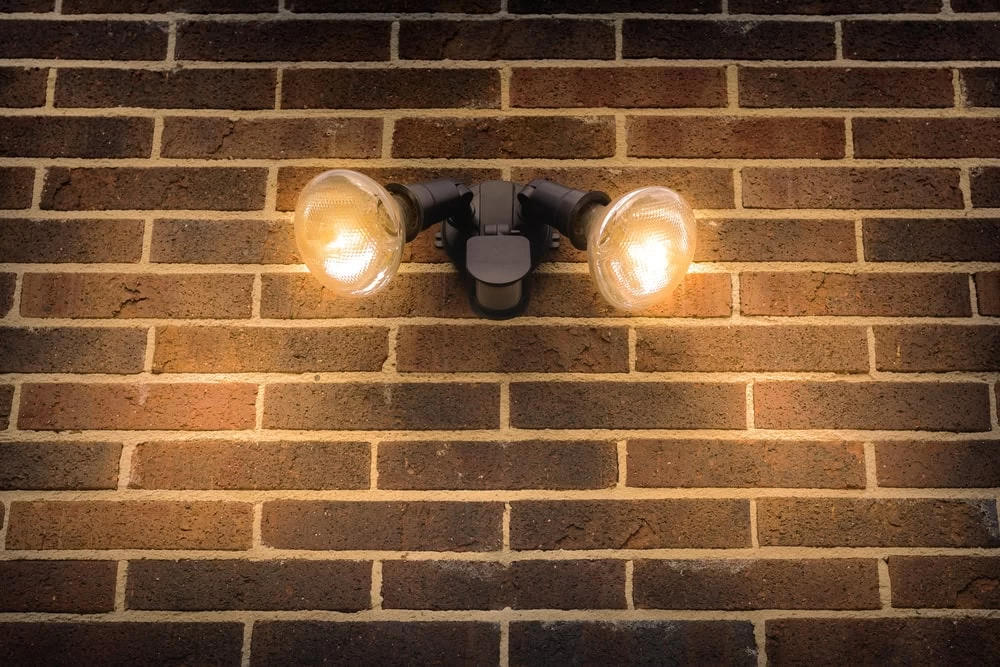
Most homeowners pay about $350 to $500 to have one hardwired motion-sensor security light installed where there was no light before, and roughly $150 to $250 to swap an existing exterior fixture for a motion-sensing one. A whole-property setup with several lights, new wiring and controls is priced as a project. These are published national ranges for 2026. Your own price depends on the wiring, the mounting height and how far the light sits from power.
Security lighting is one of the cheaper electrical upgrades you can make, and one of the few you notice every single night. It is also one of the hardest to price from a search result, because “a security light” can mean a $30 solar unit screwed to a fence post or a row of hardwired LED floodlights on a shop 200 feet from the house.
This guide breaks the cost down the way an electrician prices it: the fixture, the labor, and the wiring needed to get power to the spot. Hooked Up Electric installs security and outdoor lighting across West Texas from offices in Abilene, San Angelo, Midland and Lubbock, so the examples lean toward what we see here: brick homes, metal shops, long driveways and rural property.
Security Lighting Installation Cost at a Glance
These are the jobs homeowners ask about most, with typical installed prices for 2026.
| Job | Typical range (2026) |
|---|---|
| Swap an existing exterior fixture for a motion-sensor light | $150 to $250 |
| New hardwired motion-sensor light where there was no light | $350 to $500 |
| LED floodlight, fixture and installation | $250 to $600 |
| Smart motion-sensor light, fixture and installation | $200 to $500 |
| Solar or battery light, fixture only | $20 to $300 |
| Licensed electrician, hourly | $50 to $130 |
The ranges above are published national figures for 2026 from consumer cost guides, checked against the hourly rates in our West Texas electrician cost guide. They are a budgeting tool, not a quote. The only way to get a firm number is to have someone look at where the light goes and where the power is.
What You Are Actually Paying For
Every security lighting price is built from the same four parts.
- The fixture. A basic hardwired motion light starts around $15, and a good LED floodlight with a quality sensor can reach $200 or more. Smart fixtures that tie into an app or a camera system usually run $100 to $300.
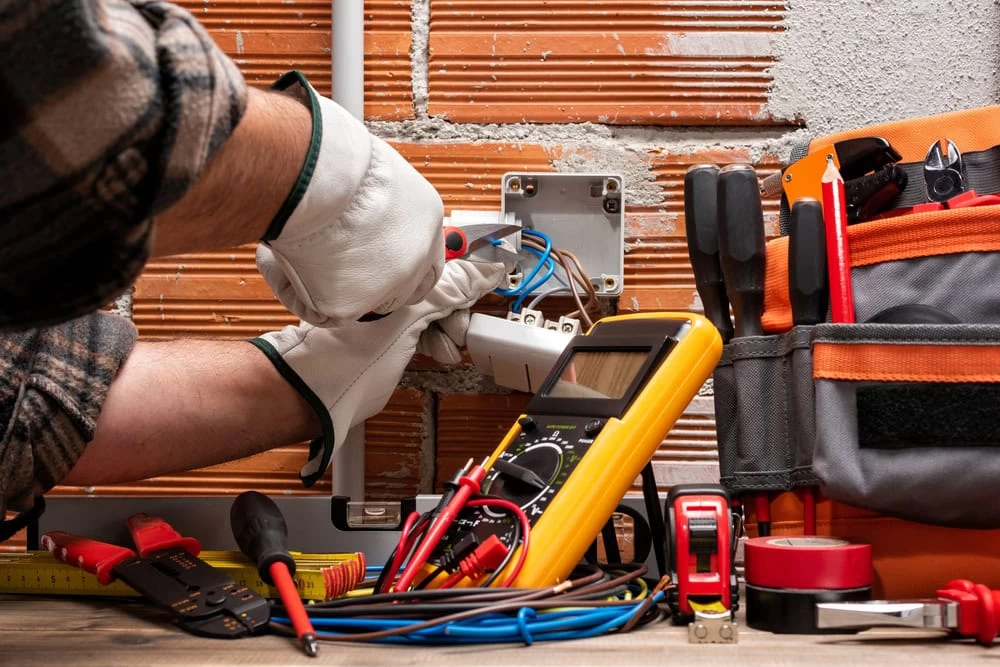
- Labor. Licensed electricians in West Texas generally charge $50 to $130 per hour. Replacing a fixture on an existing box is quick. A new location takes longer because a box has to be mounted and power brought to it.
- Wiring. New cable typically adds $2 to $4 per linear foot. If it has to be trenched and buried, as it does for a pole light or a gate, figure $4 to $12 per foot. On rural property this is often the biggest line on the bill.
- Controls. A switch, photocell, timer or smart control so the lights come on at dusk or only when something moves. Usually a small part of the total, but worth deciding up front.
What Pushes the Price Up (or Down)
- Distance from power. A light on the garage wall next to an existing circuit is cheap. The same light on a barn 150 feet away is mostly a wiring job.
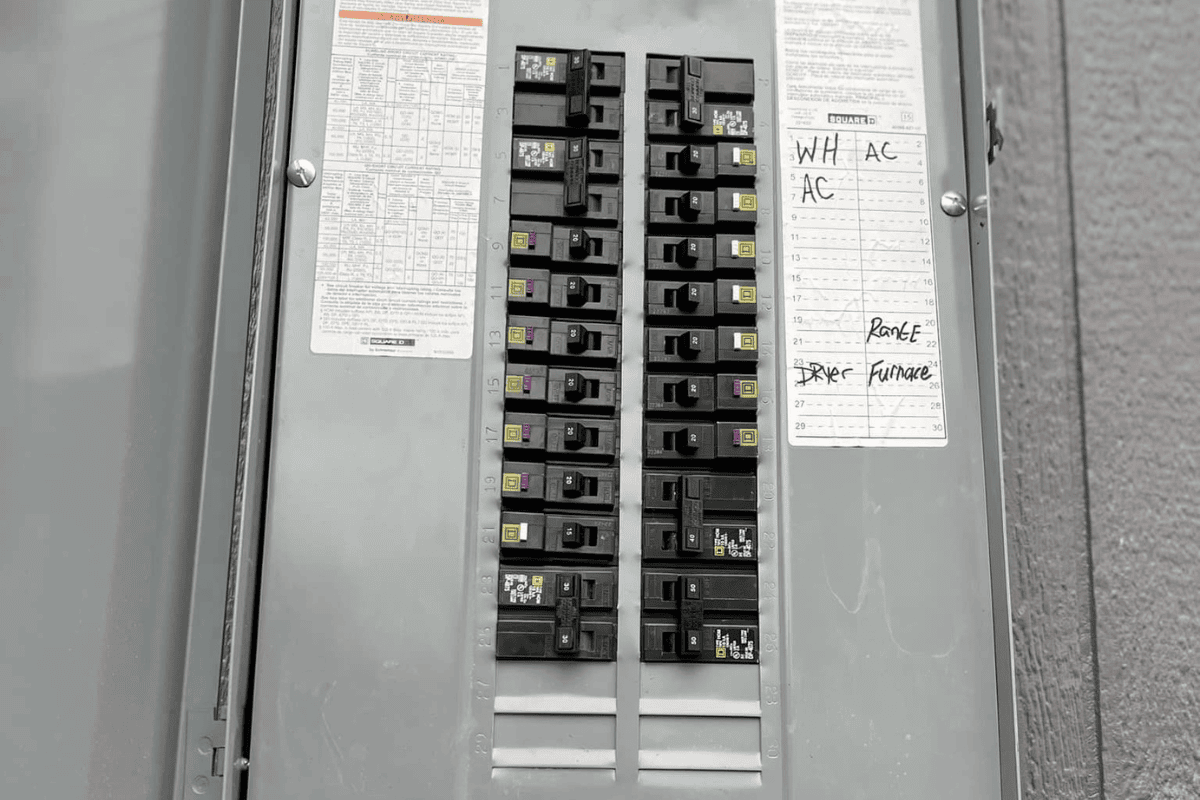
- Whether the circuit can take it. LED security lights draw very little, so most can share an existing circuit. A long run of high-output floodlights, or a panel that is already full, can mean a new circuit.
- Height and access. Second-storey eaves, tall shop walls and poles take longer and sometimes need a lift.
- What it mounts to. Brick, stone and metal buildings take more time than wood siding or soffit.
- How many lights you do at once. The trip, the setup and the ladder work are much the same for one light or five, so the price per light drops when you do them together.
- The age of the house. In older homes we sometimes open a box and find brittle or ungrounded wiring that has to be made safe before anything new is connected. Our guide to panel upgrade costs covers the bigger version of that problem.
Hardwired, Solar or Battery: Which Is Worth Paying For?
Fixture prices overlap more than most people expect: roughly $15 to $200 for hardwired, $20 to $100 for battery and $25 to $300 for solar. The real difference is the installation cost and how much you can rely on the light.
| Type | Good for | Watch out for |
|---|---|---|
| Hardwired | Entries, driveways, shops, anything you depend on | Higher install cost if there is no power nearby |
| Solar | Gates, fence lines and outbuildings far from power | Lower output, weaker after cloudy days, batteries wear out |
| Battery | Sheds, closets and short-term fixes | Batteries to change, easy to forget, low brightness |
West Texas gets plenty of sun, so solar does better here than in most places. It is a sensible answer for a gate a quarter mile from the house. For the doors you walk through and the places someone could approach unseen, hardwired is still the one to pay for: it is brighter, it works every night, and it can be tied to a switch inside.
Costs for Ranches, Shops and Rural Property
Out of town the fixture is rarely the expensive part. The distance is. A pole-mounted yard light or a floodlight on a shop needs power brought to it, and at $4 to $12 per trenched foot a 200-foot run can cost more than everything else combined.
A few ways rural owners keep that under control:
- Feed the lights from the nearest building that already has power, such as a shop or barn sub-panel, instead of from the house.
- Use hardwired lights on the buildings and solar units on far gates and fence corners.
- Ask your electric cooperative whether it offers pole-mounted security lights for a monthly fee. Some do, and it can make sense for a single yard light.
- If a trench is being dug anyway for a well pump, a gate opener or a shop feed, put the lighting conduit in at the same time.
How to Keep the Bill Down
- Do it all in one visit. Walk the property at night, mark every dark spot, and have them handled together.
- Reuse existing locations. Upgrading the porch and garage fixtures you already have to motion-sensing LED units is the cheapest real improvement.
- Light the approaches, not the whole yard. Doors, the garage, side gates and the path from the vehicle to the house matter most.
- Buy decent fixtures. A cheap sensor that false-triggers or fails early costs you a second installation. West Texas heat, dust and wind are hard on bargain fixtures.
- Combine it with other work. If an electrician is already coming for a panel, a standby generator or an EV charger, adding lights to the same visit saves a trip charge.
Security Lighting in Abilene, San Angelo, Midland and Lubbock
The ranges in this guide apply across all four areas we serve. Each office has its own page with local detail:
- Security lighting installation in Abilene
- Security lighting installation in San Angelo
- Security lighting installation in Midland
- Security lighting installation in Lubbock
Want a real number instead of a range? Call us any hour at (325) 442-5594 or request a free quote. Tell us how many lights, what they mount to and roughly how far they are from power, and we will set up a time to look at it and give you a firm price.
Frequently asked questions
How much does it cost to install a security light?
Most homeowners pay $350 to $500 for one new hardwired motion-sensor light, including the fixture, and $150 to $250 to replace an existing exterior fixture with a motion-sensing one. Extra wiring, mounting height and trenching raise the price.
Can I install a motion sensor light myself?
Swapping a fixture on an existing box is a common DIY job if you are comfortable switching off the breaker and working on a ladder. Running new wiring, adding a circuit or mounting a light at height is work for a licensed electrician.
Are solar security lights good enough?
For gates, fence lines and outbuildings far from power, often yes. For doors, driveways and anywhere you rely on the light every night, hardwired is brighter and more dependable.
Do I need a permit to add outdoor lighting?
Replacing a fixture normally does not need one. New circuits and new wiring often do, and the rules vary by city. A licensed electrician will know what your city requires and handle it.
Where should security lights go on a house?
Start with the front entry, the garage and driveway, the back door, and any side yard or gate that is dark at night. Aim the lights down and away from neighbors and the street so they light the ground, not the sky.
Can I finance a larger lighting project?
Yes. Lighting for a large property, especially one that needs trenching, can be financed along with other electrical work. Our financing page explains the options.