Summary:
Most homeowners in Taylor County start the generator conversation the same way: they remember February 2021, or they’ve lost power one too many times during a summer heat wave, and they decide they’re done being caught off guard. What they don’t expect is how quickly the sizing question gets complicated. Walk into any big-box store and you’ll see generators ranging from a few hundred dollars to several thousand, with wattage numbers that don’t obviously connect to anything in your home. This guide cuts through that confusion. We’ll explain how generator sizing actually works, what you need to account for, and why a proper load calculation, done in person by a licensed electrician, is the only way to get it right.
Backup Generator Sizing: What Your Home's Square Footage Won't Tell You
Here’s the thing most generator guides get wrong: square footage is almost meaningless when it comes to sizing. A 1,500 square foot all-electric home in Tye can require a significantly larger generator than a 3,000 square foot home in Merkel that runs on natural gas for heat and cooking. What actually determines the size you need is the sum of your electrical loads, every appliance, motor, and system that draws power from your panel.
The two numbers that matter are running watts and starting watts. Running watts is how much power an appliance needs to keep operating. Starting watts, sometimes called surge watts, is the spike of power it needs to kick on. For motor-driven equipment like well pumps and air conditioners, that surge can be two to three times the running load. Miss that in your calculation, and your generator won’t be able to start those systems when you flip the switch.
How to Calculate Your Home's Electrical Load Before Buying a Generator
The calculation starts with a simple question: what do you actually need to keep running during an outage? That answer varies a lot by household. For some people, it’s the basics, lights, the refrigerator, a few outlets, and the furnace blower. For others, it’s the whole house, including central air conditioning, an electric water heater, and a home office setup. Neither answer is wrong, but they lead to very different generator sizes and very different price points.
Once you know what you want to power, you add up the running watts for all of those loads. Then you identify which items have the highest starting surge, typically your largest motors, and make sure the generator can handle that peak demand without tripping. A standard refrigerator draws around 150 to 400 watts running but can surge to over 1,000 watts on startup. A 3-ton central air conditioner might run at 3,500 to 5,000 watts but surge to 8,000 watts or more when the compressor kicks in. That’s the number that catches people off guard.
There’s also a general rule worth knowing: a generator should run at no more than 80% of its rated capacity under normal conditions. That buffer exists so it can handle temporary surges without straining, and it extends the life of the unit over time. So if your calculated load adds up to 10,000 watts, you’re looking at a generator rated for at least 12,500 watts, or about 12.5 kilowatts, to stay within that margin comfortably.
For most homes in Taylor County, the range lands somewhere between 10 kilowatts and 22 kilowatts for whole-home coverage, depending heavily on whether you’re including central air conditioning. A home running essential loads only, refrigerator, lights, furnace blower, a few outlets, can often get by with 5 to 7 kilowatts. Add a 3-ton AC unit and that number jumps significantly.
Essential vs. Non-Essential Loads: Deciding What Actually Needs Backup Power
One of the most useful conversations you can have before buying a generator is deciding what you actually need to protect versus what would just be nice to have. Most people default to thinking they need to power everything, which often leads to buying more generator than the situation calls for. The reality is that a well-planned partial backup system can cover everything that truly matters at a fraction of the cost of a whole-home setup.
Essential loads are the things that affect your health, safety, and daily function. In Taylor County, that list typically includes the refrigerator and freezer, central air conditioning or heating, the furnace blower, lighting in key areas of the home, and any medical equipment, oxygen concentrators, CPAP machines, home dialysis units. For rural homes outside Abilene, the well pump is almost always on that essential list too. Without power, there’s no water. That’s not a minor inconvenience; it’s a real problem, especially if you’re on a private well with no municipal backup.
Non-essential loads are everything else, the second refrigerator in the garage, the game room, the outdoor lighting, the guest bathroom. These are fine to include if your budget and generator size allow for it, but they shouldn’t drive the sizing decision. The goal is to identify your floor first, then decide how much above that you want to go.
This distinction also matters for older homes in Taylor County, many of which were built with 100-amp panels. Before a whole-home generator can be installed in a home like that, a panel evaluation is often necessary to confirm the existing infrastructure can support it. That’s not a dealbreaker, it just means the assessment needs to happen before the sizing conversation can be completed. A licensed electrician will catch this during a proper on-site load calculation. An online sizing tool won’t.
Why Professional Generator Load Calculations Matter in Taylor County
Online calculators can get you in the ballpark, but they’re working with assumptions, and assumptions are where generator sizing goes wrong. They don’t know whether your AC is a 2-ton or a 4-ton unit. They don’t know if you’re on a private well. They don’t know that your shop out back pulls its own load, or that you have a family member on medical equipment that can’t go down under any circumstances.
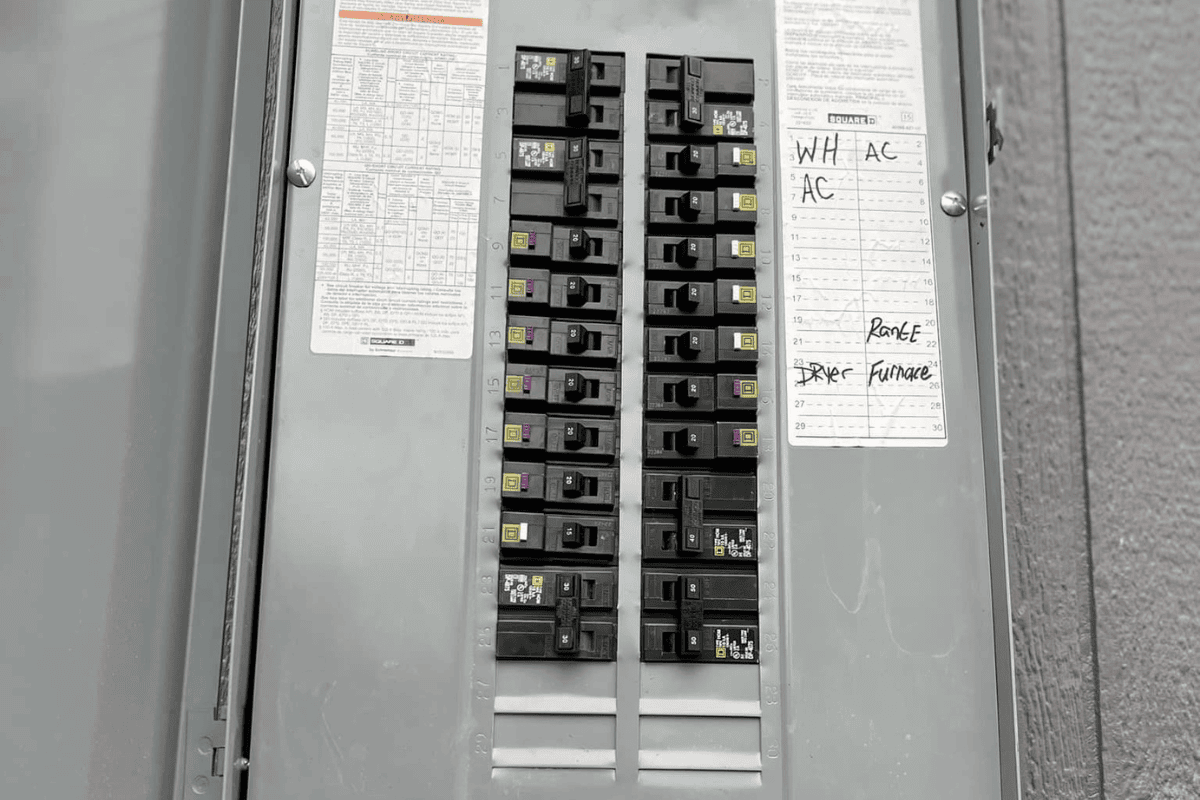
A professional load calculation is done in person, with a licensed electrician walking through your home, reading your panel, and accounting for every load that matters to your situation. That’s the only way to get a number you can actually trust, and it’s what the National Electrical Code requires for properly installed standby systems.
What Rural Taylor County Homes Need That Generic Guides Ignore
If you’re outside Abilene, out toward Merkel, Trent, Hawley, or further into the county, your generator sizing conversation looks different from what most online guides describe. Rural properties in Taylor County have electrical demands that urban-focused content simply doesn’t account for, and getting those wrong means buying a generator that can’t do the job when you need it most.
The biggest one is the well pump. A half-horsepower submersible pump needs around 1,000 watts to run, but it can surge to 2,000 watts or more when it starts. A three-quarter or one-horsepower pump pushes those numbers higher. If your generator can’t handle that surge, the pump won’t start, and you’re without water for the duration of the outage. That’s a serious problem in a West Texas summer when temperatures are sitting at 100 degrees or above, and it’s equally serious in a winter ice storm when roads are impassable and you can’t easily get help.
Beyond the well pump, rural Taylor County properties often have outbuildings, shops, and agricultural structures that draw their own loads. Livestock operations may have water systems, lighting, and ventilation equipment that can’t go down safely. These loads need to be part of the conversation, not an afterthought.
There’s also the restoration timeline reality. Properties served by Taylor Electric Cooperative often wait significantly longer for power to come back after a major outage than homes served by AEP Texas in Abilene. Utility crews prioritize urban areas first, and a rural home outside Merkel may be looking at 24 to 48 hours, or longer, after a significant storm. That’s not a criticism of the co-op; it’s just the geometry of covering a large rural service area with limited crews. It does mean that for rural Taylor County homeowners, a standby generator isn’t a luxury item. It’s a practical response to a documented reality.
Common Generator Sizing Mistakes That Cost Taylor County Homeowners Money
The two most common sizing mistakes are oversizing and undersizing, and both are more expensive than getting it right the first time. Undersizing is the more obvious problem, a generator that can’t handle your load will trip breakers, fail to start your largest motors, and potentially damage the appliances it’s supposed to protect. But oversizing has its own costs that people don’t always think through.
A generator that’s too large for your actual load wastes fuel every hour it runs. It costs more upfront, sometimes thousands of dollars more, than a properly sized unit would. And for diesel generators specifically, chronic underloading causes a condition called wet-stacking, where unburned fuel accumulates in the exhaust system and degrades the engine over time. The irony is that buying too much generator can actually shorten its lifespan.
Another mistake is relying on phone-based estimates. Some contractors will give you a sizing recommendation without ever seeing your home, your panel, or your appliances. That’s a shortcut that benefits the contractor’s schedule, not your outcome. The only accurate load calculation is one done in person, where the electrician can read your actual panel, account for your specific appliances, and flag anything unusual about your home’s electrical infrastructure.
DIY installation is the third major mistake, and it’s worth addressing plainly. Installing a backup generator without permits and inspections voids your homeowner’s insurance coverage, creates a back-feed risk that can injure utility workers on the lines, and leaves you with unpermitted work that becomes a problem if you ever sell the home. Texas requires a licensed master electrician to pull the permit for a standby generator installation. That requirement exists for real reasons, and it’s not something to work around.
The good news is that none of these mistakes are hard to avoid when you start with a proper professional assessment. That single step, a licensed electrician walking through your home and doing the calculation correctly, is what separates a generator installation you’ll rely on for 15 years from one that creates problems from the start.
Ready to Size Your Home Generator the Right Way in Taylor County?
Getting your generator size right isn’t complicated once you understand what the calculation actually involves. It’s about knowing your loads, accounting for surge demands, making honest decisions about what you need to protect, and having someone who knows your area’s specific conditions walk through the process with you.
Taylor County has a grid situation that’s different from most of the country, an island grid with no ability to import power from neighboring states, a history that includes Winter Storm Uri, and rural service areas where restoration can take days, not hours. That context matters when you’re deciding whether to invest in backup power and what size system makes sense for your home.
If you’re ready to stop guessing and get a real number, we’re based right here in Merkel and serve homeowners across Taylor County. Our licensed electricians perform on-site load calculations, handle all permitting and inspections, and give you a clear price upfront. Call us at 325-660-4493 to schedule your free estimate.