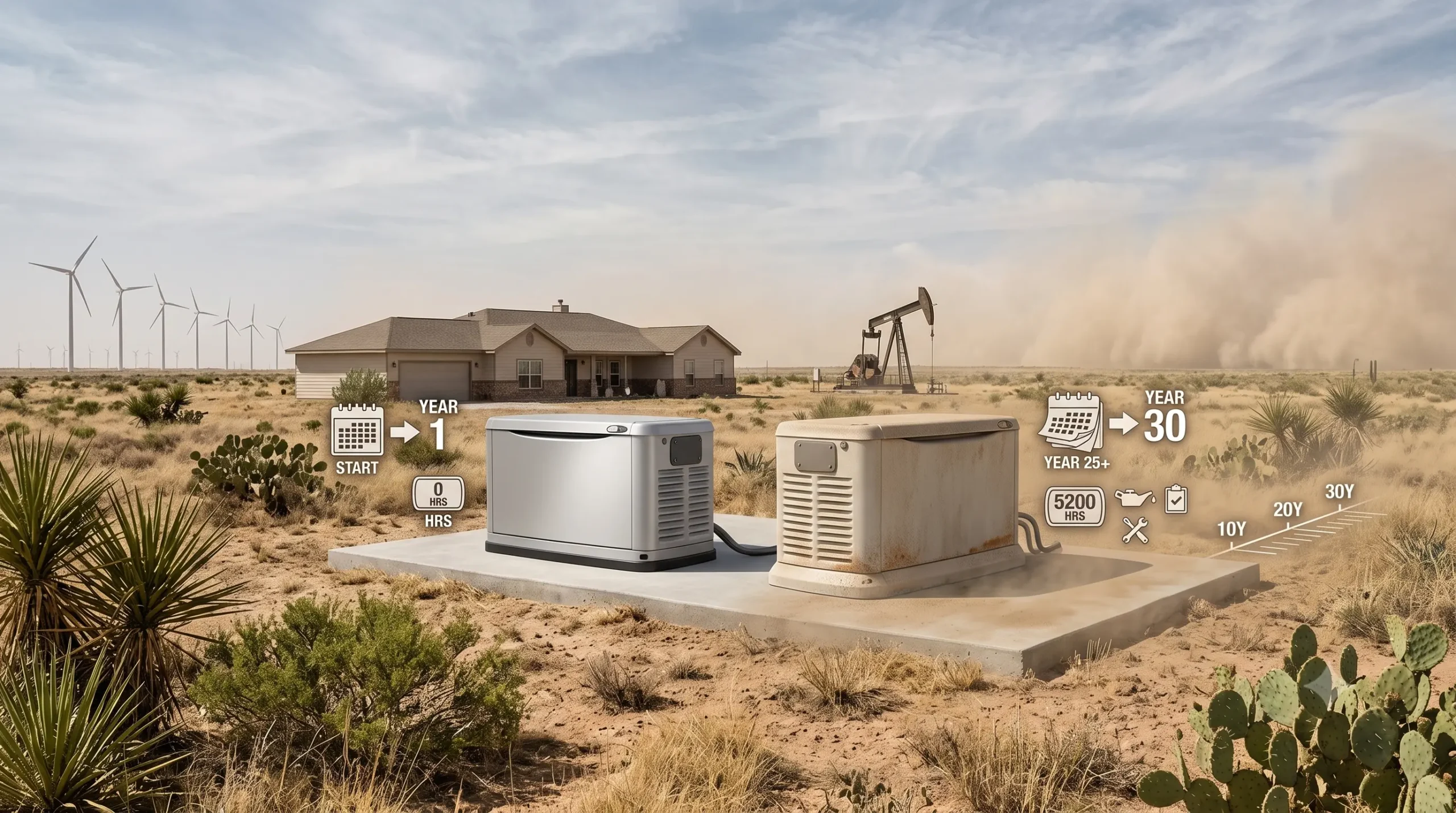
Summary: A whole-house standby generator is one of the larger single investments you can make in a home, so the question comes up fast: how long is it actually going to last? It is a fair thing to ask before spending five figures, and the honest answer is more useful than the marketing one: because a generator’s lifespan is not fixed at the factory. Two identical units can be a decade apart in service life depending on how they were sized, installed, and cared for. Across Abilene, San Angelo, Midland, and Lubbock we have serviced generators still starting reliably after twenty-plus years, and we have condemned units that failed in under ten because they were oversized, never maintained, or run hard in dusty conditions. This guide gives you the real ranges (in both calendar years and engine hours), explains what wears out first, and shows what specifically shortens a generator’s life out here in West Texas. For a properly sized and maintained residential standby unit, plan on 20 to 30 years of service life. That is the realistic window for the air-cooled units most West Texas homes run, and the upper end is genuinely achievable: the generator spends almost all of its life switched off, waiting, not running. The reason the range is so wide is that “lifespan” for a generator is not really measured in years at all. It is measured in engine hours, and how many hours a unit accumulates per year depends on how often your power goes out and how long a weekly self-test you have it set to run. A home that loses power twice a year racks up hours far more slowly than a rural property that runs its whole-house generator for days at a time each winter. An air-cooled standby generator (the type in the vast majority of homes) is generally rated for roughly 1,500 to 3,000 engine hours before it needs major engine work or replacement. Here is why that translates to decades: a typical weekly self-exercise cycle runs about 5 to 12 minutes, which is only 5 to 10 hours a year. Add real outage runtime: maybe another 20 to 50 hours in a bad year, and a unit accumulates well under 100 hours annually. At that rate, 3,000 hours is 25 to 30 calendar years. The table below shows the typical service life of a whole-house generator and the parts inside it, so you can see what to expect and budget for. The single largest factor in how long your generator lasts (bigger than the brand) is whether it is air-cooled or liquid-cooled. Air-cooled units (typically 8kW to 26kW) use a fan to cool the engine, cost less, and suit most homes; they land in the 20-to-30-year window. Liquid-cooled units (usually 22kW and up) use a radiator and coolant like a car engine, run cooler under sustained load, and are built for far more hours: 25 to 40 years is realistic. For most West Texas homes an air-cooled unit is the right call and will outlast its warranty many times over. A liquid-cooled unit earns its higher price only on large all-electric homes, properties with heavy well-pump and outbuilding loads, or anywhere the generator has to carry the whole house for long stretches. Matching the type to your loads is part of sizing the generator correctly, and getting that right is what keeps it from wearing out early. National lifespan figures assume a mild climate and a clean install. West Texas adds a few specific stresses that can take years off a unit if they are not accounted for. None of them are dealbreakers, but each is a reason to install and maintain deliberately rather than assume the factory number is guaranteed. Heat. Triple-digit summers make an air-cooled engine work harder to shed heat. Adequate clearance around the unit, an unobstructed airflow path, and clean cooling fins matter more here than in a cooler climate: a generator choked with dust in 105-degree heat ages faster. Dust and caliche. The fine, chalky dust that blows across the region gets into air filters and cooling fins and settles on everything. Filters clog sooner, so the yearly service interval is not optional out here: a neglected air filter forces the engine to run richer and hotter, which shortens its life. Oversizing and wet-stacking. Counterintuitively, a generator that is too big for its load can wear out faster than one sized correctly. An engine running far below its rated load never reaches proper operating temperature, and unburned fuel and oil build up in the exhaust: a condition called wet-stacking that fouls the engine over time. It is one more reason correct sizing beats “just buy the biggest one.” A generator rarely dies all at once. It is almost always a component that fails first, and knowing which ones lets you stay ahead of them. The battery is by far the most common culprit: it lives outdoors through big temperature swings and lasts only three to five years, and a dead battery is the number-one reason a generator fails to start when the power actually goes out. Replace it on schedule, not when it dies. After the battery come the wear items (oil, oil filter, air filter, and spark plugs), which are not failures at all but routine replacements handled at each annual service. The control board is the most common genuine repair, typically between years ten and twenty; a certified dealer can source and swap it, which is one reason buying from an installer with a local service network matters. The engine block itself, if the unit was sized right and maintained, usually outlives everything around it. Reaching the top of the lifespan range is not luck. It comes down to three things, and all of them are decided early. Size it correctly for your real loads so it neither strains nor wet-stacks. Install it professionally, on a proper pad with correct clearances, the right fuel connection, and a transfer switch matched to your service. And maintain it every year: oil, filters, plugs, a battery check, and a load test. That yearly service is the highest-return money you will spend on the unit: routine generator maintenance runs about $200 to $400 a year and is the difference between a unit that lasts thirty years and one that fails in the middle of an outage. If you want the full picture of what a system costs to own from day one, our guide to whole-house generator cost in West Texas breaks down both the install and the ongoing numbers. How long does a whole-house generator last? How many engine hours does a standby generator last? How long does a Generac whole-house generator last? How long does a whole-house generator battery last? Can an oversized generator wear out faster? How long can a whole-house generator run continuously? The honest answer to “how long will it last” is really “how well was it sized, installed, and maintained.” Hooked Up Electric installs and services whole-home standby generators across West Texas from offices in Abilene, San Angelo, Midland, and Lubbock. Our licensed electricians size the unit to your actual loads, install it to code, and offer annual maintenance plans that keep it starting for decades. Call 325-442-5594 for a free estimate or to set up a maintenance visit.How Long Does a Whole-House Generator Last?
Engine Hours vs. Calendar Years: How Lifespan Is Really Measured
Component Typical service life Notes Air-cooled standby unit 20 to 30 yrs (1,500 to 3,000 engine hrs) The most common residential type Liquid-cooled standby unit 25 to 40 yrs (10,000 to 30,000 hrs) Larger homes; heavier-duty engine Starting battery 3 to 5 yrs The #1 cause of a no-start (replace on schedule) Automatic transfer switch 20 to 30 yrs Usually outlasts one generator Control board 10 to 20 yrs Electronic; the most common major repair Oil, filters, spark plugs Annual Wear items, not failures (replaced yearly) Air-Cooled vs. Liquid-Cooled: The Biggest Lifespan Difference
What Shortens a Generator's Life in West Texas
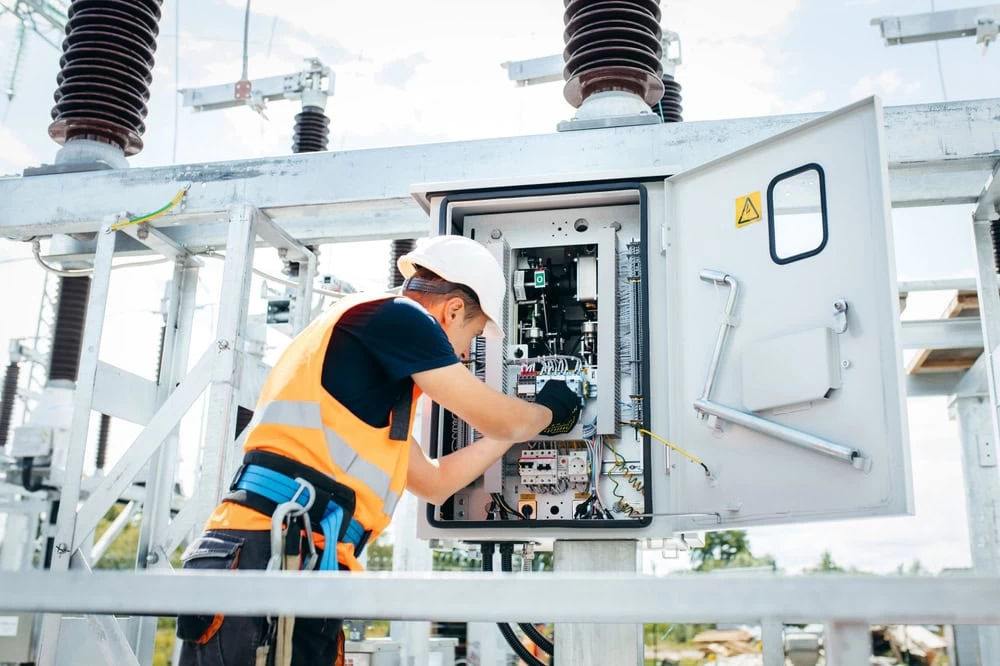
The Parts That Wear First: Battery, Filters, and Control Board
How to Get 25+ Years Out of Your Generator
How Long Does a Whole-House Generator Last? Frequently Asked Questions
Twenty to thirty years for a properly sized, maintained air-cooled standby unit; 25 to 40 for liquid-cooled. Because it runs so few hours per year, the upper end of that range is realistic, not optimistic.
Air-cooled units are generally rated for about 1,500 to 3,000 hours; liquid-cooled units for 10,000 to 30,000. Most homes accumulate under 100 hours a year between weekly self-tests and outages, so those hours translate to decades.
A Generac air-cooled Guardian, sized correctly and serviced yearly, lasts in the same 20-to-30-year window as comparable brands. Longevity depends far more on sizing and maintenance than on the name on the label.
Three to five years. The battery is the most common reason a generator fails to start, so replace it on schedule rather than waiting for it to die during an outage.
Yes. A unit running far below its rated load never reaches proper operating temperature and can wet-stack: unburned fuel fouling the engine. Correct sizing extends life; oversizing can shorten it.
On natural gas, effectively as long as the gas supply holds; on propane, until the tank runs low. Manufacturers recommend a maintenance pause for an oil check on extended multi-day runs, but a standby unit is built to run for days.