Summary:
Published cost guides put one installed electric baseboard heater at about $400 to $650 (Fixr, average $550), with a wider typical range of $416 to $1,536 and an average of $974 (Angi, 2024 data). HomeGuide lists $200 to $1,100 per installed electric baseboard heater. The swing factor is the wiring: a heater that can go on an existing circuit costs far less than one that needs a new 240-volt circuit from the panel, which Angi prices at about $570 to $1,100. These are national ranges for budgeting, not a quote.
Electric baseboard heaters are one of the simplest ways to add heat to a room that the central system does not reach: a converted garage, an addition, a cold back bedroom or a shop office. There is no ductwork and no gas line. The heater itself is cheap. What decides the price is the electrical work behind it: the circuit, the voltage, the thermostat and how far the wire has to run from your panel.
This guide lays out the published national price ranges, explains why they differ, and covers the safety and code points that matter before you buy a heater. Hooked Up Electric is a licensed Texas electrical contractor with offices in Abilene, San Angelo, Midland, and Lubbock.
Electric Baseboard Heater Installation Cost at a Glance (2026)
These are the published national ranges from the cost guides we read for this article.
| Item | Published range | Source |
|---|---|---|
| One electric baseboard heater, installed | $400 to $650 (average $550) | Fixr |
| Typical total, most homeowners | $416 to $1,536 (average $974) | Angi (2024 data) |
| Electric baseboard heater, installed, per heater | $200 to $1,100 | HomeGuide |
| Licensed electrician to install one heater | $390 to $1,190 | Angi (2024 data) |
| Heater unit only, 120 volt | $50 to $120 | Fixr |
| Heater unit only, 240 volt | $100 to $300 | Fixr |
| New dedicated circuit | $570 to $1,100 (average about $700) | Angi (2026 data) |
| Programmable thermostat | $50 to $250 | Fixr |
| Smart or Wi-Fi thermostat | $100 to $500 | Fixr |
| Permit | $50 to $350 | HomeAdvisor |
Why the ranges differ. Each guide prices a slightly different job. Fixr’s $400 to $650 is built around one 6-foot, 1,500-watt, 240-volt heater, with a low end of $285 for a small 350-watt unit and a high end of $1,400 for a 4,000-watt heater with a Wi-Fi thermostat. Angi’s $416 to $1,536 range is a typical total, and its high end reaches $4,000. The biggest single variable is whether the heater can use a circuit that already exists or needs a new one run from the panel.
240 Volt vs 120 Volt Baseboard Heaters
Baseboard heaters come in two voltages:
- 120 volt: Fixr lists these at $50 to $120 for the unit.
- 240 volt: Fixr lists these at $100 to $300 for the unit. HomeGuide notes they cost more to install because they need a dedicated circuit.
The heater must match the circuit it is wired to. Cadet’s installation instructions state that improper installation or incorrect supply voltage voids the warranty, which is one reason to confirm the voltage at the panel before buying.
Sizing. HomeGuide notes that baseboard heaters typically run 2 to 6 feet long and produce about 250 watts per linear foot. Angi uses a rule of thumb of about 10 watts per square foot for a well insulated room and about 15 watts per square foot for a less insulated one. If you are also adding other 240-volt loads, our 240 volt outlet cost guide covers what that circuit work costs on its own.
The Circuit Decides Most of the Price
The heater is the cheap part. Angi puts the heater unit itself at $25 to $200, while a licensed electrician installing one runs $390 to $1,190. Most of that gap is wiring.
- Using an existing circuit: If a suitable circuit is already at the wall, the job is mostly mounting the heater, making the connections and adding a thermostat. For a full installation, Fixr estimates about 5 hours of labor, or $200 to $600.
- Adding a new dedicated circuit: Angi puts a new dedicated circuit at $570 to $1,100, with an average near $700 (2026 data). Angi’s breakdown includes a breaker (Angi lists $10 to $30) and wire (about $1 per foot), so a long run from the panel costs more.
- When the panel is full: If there is no room for a new double pole breaker, the panel may need work first. Angi lists an electrical panel upgrade at $1,200 to $2,000 as an add-on to circuit work. See our panel upgrade cost guide and our breaker replacement cost guide for those numbers.
Hourly rates vary by guide: Fixr lists electricians at $40 to $120 an hour, Angi at $50 to $100, and HomeGuide at $50 to $130 an hour to add a dedicated circuit.
Safety and Code Points Before You Buy
Baseboard heaters are simple, but a few rules decide where they can go and how they are wired.
- No outlet above the heater. Cadet’s instructions say the National Electrical Code does not allow a receptacle to be installed above a baseboard heater. Cadet makes a receptacle kit that mounts at the end of a baseboard heater for walls that need an outlet.
- Clearances. Cadet’s heater safety tips call for about 3 feet of open space in front of a heater and 12 inches on the sides and above, and say not to install a heater where an open door would block the airflow. The U.S. Department of Energy’s Energy Saver guide says baseboards should sit at least three quarters of an inch above the floor or carpet.
- Thermostats. Cadet explains that a double pole thermostat breaks both sides of the power line and has a true off setting, while a single pole thermostat only has a low setting and can still turn the heater on. Energy Saver warns that thermostats built into the heater may not read room temperature well and suggests a wall thermostat on an interior wall.
- Permits and licensing. HomeAdvisor puts permits at $50 to $350. In Texas, TDLR lists an exemption for electrical work on a home you own and live in, but it notes that city rules can override that exemption, so check with your city before doing the wiring yourself.
Is baseboard heat efficient? Energy Saver says electric resistance heat is 100% efficient at the point of use, since all the electricity becomes heat, but that power plants convert only about 30% of their fuel energy into electricity, which is why electric heat can cost more to run. Its advice is that heat pumps can cut electricity use by 50% compared with resistance heat in most climates. Baseboards make the most sense for a room or two, not a whole house.
What Changes the Price in West Texas
The published ranges above are national. On a job in Abilene, San Angelo, Midland or Lubbock, these are the things that move the number:
- Distance from the panel. A heater in a garage conversion next to the panel is a short run. A back bedroom on the far side of the house means more wire and more time getting it there.
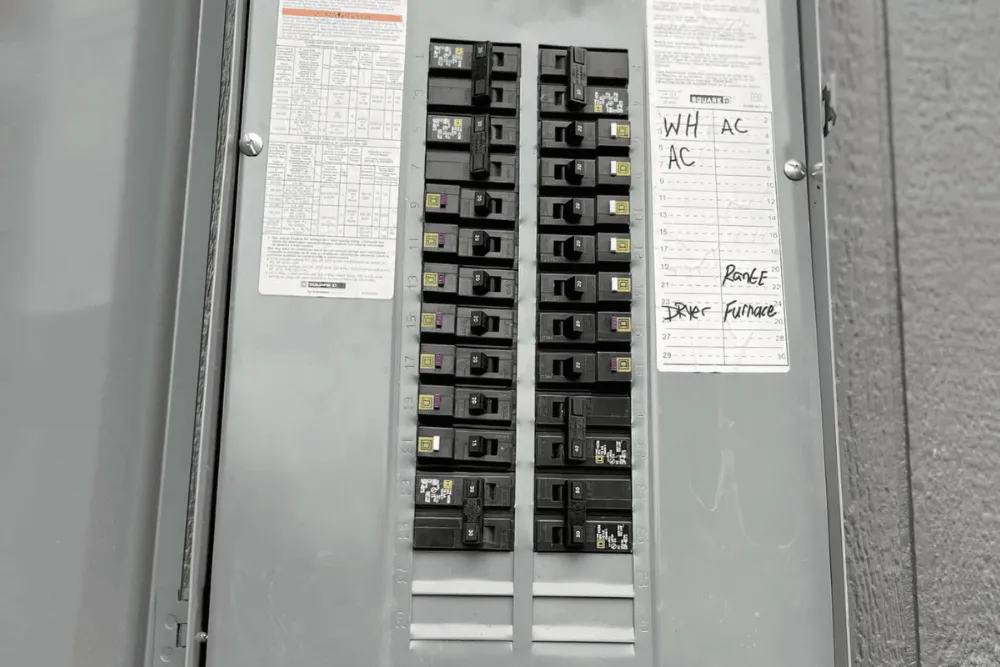
- Space in the panel. A 240-volt heater takes a double pole breaker. Older or crowded panels may not have room.
- How many rooms. HomeGuide prices whole house baseboard heat at $3,000 to $4,200 for a 1,000 to 1,400 square foot home, using 4-foot, 1,000-watt heaters, rising to $5,400 to $6,600 for 1,800 to 2,200 square feet. Each heater on its own thermostat adds parts and labor.
- Thermostat choice. A simple dial costs little; Fixr lists smart or Wi-Fi models at $100 to $500.
- City permit. Permit rules and fees differ by city, and HomeAdvisor’s range is $50 to $350.
For general labor rates, our guide to electrician costs in West Texas explains how service calls and hourly billing work.
How to Keep the Cost Down
- Size the heater to the room. Use the watts per square foot rule above so you do not pay for a bigger heater and circuit than you need.
- Put it near existing power. A wall close to the panel or to a suitable circuit shortens the wire run.
- Group the work. If you need heat in two rooms, or another 240-volt circuit for an appliance, doing it in one visit saves a second trip.
- Match the voltage. Confirm whether you have, or need, 120 or 240 volts before you buy the heater, so it is not the wrong unit.
- Use zones. Energy Saver says zone heating, keeping only the rooms you use warm, can save more than 20% compared with heating the whole house.
- Look at a heat pump for larger areas. If you are heating most of the house, compare the running cost against a heat pump before committing to baseboards.
If you are weighing other room heat, our electric fireplace installation cost guide covers the electrical side of that option.
Frequently Asked Questions About Electric Baseboard Heater Costs
How much does it cost to install an electric baseboard heater?
Published guides put a single installed heater at about $400 to $650 (Fixr, average $550 for a 6-foot, 1,500-watt, 240-volt unit) and the wider typical range at $416 to $1,536 with an average of $974 (Angi, 2024 data). Jobs that need a new circuit, a large heater or a smart thermostat land higher.
Does a baseboard heater need its own circuit?
Often, yes. HomeGuide notes that a 240-volt heater costs more to install because it needs a dedicated circuit, and Angi prices a new dedicated circuit at about $570 to $1,100, with an average near $700 (2026 data). Whether an existing circuit can carry a new heater depends on what is already on it, which an electrician checks before quoting.
Is a 240-volt or a 120-volt baseboard heater better?
Fixr lists 120-volt units at $50 to $120 and 240-volt units at $100 to $300. The heater has to match the circuit it is wired to; the wrong supply voltage voids the warranty on Cadet heaters, per the maker’s instructions.
How much does it cost to run a baseboard heater?
Fixr estimates about $50 to $60 a month for one 1,350-watt heater running 10 hours a day at 13.31 cents per kWh. Your cost depends on your rate, your insulation and how many hours the heater actually runs.
Can I put furniture or curtains near a baseboard heater?
Keep them back. Cadet’s heater safety tips call for about 3 feet of open space in front of a heater and 12 inches on the sides and above, and say to keep curtains, bedding and other items that can burn away from it. Energy Saver adds that baseboards should sit at least three quarters of an inch above the floor or carpet.
Can I install a baseboard heater myself in Texas?
TDLR lists an exemption for electrical work on a home you own and live in, but it also says city rules can override that exemption, so check with your city first. A new 240-volt circuit means work inside the panel, which is a job for a licensed electrician.
Planning baseboard heat for a room? Call Hooked Up Electric at 325-442-5594 or request a quote online. We serve Abilene, San Angelo, Midland, and Lubbock.
Sources: Fixr, electric baseboard heater installation cost (updated January 2025); Angi, electric baseboard heating cost (2024 data, updated August 2024) and dedicated circuit cost (2026 data); HomeAdvisor, electric baseboard or wall heater installation cost (updated August 2022); HomeGuide, baseboard heater cost (undated); U.S. Department of Energy, Energy Saver, electric resistance heating (undated); Cadet, BRF12 receptacle installation instructions (2016) and electric heater safety tips (undated); Texas Department of Licensing and Regulation, exemptions to electrician licensing (undated).