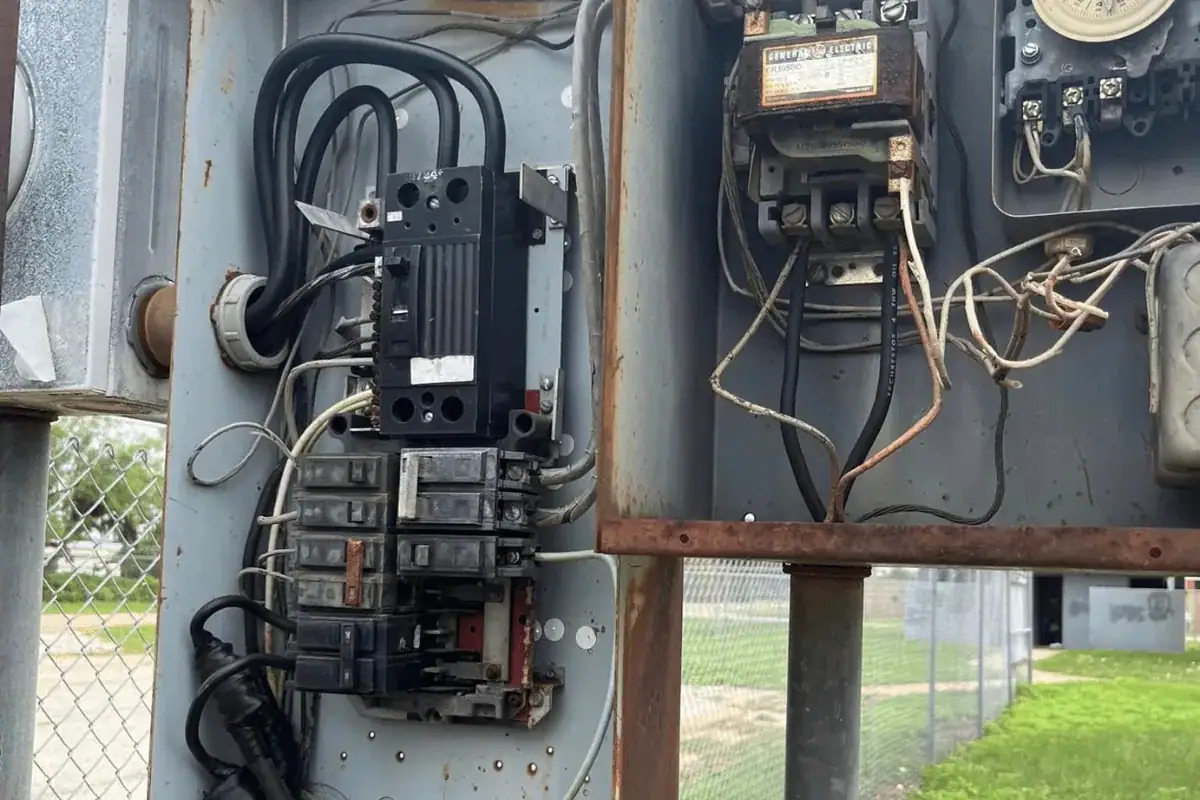
Summary:
A panel upgrade is one of those jobs where three quotes come back hundreds of dollars apart and nobody explains why. This guide breaks down what an electrical panel upgrade actually costs in West Texas in 2026 (Abilene, San Angelo, Midland and Lubbock), what sits inside that number, and the specific things that push a job to the high end here.
Every figure below is an installed price: parts, labor, permit and inspection. Where something is normally quoted separately, it is listed separately.
What an Electrical Panel Upgrade Costs in West Texas
Most West Texas homes land between $1,800 and $3,800. Here is the range by job type.
| Job | Typical installed cost |
|---|---|
| Panel replacement, same service size (100A to 100A) | $1,300 to $2,200 |
| Panel replacement, 200A to 200A | $1,800 to $3,000 |
| 100A to 200A service upgrade (the most common job) | $2,200 to $3,800 |
| 320A or 400A service upgrade | $3,500 to $8,500 |
| Sub-panel added for a shop, garage or addition | $900 to $1,800 |
Quoted separately when the job needs them:
- New meter base: $300 to $600
- New service mast and weatherhead: $400 to $1,200
- Permit and inspection: $75 to $300
- Whole-home surge protector at the panel: $300 to $700
A straight panel swap is a one-day job, roughly four to eight hours with the power off for most of it. A full service upgrade takes about the same labor but has to be scheduled around the utility disconnect, so the calendar is usually the slow part, not the work.
What Is Actually Inside That Price
When a quote looks high, it is usually one of these five doing the work:
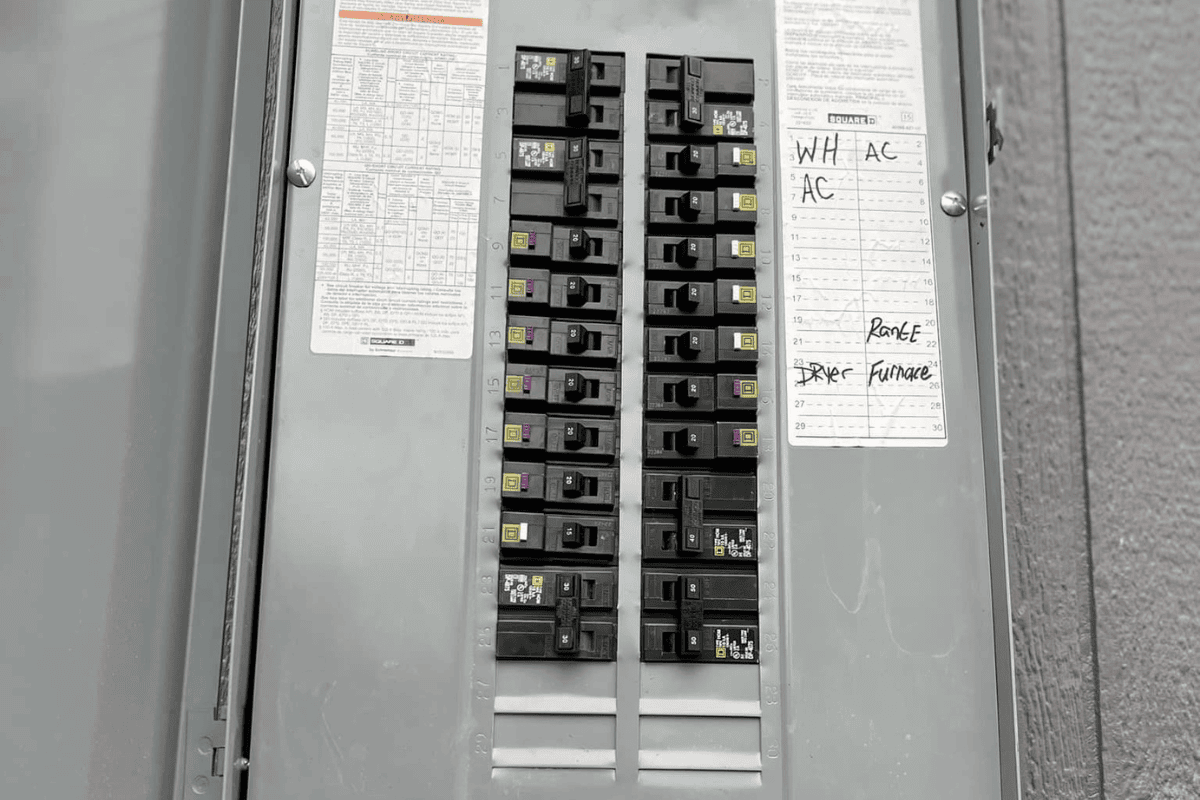
- The panel and breakers. A 200-amp load center with a full set of breakers runs $700 to $1,400 in parts alone. Arc-fault and ground-fault breakers cost several times a standard breaker, and current code requires them on most circuits, so a code-compliant panel is not the same price as a like-for-like swap from 1985.
- Labor. Eight to ten hours of licensed time on a typical upgrade.
- Service entrance conductors. Going from 100 to 200 amps means new, larger wire from the meter to the panel. This is a real material cost, not a markup.
- Permit and inspection. Required in Texas. Panel work is not a legal DIY job here, and an unpermitted panel becomes a problem the day you sell the house.
- Bringing the rest of it up to code. Grounding electrodes, bonding and circuit labeling all have to meet current code once the panel is touched.
What Pushes a West Texas Panel Job to the High End
Four things account for most of the expensive quotes written in this part of the state.
- Older housing stock. A lot of Abilene and San Angelo homes were built between the 1950s and the 1970s. Once the cover comes off, cloth-insulated or aluminium branch wiring often turns up, and that has to be dealt with before the new panel is energised. If it does, our guide to rewiring costs explains the options and what they cost.
- Overhead service and tired masts. Many properties around Taylor, Tom Green and Nolan counties are fed overhead. A rusted mast, or one that no longer meets clearance rules, gets replaced along with the panel.
- Detached shops, barns and well pumps. Common out here, and they change the load calculation. A house that would sit comfortably on 150 amps needs 200 once a shop and a well pump are on it.
- Utility coordination. The service has to be disconnected and re-connected by the utility. That is scheduling rather than labor, but it can add days to the job.
Do You Actually Need an Upgrade?
Not every old panel needs replacing. These are the signs that one genuinely does:
- Breakers trip when the air conditioning runs alongside anything else
- The panel is full, with no space left to add a circuit
- There is still a fuse box, or a 60 or 100-amp service in a house that has since gained central air, a shop or an electric range
- Any sign of heat: a warm cover, a burning smell, scorch marks, or a breaker that will not reset
- Rust inside the enclosure, common where the meter faces the prevailing weather
- The panel is a Federal Pacific Stab-Lok or a Zinsco (see below)
If more than one of these is true, start with an inspection rather than assuming the panel is the whole story. Sometimes it is a single failing circuit, not the service.
Federal Pacific and Zinsco Panels: The Insurance Problem
If the label says Federal Pacific Stab-Lok or Zinsco, the conversation changes. These were installed widely from the 1950s into the early 1980s, and repeated testing has found that a meaningful share of their breakers fail to trip under overload: the one thing a breaker exists to do.
For Texas homeowners the consequence is financial as well as physical. Many insurers now decline to write new policies on homes with these panels, and some decline to renew existing ones. Replacement is treated as maintenance rather than a covered loss, so the cost sits with the homeowner either way.
There is no partial fix worth paying for. Replacement breakers for these panels are not a dependable answer. A permitted panel replacement is the version that satisfies both an inspector and an underwriter.
Upgrading Before a Generator, EV Charger or Addition
A panel upgrade is often not the project. It is the thing the project turns out to need first. Three common ones here:
- Standby power. A whole-home unit needs a transfer switch and enough service capacity behind it. An older 100-amp panel usually has to be upgraded first, which is why whole-house generator quotes so often carry a panel line item.
- EV charging. A 48-amp Level 2 charger is a substantial continuous load. Plenty of homes can take one; homes still on 100-amp service usually cannot, without either an upgrade or a load-management device. Our EV charger installation cost guide covers what each option adds to the job.
- Additions, shops and kitchen remodels. Far cheaper to do the panel while the walls are already open than to come back for it in two years.
If more than one of these is on the list for the next couple of years, size the panel once for all of them. Upgrading twice costs more than upgrading generously.
One more thing to plan for: under the current electrical code, replacing a home’s service equipment also means adding a whole house surge protector. This plain-language guide to whole house surge protectors explains what that device does and what it does not do.
Panel Upgrade Questions West Texas Homeowners Ask
How long does a panel upgrade take?
Four to eight hours of work for a straight replacement, with the power off for most of it. A full service upgrade is a similar day of labor but has to be booked around the utility disconnect.
Do I need a permit for a panel upgrade in Texas?
Yes. Panel and service work requires a permit and an inspection, and it has to be done by a licensed electrical contractor. We pull the permit and meet the inspector as part of the job.
Is 200 amps enough?
For most West Texas homes, yes, including central air, an electric range and a Level 2 EV charger. Homes with a detached shop, a well pump, a pool or whole-home standby power are the ones that occasionally justify 320 or 400 amps. A load calculation settles it properly.
Can I add a sub-panel instead?
Sometimes. A sub-panel cheaply solves “no room for more breakers”. It does not solve “not enough service capacity”. Which problem you have is a calculation, not a guess.
Will my insurer make me replace a Federal Pacific panel?
Many Texas carriers now decline or non-renew policies on homes with Federal Pacific Stab-Lok or Zinsco panels, though it varies by carrier. Check with yours. Either way it is treated as maintenance, so it is rarely covered.
Why do quotes vary so much for the same house?
Almost always the meter base, the service mast and the condition of the existing wiring. A quote that does not mention them is either assuming they are fine or leaving them for a change order later.
Want a real number for your house rather than a range? We will look at the panel, run the load calculation and put the price in writing before anything is ordered. Call 325-442-5594 or request a free quote. If you already know what you need, our circuit breaker and panel upgrade service covers all four metros we serve: Abilene, San Angelo, Midland and Lubbock.