Summary:
You installed security lights to protect your property and save money on insurance. But what if those same lights are actually draining your wallet every month? Poor placement, wrong fixture choices, and common installation errors turn what should be a smart investment into an expensive problem. Your lights might be running all night when they don’t need to. They’re creating blind spots where they should provide coverage. Or they’re failing after one Texas summer because they weren’t built for the heat. The good news? Most of these mistakes are completely avoidable once you know what to look for. Let’s walk through the five biggest security lighting installation errors that are costing Taylor County homeowners real money, and exactly how to fix them.
Using the Wrong Fixtures for Outdoor Conditions
Not all light fixtures are created equal. Using indoor-rated lights outside is one of the fastest ways to burn through money. Indoor fixtures aren’t sealed against moisture, can’t handle temperature swings, and will fail quickly when exposed to West Texas weather. You end up replacing them constantly.
Outdoor-rated fixtures are built differently. They’re sealed to keep out rain, dust, and humidity. They’re designed to handle the kind of heat we see in Taylor County summers and the cold snaps that roll through in winter. When you use the right fixture from the start, it lasts years instead of months.
Why LED security lights save money long-term
LED security lighting isn’t just a trendy upgrade. It’s a fundamental shift in how much you spend on outdoor lighting. Traditional incandescent bulbs waste about 90% of their energy as heat. That’s money disappearing into thin air every time the light turns on.
LEDs use up to 90% less energy and last up to 25 times longer than incandescent bulbs, according to the U.S. Department of Energy, which puts the average household saving at about $225 a year in energy costs from using LED lighting. That’s real money back in your pocket, month after month. Fewer trips up the ladder to replace burned-out bulbs.
For security lighting that runs several hours every night, the difference adds up fast. Motion-sensor LED lights save more compared to lights that stay on from dusk to dawn. You’re only using power when you actually need it.
The upfront cost is higher, yes. But when you factor in energy savings and fewer replacements, LEDs earn that cost back over time. Then they keep saving you money. That’s especially true in areas like Callahan County, Eastland County, Jones County, and Taylor County, where properties tend to be larger and require more fixtures to cover driveways, outbuildings, and perimeter areas.
Quality matters here too. Cheap LED fixtures use inefficient drivers and low-grade components that fail early. Professional-grade LEDs from a licensed electrician come with proper heat management and reliable performance that actually delivers on those energy savings.
How weather-resistant ratings protect your investment
Every outdoor fixture has an IP rating, Ingress Protection. It tells you exactly how well that fixture keeps out dust and water. An IP65 rating or higher means the fixture can handle water jets from any direction and keeps dust completely sealed out. That’s what you need for outdoor security lighting installation in Texas.
West Texas weather isn’t gentle. You’ve got intense sun that bakes fixtures all summer. Dust storms that coat everything. Sudden downpours. Temperature swings that can crack cheap materials. A fixture without proper weather resistance won’t survive a full year.
Die-cast aluminum housings hold up better than plastic. They don’t crack in the heat or become brittle in cold weather. The seals around the lens and electrical connections need to be solid, not just decorative. Water getting inside a fixture causes corrosion, shorts, and complete failure.
When fixtures fail, you’re not just buying replacements. You’re paying for the labor to remove the old one, install the new one, and dispose of the failed equipment. If the failure causes electrical damage to your system, you’re looking at even bigger repair bills. One failed fixture costs far more than the fixture itself once you add up all the costs.
Professional installation includes selecting fixtures rated for the specific conditions where they’ll be installed. A fixture near a sprinkler system needs better water protection than one under an eave. We know Taylor County and understand what works here and what fails. That knowledge saves you from replacing fixtures every couple of years.
Poor Placement Creating Blind Spots and Wasted Light
You can have the best fixtures money can buy. But if they’re in the wrong spots, you’re still vulnerable. Placement determines whether your security lighting actually protects your property or just lights up random patches of ground while leaving entry points dark.
Blind spots are areas where someone could approach your home completely unseen. They happen when fixtures are spaced too far apart, aimed at the wrong angle, or blocked by landscaping. Every blind spot is a security weakness that defeats the entire purpose of installing lights in the first place.
Common security lighting placement mistakes homeowners make
One of the biggest mistakes is lighting everything evenly instead of focusing on entry points and vulnerable areas. Your front door, back door, garage, and any ground-level windows need priority coverage. Dark corners where someone could hide need attention. The middle of your lawn doesn’t.
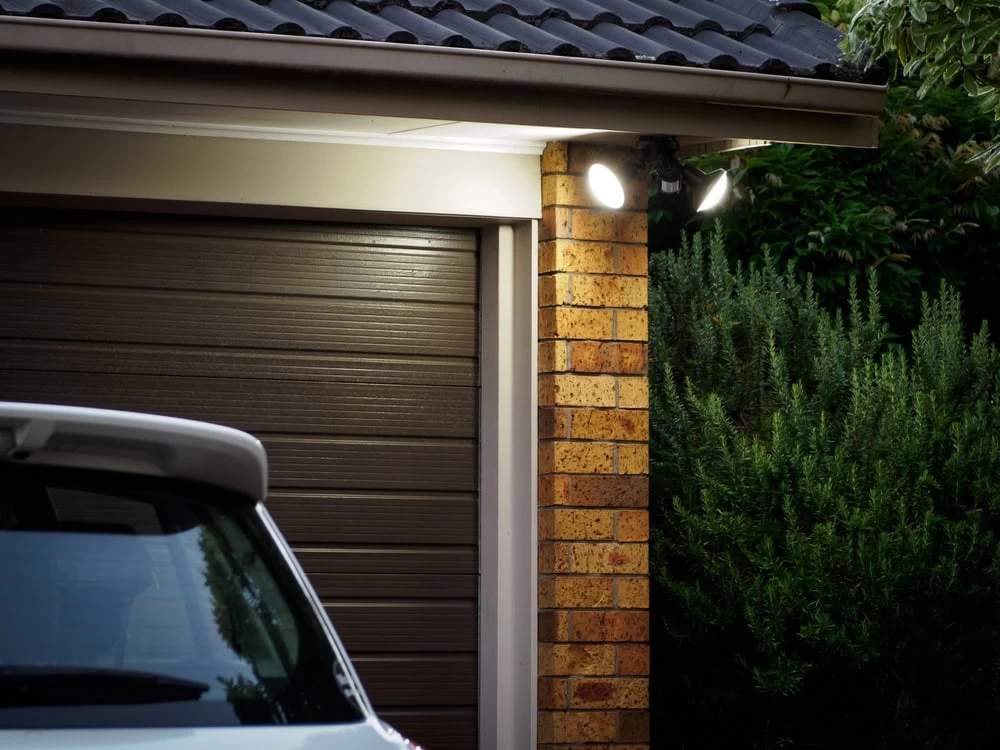
Mounting lights too low creates glare that actually makes it harder to see. When a bright light shines directly in your eyes, everything beyond it disappears into darkness. Security lights should be mounted 8-12 feet high, aimed downward to illuminate the ground and reduce glare. Simple fix, huge difference.
Spacing matters more than most people realize. Path lights crammed together every three feet create a runway effect that’s harsh and wasteful. Proper spacing is 6-8 feet apart for walkways, with wider spacing for driveways. The goal is to guide movement, not blind people.
Pointing lights at windows or doors creates backlighting that prevents you from seeing outside. Position fixtures at an angle so they illuminate the area around the entry point without shining directly into the glass. This lets you see who’s approaching instead of just seeing reflected glare.
Ignoring motion sensor placement is another common error. Motion sensors work best when they detect movement across their field of view, not straight toward them. Installing a sensor above a door where people walk directly at it reduces effectiveness. Placing it to the side where people cross the detection zone works much better. That’s the difference between lights that turn on every time versus lights that miss half the activity.
How professional outdoor lighting design eliminates coverage gaps
We walk your property at dusk to see exactly where dark spots exist. We’re looking at how you actually use your space, where you park, which doors you use, where your family walks at night. That real-world assessment creates a lighting plan that makes sense.
Beam angle selection is part of the design. Narrow beams (10-25 degrees) highlight specific features like architectural details or trees. Medium beams wash walls and broader surfaces. Wide beams provide general coverage for patios and open areas. Using the right beam angle in each location eliminates wasted light and dark spots.
Lumen output needs to match the application. Path lights typically need 100-200 lumens. Wall-mounted security lights near doors work well at 400-700 lumens. Flood lights for driveways or large yards might need 700-1,300 lumens. More isn’t always better. Excessive brightness creates glare and light trespass that annoys neighbors.
Overlapping coverage patterns are key to eliminating hiding spots. When two fixtures cover the same area from different angles, you eliminate the deep shadows that a single light source creates. This is especially important around corners, under eaves, and near fences where shadows naturally form.
Professional installation also accounts for future growth. Trees and shrubs that are small now will eventually block light paths. Landscaping changes over time. A good lighting plan anticipates these changes and positions fixtures where they’ll remain effective for years.
The electrical side matters too. Adding multiple security lights to a single circuit can overload it, causing breakers to trip or creating a fire hazard. Our licensed electricians calculate the load and ensure your system can handle the fixtures safely. We also add GFCI protection where required by code to prevent electrical shock in outdoor moisture conditions.
Getting security lighting installation right the first time
Security lighting installation mistakes cost you in multiple ways. Wasted energy. Frequent replacements. Poor coverage. Potential safety hazards. The five errors we’ve covered account for the majority of problems homeowners face with outdoor lighting. Wrong fixtures fail early. Poor placement creates vulnerabilities. Missing controls waste electricity. DIY wiring creates risks. Ignoring maintenance lets small problems become big ones.
The solution isn’t complicated. Start with quality LED fixtures rated for outdoor use in Texas weather. Plan placement based on actual entry points and vulnerable areas, not just aesthetics. Use motion sensors and dusk-to-dawn controls to run lights only when needed. Have the electrical work done by a licensed professional who understands code requirements and safety standards.
When you’re ready to upgrade your security lighting in Callahan County, Eastland County, Jones County, or Taylor County, working with experienced local electricians makes all the difference. We provide professional installations that protect properties and save money on energy costs. Proper installation means your security lighting actually works the way it should, keeping your property safe without draining your wallet every month.