Summary:
Your property has vulnerabilities you might not even see until the sun goes down. Dark corners near side doors. Shadows along the fence line. Unlit pathways that could hide someone waiting. Most homeowners think about security lighting after something happens, but the right strategy works because it stops problems before they start. Good security lighting installation isn’t about flooding every inch of your yard with light, it’s about placing the right fixtures in the right spots so intruders see a property that’s too risky to target. In Taylor County, Callahan County, Eastland County, and Jones County, where response times can stretch longer than in urban areas, that deterrent effect matters even more. Let’s talk about what actually works.
How Security Lighting Installation Actually Deters Intruders
Most break-ins aren’t planned heists. They’re crimes of opportunity. Someone drives through a neighborhood, spots a dark house with easy access, and makes a quick decision. Burglars tend to look for the path of least resistance, not a challenge.
The deterrent effect comes from two angles. First, there’s the psychological impact. A well-lit property signals that someone cares about security, which usually means other protective measures are in place too. Second, there’s the practical reality that good lighting eliminates hiding spots and increases the risk of being seen, identified, or caught on camera.
But here’s what most people get wrong: leaving every light on all night doesn’t help. In fact, lights that never change can signal an empty house just as clearly as a dark one. The goal is strategic coverage that makes your property look occupied and monitored, not like a stadium parking lot.
Where to Install Motion Sensor Lights for Maximum Protection
Motion sensor lights do the heavy lifting when it comes to security lighting installation. They conserve energy by staying off until movement triggers them, and that sudden activation startles anyone who wasn’t expecting it. For someone approaching your property with bad intentions, that flash of light is often enough to send them somewhere else.
The key is placement. You want motion sensors covering every approach to your home. Start with the front door and any side or back entrances. These are primary access points, and lighting them eliminates the cover someone would need to work on a lock or force entry unnoticed.
Don’t forget your garage. Whether it’s attached or detached, garage doors are common targets because they often have weaker security than main entrances. A motion-activated floodlight above the garage door catches anyone approaching and makes it clear they’ve been seen.
Driveways and walkways need coverage too, but not just for security. When you’re coming home after dark with groceries or getting the mail, you need to see where you’re stepping. Motion sensors along these paths serve double duty, they keep you safe from trips and falls while also alerting you to unexpected movement.
For best results, mount motion sensor lights six to ten feet off the ground. This height provides optimal coverage and makes it harder for someone to tamper with the fixture. Adjust the sensitivity settings so you’re not triggering lights every time a cat walks by, but sensitive enough to catch human movement at the distances that matter.
Side yards are often overlooked, but they’re exactly where intruders prefer to work. These areas are typically darker, less visible from the street, and provide access to windows or back doors. Installing motion-activated lighting along side yards closes that gap and forces anyone approaching to do so in full view.
Strategic Floodlight Placement That Eliminates Dark Spots
Floodlights are your workhorses for perimeter lighting. They cover large areas with bright, wide-angle illumination that makes it nearly impossible for someone to approach undetected. But throwing up a few floodlights randomly won’t cut it, you need a plan that accounts for your property’s specific layout and vulnerable points.
Start by walking your property at night. Look for areas where shadows create hiding spots or where the transition from light to dark gives someone cover. These are your priority zones. Common problem areas include the space between your house and fence, areas around outbuildings or sheds, and any spots where landscaping or structures block sightlines.
Entry points deserve the most attention. Every door and accessible window should have adequate lighting. This doesn’t mean blinding brightness, it means enough light to clearly see someone’s face if they’re standing there. That level of illumination serves two purposes: it deters the attempt in the first place, and if someone does try something, you’ve got usable footage if you have security cameras.
Corners and fence lines need consideration too. These perimeter areas are where someone might test your property’s security before committing to an approach. Lighting these zones extends your security envelope beyond your walls and windows. You’re not just protecting the house itself, you’re protecting the entire property.
Height and angle matter with floodlight placement. Mount fixtures high enough that they can’t be easily disabled, and angle them to minimize glare while maximizing ground coverage. Glare can actually work against you by creating bright spots that make it harder to see what’s happening in darker areas just beyond the light.
Don’t create a fortress that annoys your neighbors. Properly aimed floodlights direct light where you need it without spilling into adjacent properties. This isn’t just good manners, in some areas, it’s required by local ordinances. A professional electrician knows how to position fixtures for maximum security benefit while respecting light pollution concerns.
Integrating Security Lighting with Home Security Systems
Security lighting works best when it’s part of a larger strategy, not a standalone solution. Your lights should work with your cameras, alarms, and other protective measures to create layers of defense that make your property genuinely difficult to target.
The relationship between lighting and security cameras is especially important. Cameras can only capture what they can see, and in low-light conditions, even expensive systems struggle. Proper lighting ensures your cameras get clear, detailed footage that’s actually useful for identification. A shadow or pixelated blur won’t help law enforcement, you need faces, clothing details, and vehicle information.
Smart lighting controls take this integration further. These systems let you manage your security lighting remotely, create schedules that mimic realistic occupancy patterns, and even trigger lights based on other security system events. If your alarm detects a door sensor activation, your lights can respond by flooding the area with illumination. That kind of coordinated response makes a huge difference.
LED Security Lights vs Traditional Fixtures for Texas Properties
If you’re still using old halogen or incandescent security lights, you’re wasting money every month. LED technology has transformed security lighting installation by delivering better performance at a fraction of the operating cost. LEDs use up to 90% less energy than incandescent bulbs, according to the U.S. Department of Energy, so running them every night adds far less to the bill.
LEDs produce crisp, white light that enhances visibility and camera performance. The color rendering is superior, which means you can actually distinguish colors and details at night, important when you’re trying to identify someone or describe what happened. Traditional fixtures often cast that yellowish glow that washes out details and makes everything look the same.
Durability matters in Texas. Summer heat, sudden storms, and temperature swings put stress on outdoor fixtures. LEDs handle these conditions better than traditional bulbs. They’re solid-state technology without fragile filaments, so they withstand vibration, impact, and weather exposure. Most quality LED security fixtures are rated for 50,000+ hours of operation, which translates to years of reliable service with minimal maintenance.
The upfront cost is higher, but the math works in your favor quickly. Lower electricity bills, fewer bulb replacements, and reduced maintenance add up to significant savings over the life of the system. Plus, many utility companies offer rebates for LED upgrades, which can offset some of the initial investment.
Heat output is another consideration. Traditional security lights generate substantial heat, which can be a problem when they’re mounted near siding, soffits, or other materials. LEDs run much cooler, reducing fire risk and making them safer for installation in a wider range of locations.
For Texas properties where reliability matters and you can’t afford fixtures that fail during a storm or extreme heat, LED security lights are the clear choice. They perform when you need them most and cost less to operate while doing it.
Why Professional Installation Beats DIY for Security Lighting
Security lighting installation involves electrical work that affects your safety and your insurance coverage. While some simple fixture replacements might seem straightforward, creating an effective security lighting system requires planning, code compliance, and electrical expertise that most homeowners don’t have.
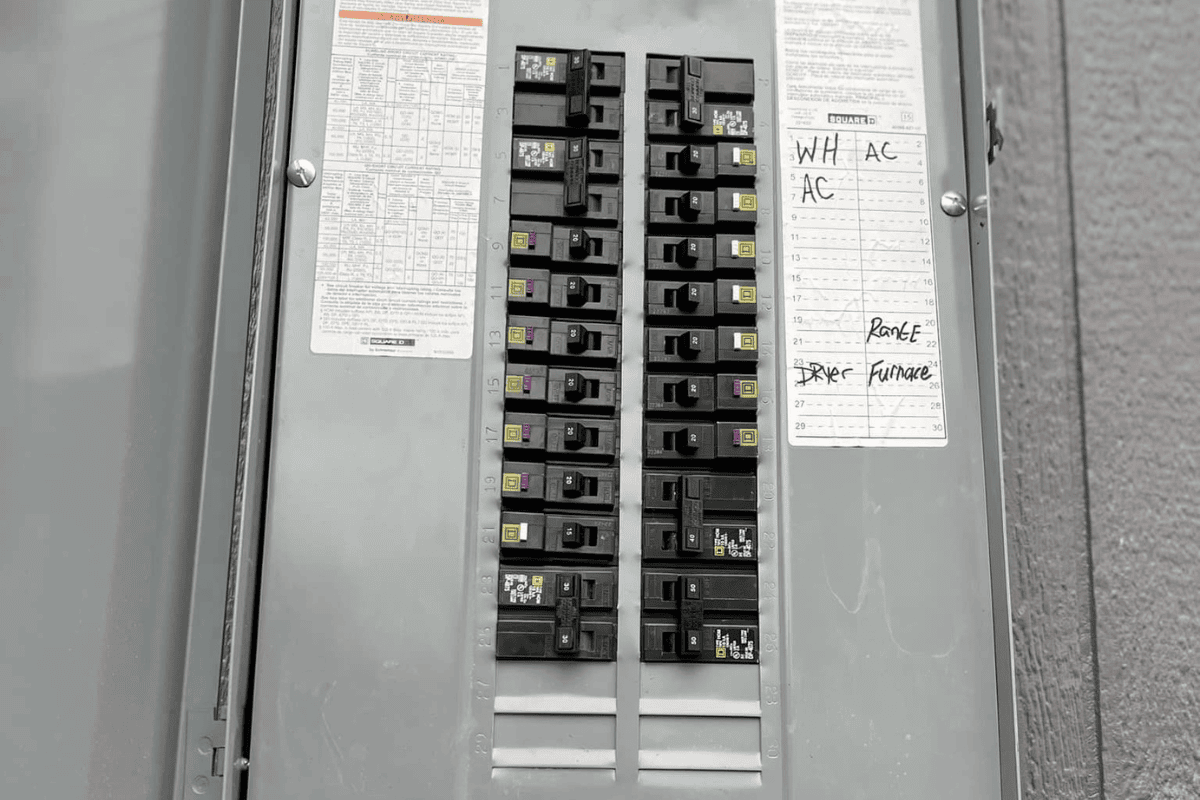
The first issue is proper circuit loading. Adding multiple high-output fixtures to an existing circuit can overload it, creating a fire hazard. A licensed electrician knows how to calculate loads, determine if new circuits are needed, and ensure your electrical panel can handle the additional demand safely. Getting this wrong isn’t just inconvenient, it’s dangerous.
Code compliance matters more than most people realize. Electrical codes exist to prevent fires, shocks, and other hazards. They specify everything from wire gauge and conduit requirements to proper grounding and fixture ratings. DIY installations that ignore these requirements can void your homeowner’s insurance. If something goes wrong and the insurance company discovers non-compliant electrical work, they can deny your claim entirely.
Proper placement requires experience. Where you think a light should go and where it actually needs to be for effective coverage are often different. Professional electricians who’ve done security lighting installation across Taylor County, Callahan County, Eastland County, and Jones County have seen what works and what doesn’t. We know how to eliminate blind spots, avoid glare problems, and position fixtures for maximum deterrent effect.
Weather resistance is critical in Texas. Fixtures need proper sealing, appropriate enclosures, and correct mounting to handle rain, wind, and temperature extremes. Professional installation ensures connections are weatherproof and fixtures are secured properly so they don’t fail when you need them most.
Then there’s the liability issue. If you do the work yourself and something goes wrong, a fire, an injury, property damage, you’re fully responsible. Professional electricians carry insurance that protects you if problems occur during or after installation. That protection has real value, especially when you’re talking about permanent electrical modifications to your property.
The most important consideration is getting it right the first time. Poor placement, inadequate wiring, or incompatible fixtures waste money and leave gaps in your security coverage. Professional installation ensures your lighting system works reliably when you need it and continues operating safely for years to come. For something as important as protecting your property and family, that expertise is worth having.
Creating a Security Lighting Plan That Actually Protects Your Property
Effective security lighting installation comes down to strategy, not just brightness. You need the right fixtures in the right places, installed correctly and integrated with your overall security approach. Motion sensor lights at entry points, strategic floodlight placement that eliminates dark spots, and LED technology that delivers performance without breaking your monthly budget, these elements work together to make your property a harder target.
The difference between a system that deters intruders and one that just wastes electricity is professional planning and installation. Understanding your property’s vulnerabilities, choosing appropriate fixtures, and ensuring code-compliant electrical work protects your investment and your family.
If you’re ready to address security lighting for your property in Taylor County, Callahan County, Eastland County, or Jones County, we bring licensed, code-compliant work to every installation. Our licensed electricians understand what works in Texas conditions and how to create lighting systems that actually provide the protection you’re looking for.