Summary:
You flip a switch. The lights flicker. You plug in your phone charger and the outlet feels warm. Maybe you’ve noticed a faint burning smell near a wall outlet but can’t quite place where it’s coming from.
These aren’t quirks. They’re warnings. And ignoring them is how small electrical issues turn into house fires, failed inspections, or emergency service calls that cost three times what a simple repair would have.
The truth is, most homeowners in Callahan County, Eastland County, Jones County, and Taylor County don’t realize how serious faulty outlets and switches can be until something goes wrong. By then, the damage is done. This guide breaks down the five warning signs that mean your outlet and switch repair can’t wait, and what we look for when things start going sideways.
What Causes Outlets and Switches to Fail
Outlets and switches aren’t designed to last forever. Every time you plug something in or flip a switch, you’re creating a connection that generates heat and wear. Over time, that wear adds up.
The wiring behind your walls loosens. The metal contacts inside the outlet start to degrade. The plastic housing cracks from years of temperature changes. And if your home was built more than 20 years ago, there’s a good chance your electrical system wasn’t designed to handle the load you’re putting on it today.
Older homes in Taylor County often have wiring that was perfectly fine for a few lamps and a television. But now you’re running laptops, phone chargers, kitchen appliances, HVAC systems, and smart home devices all at once. That’s when loose wall outlets, flickering lights, and warm faceplates start showing up. It’s not always dramatic. Sometimes it’s just a plug that doesn’t fit as snugly as it used to. But behind that loose outlet could be a connection that’s arcing, overheating, and slowly turning into a fire hazard.
Sign 1: Flickering Lights When You Use Certain Outlets or Switches
Flickering lights aren’t charming. They’re a red flag. When your lights dim or flicker every time you plug something in or flip a switch, it usually means there’s a loose connection somewhere in the circuit.
That loose connection creates resistance. Resistance creates heat. And heat is what starts electrical fires. It’s not always the bulb. It’s not always the fixture. A lot of times, it’s the wiring behind the switch or outlet that’s failing.
This happens more often in older homes where the wiring has been in place for decades. Thermal expansion and contraction, basically, the wiring heating up and cooling down over and over, causes connections to loosen. Once that happens, electricity doesn’t flow smoothly. It jumps. It arcs. And that’s when you start seeing lights flicker.
If the flickering is isolated to one room or one switch, the problem is likely localized to that circuit. But if it’s happening throughout the house, especially when you turn on large appliances like your air conditioner or microwave, you could be dealing with a bigger issue at the electrical panel or even the main service connection. Either way, it’s not something you want to ignore.
We can trace the circuit, test the connections, and figure out whether you need a simple outlet replacement or something more involved like rewiring or a panel upgrade. The longer you wait, the more likely that loose connection turns into a burned wire, a tripped breaker, or worse, a fire behind your wall.
Sign 2: Outlets That Feel Warm or Hot to the Touch
Your outlets should never feel warm. If you touch an outlet and it’s hot, that’s a serious problem. It means something inside that outlet, or in the wiring behind it, is generating more heat than it should.
Overheating outlets are one of the leading causes of electrical fires. The heat usually comes from one of three things: a loose connection, an overloaded circuit, or damaged wiring. All three are dangerous.
Loose connections create resistance, and resistance generates heat. If the wires aren’t tightly secured to the outlet terminals, electricity has to work harder to flow through. That extra work creates friction, and friction creates heat. Over time, that heat can melt the plastic housing, char the wires, and ignite nearby materials like insulation or drywall.
Overloaded circuits happen when you’re drawing more power through an outlet than it was designed to handle. This is common in older homes where people are using power strips and extension cords to make up for a lack of outlets. The problem is, those outlets were never meant to carry that much load continuously. Eventually, the circuit overheats.
Damaged wiring is harder to spot because it’s hidden behind the wall. But if the insulation on the wires has deteriorated, whether from age, pests, or poor installation, the wires can short out or arc, generating dangerous levels of heat.
If an outlet feels warm even when nothing is plugged into it, that’s an immediate sign that something is wrong with the wiring or the circuit. Don’t use it. Turn off the breaker to that outlet and give us a call. This isn’t a DIY fix. You need someone who can safely diagnose the problem, trace the wiring, and make the necessary repairs before that heat turns into a fire.
In Callahan County, Eastland County, Jones County, and Taylor County, homes built in the 70s, 80s, and 90s are especially prone to this issue because of outdated wiring methods and materials that don’t hold up as well over time. A professional electrical repair doesn’t just fix the outlet, it addresses the root cause so the problem doesn’t come back.
Loose Wall Outlets and What They Really Mean
A loose outlet might seem like a minor annoyance. You wiggle the plug to get it to stay in. You avoid using that outlet because it doesn’t grip anymore. But what you’re actually dealing with is a safety hazard that gets worse every time you use it.
Loose outlets happen for a few reasons. Sometimes the outlet itself is worn out. The metal contacts inside lose their tension over time, especially if you’ve been plugging and unplugging things frequently. Other times, the outlet isn’t secured properly to the electrical box in the wall, so it shifts and moves when you try to use it.
But the bigger issue is what’s happening behind the outlet. When an outlet is loose, the wiring connections can also be loose. And loose wiring is one of the top causes of electrical fires. Every time that loose connection arcs or heats up, it’s degrading the wire and increasing the risk of a short circuit or fire.
Sign 3: Plugs That Fall Out or Don't Fit Snugly
If your plugs fall out easily or don’t stay in place, that outlet is worn out. The metal contacts inside the outlet are supposed to grip the prongs of the plug tightly. When they don’t, it creates a weak connection.
Weak connections cause resistance. Resistance causes heat. And heat causes fires. It’s a chain reaction that starts with something as simple as a plug that doesn’t fit right.
This is especially common in high-use outlets, like the ones in your kitchen, living room, or home office. Every time you plug something in and pull it out, you’re wearing down those contacts a little bit more. Eventually, they lose their grip entirely.
But here’s the part most people don’t realize: if the front of the outlet is worn out, there’s a good chance the back is too. A lot of outlets installed in the 70s, 80s, and 90s used a wiring method called “backstabbing,” where the wires are pushed into holes in the back of the outlet instead of being wrapped around screw terminals. It’s faster to install, but it’s also less secure.
Over time, those backstab connections loosen. When they do, the outlet stops working properly. You might notice flickering lights nearby, or the outlet might only work intermittently. Worse, that loose connection can start arcing inside the wall, where you can’t see it.
We can replace worn-out outlets with new ones that use screw terminal connections, the safer, more reliable method. We’ll also inspect the wiring behind the outlet to make sure there’s no heat damage or other issues that could cause problems down the road. It’s a small repair that makes a big difference in your home’s safety.
If you’re in Taylor County, Callahan County, Eastland County, or Jones County and you’ve got outlets where plugs don’t stay in, don’t wait until the outlet stops working completely. Get it checked. It’s a quick fix now, but it could save you from a much bigger problem later.
Sign 4: Burning Smell or Discoloration Around Outlets and Switches
If you smell burning plastic or rubber near an outlet or switch, stop using it immediately. That smell is one of the clearest warning signs of an electrical fire hazard. It means something inside the outlet or behind the wall is overheating.
Burning smells usually come from melting insulation, overheated wires, or arcing connections. All three are dangerous. The smell might be faint at first, just a whiff of something off when you walk past a certain wall. But that faint smell is telling you that heat is building up somewhere it shouldn’t be.
Discoloration is another major red flag. If you see brown, black, or charred marks around an outlet or switch, that’s evidence of arcing or overheating. Arcing happens when electricity jumps across a gap between two wires or contacts. It’s like a tiny welder inside your wall, generating temperatures hot enough to melt plastic and ignite nearby materials.
Discolored outlets don’t fix themselves. The damage has already been done. Even if the outlet still works, the wiring behind it could be compromised. The plastic housing could be brittle and cracked. The metal contacts could be corroded. Using that outlet again could make the problem worse.
This is where we become essential. We can open up the outlet, inspect the wiring, check for heat damage, and determine whether the problem is isolated to that one outlet or if it’s part of a larger issue with the circuit. Sometimes the fix is as simple as replacing the outlet. Other times, it requires rewiring that section of the circuit or upgrading the electrical panel to handle the load properly.
In older homes across Callahan County, Eastland County, Jones County, and Taylor County, burning smells and discoloration are often signs of outdated wiring that can’t keep up with modern electrical demands. Aluminum wiring, cloth-insulated wiring, and knob-and-tube wiring are all common in homes built before 1980, and they’re all more prone to overheating and failure than modern copper wiring.
If you notice a burning smell or see discoloration, don’t plug anything else into that outlet. Turn off the breaker to that circuit if you can do so safely. And give us a call right away. This is not a wait-and-see situation. It’s an active fire hazard that needs to be addressed immediately.
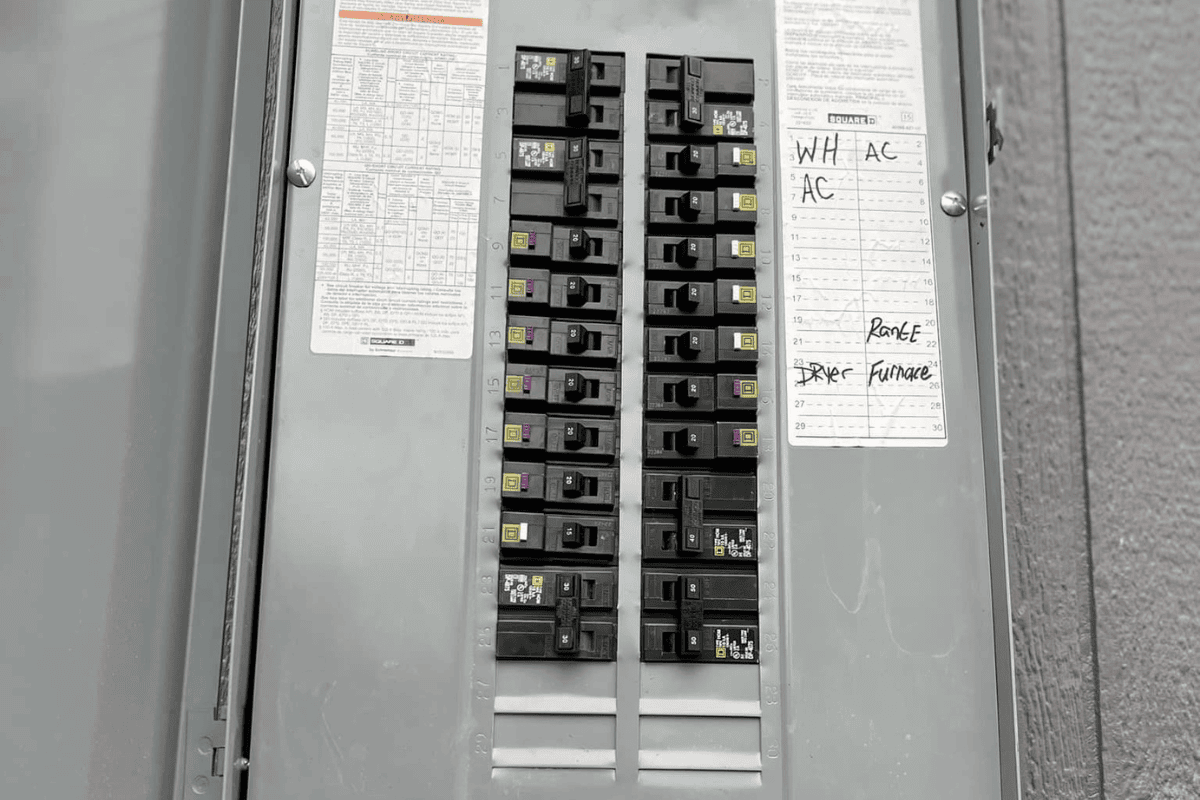
Circuit breakers are designed to protect you. When they trip, they’re doing their job, cutting off power to prevent overheating, overloading, or short circuits. But if a breaker trips once and stays on after you reset it, that’s normal. If it keeps tripping every time you use a certain outlet, that’s a problem.
Repeated tripping means the circuit is either overloaded or there’s a fault somewhere in the wiring. Overloading happens when you’re trying to draw more power through the circuit than it can handle. This is common in kitchens, garages, and home offices where multiple high-wattage devices are plugged into the same circuit.
But if you’re not overloading the circuit and the breaker still trips, the issue is likely with the outlet itself or the wiring behind it. Loose connections, damaged wires, or faulty outlets can all cause short circuits that trip the breaker. And every time that breaker trips, it’s because something dangerous is happening, heat is building up, electricity is arcing, or the circuit is on the verge of failure.
Some homeowners try to solve this by replacing the breaker with a higher-amp version. That’s dangerous. Breakers are sized to match the wiring in your home. If you put in a breaker that’s too large, it won’t trip when it should, and you’ll end up with overheated wires and potential fire hazards.
The right solution is to have us diagnose why the breaker is tripping. We’ll test the circuit, inspect the outlets, check the wiring, and determine whether you need outlet and switch repair, circuit rewiring, or an additional circuit to handle the load. It’s not about making the breaker stop tripping, it’s about fixing the underlying problem so your electrical system works safely.
In Callahan County, Eastland County, Jones County, and Taylor County, older homes often have circuits that were designed for much lower electrical loads than what modern households demand. Adding a dedicated circuit for high-use areas like kitchens or home offices is often the best long-term solution. We can assess your needs and make sure your electrical system is up to code and capable of handling your daily usage without tripping breakers or creating fire hazards.