Summary:
What Makes Motion-Sensor Security Lighting Different
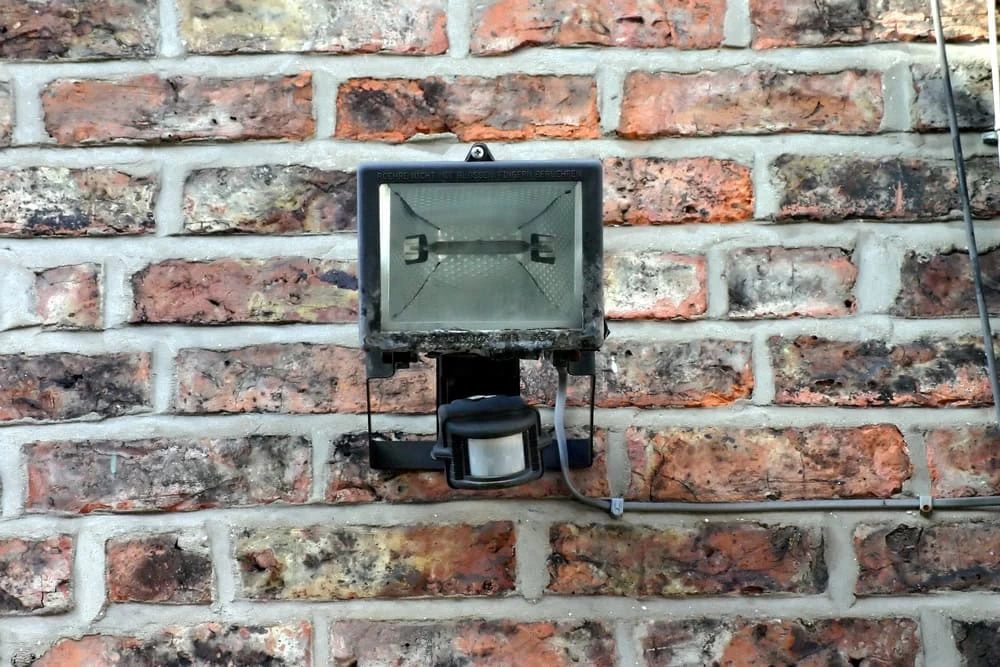
Motion-sensor security lighting only activates when it detects movement within its range. Unlike traditional security lights that stay on from dusk to dawn, these systems use passive infrared (PIR) sensors to detect heat signatures from people, vehicles, or animals.
When something moves within the detection zone, typically 70 feet with a 180-degree angle, the lights instantly illuminate. After a preset time with no movement, they turn off automatically. This simple difference creates massive advantages for rural property owners in Eastland County, TX and beyond who need to cover large areas without running up electric bills.
The technology has gotten remarkably sophisticated. Modern systems can distinguish between a person walking up your driveway and a branch swaying in the wind, reducing false triggers while maintaining reliable security coverage.
How Motion Sensors Work on Large Rural Properties
Understanding how motion-sensor security lighting works helps you see why it’s so effective for rural applications. The system relies on PIR sensors that monitor infrared radiation, essentially, heat. Every living thing emits infrared energy, and when that energy moves through the sensor’s field of view, it triggers the light.
For rural properties in Callahan County, Eastland County, Jones County, and Taylor County, this means you can cover critical areas without constant illumination. Your main entrance, driveway, barn, equipment storage, and outbuildings all get protection, but the lights only run when they’re actually needed.
The sensor range matters significantly. A 70-foot detection range with 180-degree coverage can monitor a substantial area from a single fixture. If you have a long driveway, you might need multiple lights positioned strategically to create overlapping coverage. For properties with multiple access points, common in rural settings, this approach provides comprehensive security without leaving dark gaps.
Installation placement is critical for residential security lighting systems. Mounting height affects detection range and reduces false triggers. Most professionals recommend installing motion-sensor lights at least 7 to 10 feet high, angled to cover the approach paths rather than pointing straight down. This gives you maximum coverage while minimizing activation from small animals or blowing debris.
The sensitivity settings let you fine-tune performance. If you’re getting too many false triggers from wildlife, you can adjust the sensitivity. If the lights aren’t catching movement far enough out, you can increase it. This flexibility makes motion sensors adaptable to your specific property layout and security needs.
Weather resistance is non-negotiable for outdoor installations in Texas. Look for fixtures with at least an IP65 rating, which means they’re completely dust-proof and can handle water jets from any direction. Texas weather throws everything at outdoor equipment, intense sun, heavy rain, occasional ice, and your home security lighting needs to handle it all without failing.
Energy Savings That Actually Make a Difference
Here’s where motion-sensor security lighting really separates itself from traditional options. Rural properties need extensive coverage. If you’re lighting up your driveway, barn, shop, house perimeter, and equipment storage with lights that run all night, you’re looking at serious electricity costs.
Motion sensors cut that expense dramatically. Motion-sensor lighting uses less energy than all-night systems because the lights only run when they are triggered. For a rural property with 10 to 15 security lights, that adds up over a year.
The math is straightforward. A traditional 100-watt incandescent bulb left on for 12 hours nightly burns about 36.5 kilowatt-hours per month. A comparable LED motion sensor light, activated for only a few minutes daily, might consume just 1 to 2 kilowatt-hours monthly. Multiply that across multiple fixtures, and the savings add up fast.
LED technology amplifies these savings. LEDs use up to 90% less energy and last up to 25 times longer than incandescent bulbs, according to the U.S. Department of Energy. You’re not just saving on electricity; you’re also cutting down on replacement costs and maintenance time.
For commercial agricultural operations and commercial security lighting needs in Taylor County, TX, these savings can significantly impact operating costs. When you’re managing tight margins on a farm or ranch, every dollar counts. Switching from all-night lighting to motion-activated systems reduces utility bills month after month.
The environmental benefit matters too. Lower energy consumption means reduced carbon emissions and less strain on the electrical grid. For property owners who value sustainability alongside security, motion-sensor lighting delivers on both fronts.
Security Benefits for Rural Properties
Security lighting serves one primary purpose: making your property less appealing to criminals and more visible to you and your neighbors. Motion-sensor systems excel at both.
The startle effect is real. When someone approaches your property and a bright light suddenly floods the area, it creates an immediate psychological impact. Would-be intruders know they’ve been detected. That split-second of surprise often sends them looking for an easier target.
Research supports the link between lighting and crime. A randomized study of street lighting in New York City found at least a 36 percent drop in nighttime outdoor crimes where lights were added (Chalfin and colleagues, 2019). For rural properties in Jones County, TX and surrounding areas, where law enforcement may be many miles away, that deterrence factor becomes even more critical. Motion-activated outdoor security lighting creates a visible barrier that works 24/7, even when you’re asleep or away from the property.
Why Rural Properties Face Higher Security Risks
Rural property owners deal with security challenges that suburban and urban residents rarely face. You’re isolated. Help isn’t around the corner. And criminals know it.
Farm and ranch properties are common targets for crime. Theft of machinery, equipment, and livestock tops the list, along with trespassing, vandalism, and illegal dumping. The vast size and remote locations of rural properties make them appealing targets because criminals can work without being observed.
Your nearest neighbor might be a quarter-mile away or more. There’s no street traffic. No casual observers walking dogs. When something happens on your property at 2 AM, you’re on your own until help arrives. Motion-sensor security lighting creates a visible deterrent that works even when you’re asleep or away.
The isolation cuts both ways. While it provides privacy and space, it also means criminals face less risk of being spotted. Well-placed motion-sensor lights eliminate dark hiding spots and create the illusion that someone is actively monitoring the property. Many systems can also integrate with security cameras, automatically triggering recording when the lights activate.
Equipment theft is particularly problematic across Callahan County, TX and the surrounding region. Tractors, ATVs, tools, and machinery represent significant investments. Storing them in illuminated areas, or areas that light up when approached, makes theft much more difficult and risky for criminals. The same principle applies to livestock. Motion-activated lights near barns and pastures can alert you to unusual activity and deter predators, both two-legged and four-legged.
Trespassing is another common issue. Hunters, off-roaders, and others may wander onto your property without permission. Motion-sensor lighting at gates, property lines, and access roads makes it clear that the area is monitored and occupied. It’s a non-confrontational way to establish boundaries and discourage unauthorized entry.
Coverage Strategies for Large Properties
Covering a rural property with security lighting requires strategy. You can’t just throw up a few lights and call it done. You need to think about access points, vulnerable areas, and how to create overlapping coverage without gaps.
Start with your primary access points. Your main driveway or entrance road should be well-lit when vehicles approach. This serves dual purposes: security and convenience. Coming home after dark on a long driveway is much safer when motion-sensor lights guide your way. For guests or delivery drivers, it eliminates the fumbling-in-the-dark experience.
Outbuildings need attention. Barns, shops, equipment storage, and garages are common targets for theft. Placing motion-sensor lights at entry points, doors, roll-up doors, and windows, creates a protective perimeter. If someone approaches these structures, the lights activate, alerting you and potentially scaring off the intruder.
The house perimeter is your inner ring of security. Motion sensors at front and back doors, garage entries, and ground-floor windows catch anyone attempting to approach the house itself. This layer works in combination with your outer security (driveway and outbuildings) to create defense in depth.
Consider sight lines from your house. If you can see the lights activate from a bedroom window or living area, you’ll know immediately when something triggers them. This real-time awareness lets you assess the situation and respond appropriately, whether that means checking a security camera feed, turning on additional lights, or calling for help.
Combination approaches often work best for rural properties. You might use motion sensors for high-traffic areas like driveways and main entrances, while using dusk-to-dawn lights for perimeter security or areas requiring consistent illumination. Some property owners also use hi/low combination systems, which maintain a low-intensity light throughout the night and brighten to full power when motion is detected. This hybrid approach balances constant visibility with energy efficiency and the startle effect of sudden bright light.
Don’t forget about dark corners and blind spots. Walk your property at night and identify areas where someone could approach undetected. These are your priority locations for motion-sensor coverage. Gates, fence lines, and property boundaries also benefit from strategic lighting, especially if you’ve had issues with trespassing or illegal dumping.
Professional Security Lighting Installation in Taylor County
Motion-sensor security lighting isn’t just about keeping the bad guys away. It’s about creating a safer, more convenient, and more efficient environment for your daily life on a rural property. The energy savings alone often justify the investment, and the added security and convenience make it a clear winner over traditional all-night lighting systems.
If you’re ready to upgrade your outdoor security lighting in Callahan County, Eastland County, Jones County, or Taylor County, working with experienced local electricians makes all the difference. Proper security lighting installation, strategic placement, and quality fixtures ensure your system performs reliably for years to come.
We’ve been serving rural properties across the Taylor County, TX area with professional electrical solutions. Our licensed electricians understand the unique challenges of securing large properties and can design a motion-sensor lighting system that fits your specific needs and budget.