Summary:
Most homeowners don’t think about their electrical panel until something goes wrong. A breaker trips for the third time this week. The lights flicker when the AC kicks on. An electrician tells you the panel can’t support the EV charger you just bought. Suddenly, a piece of equipment tucked in your utility room becomes a very urgent problem. This guide is for Taylor County homeowners who are somewhere in that process — not sure what they need, not sure what it costs, and not sure who to call. We’ll walk you through all of it.
Electrical Panel Repair vs. Replacement: How to Know Which One You Actually Need
Not every electrical problem requires a full panel replacement. Sometimes a single faulty breaker is the culprit, and swapping it out is a straightforward repair. But if your panel is more than 25 years old, frequently tripping, running hot to the touch, or simply doesn’t have enough circuits for your home’s current load, repair is usually a short-term fix on a long-term problem.
The honest answer is that a licensed electrician needs to assess your specific setup before anyone can tell you which direction makes sense. What we can tell you is that a panel replacement isn’t as disruptive as most people expect — and in many cases, it’s the more cost-effective choice over repeated repairs on aging equipment.
Residential Electrical Panel Basics: What's Actually Inside That Box
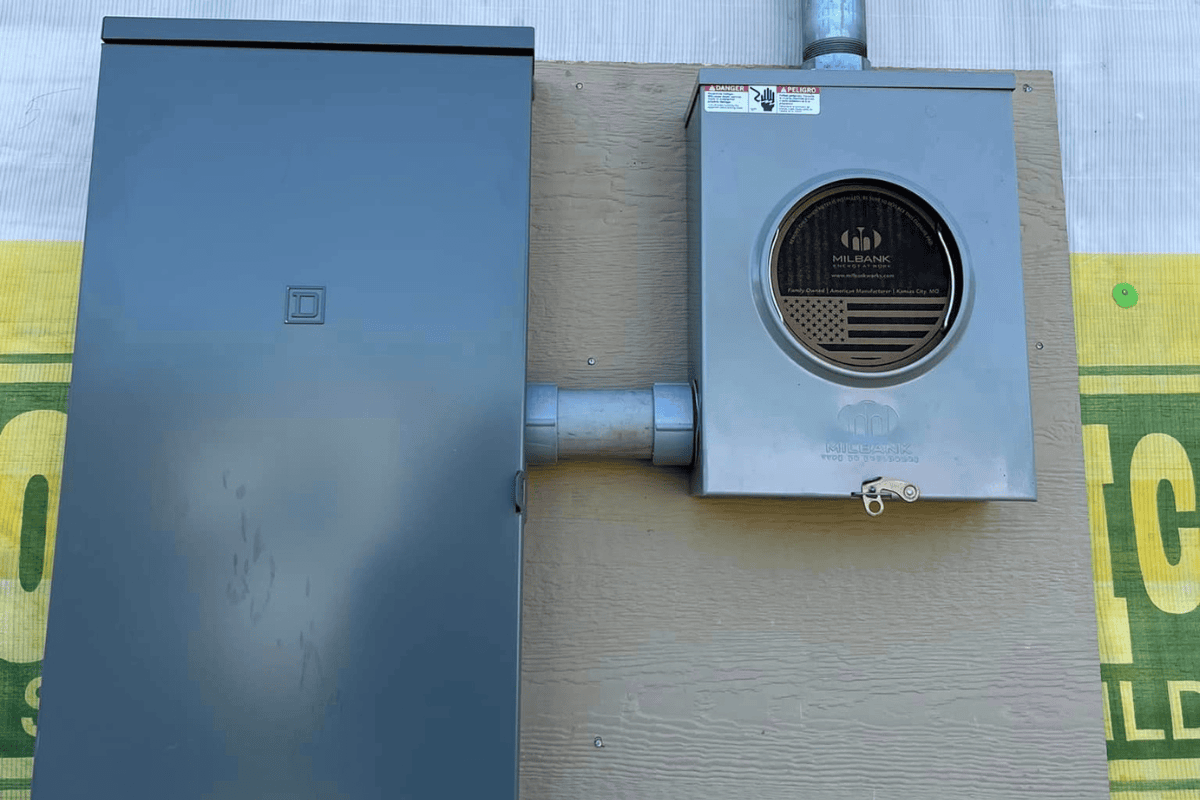
Your residential electrical panel — also called a breaker box or service panel — is the central hub that receives power from the utility and distributes it to every circuit in your home. Each circuit breaker inside the panel is designed to trip and cut power if a circuit draws more current than it’s rated for. That’s a safety feature, not a flaw. The problem is when a panel is undersized for the home’s actual electrical demand, those breakers start tripping constantly because the system is genuinely overloaded — not just occasionally stressed.
In Taylor County, a significant portion of the housing stock was built between the 1950s and 1990s, when 100-amp service was the standard. At the time, that was more than adequate. Homes had a refrigerator, a few lights, maybe a window unit. Today, those same homes are running central HVAC systems, electric ranges, dishwashers, multiple large televisions, home offices, and in many cases, EV chargers or smart home systems. A 100-amp panel simply wasn’t designed for that.
Modern panels also include safety features that older equipment lacks entirely. Arc fault circuit interrupters (AFCIs) detect dangerous arcing in wiring before it causes a fire. Ground fault circuit interrupters (GFCIs) cut power instantly when a ground fault is detected near water. These aren’t optional extras — they’re required under the current National Electrical Code for most residential applications. If your panel predates these requirements, it’s not just outdated. It’s operating without protections that current code considers essential.
Signs Your Old Electrical Panel Is Telling You Something
Panels don’t usually fail all at once. They give you signals first — and most homeowners either miss them or assume they’re normal. Breakers that trip repeatedly, especially under normal household loads, are one of the clearest signs. A burning smell near the panel, scorch marks around breakers, or a panel that’s warm to the touch are more serious warning signs that shouldn’t wait.
If your home still has a fuse box rather than a circuit breaker panel, that’s its own category of concern. Fuse boxes aren’t inherently dangerous, but they can’t support modern electrical loads safely, and they lack the protective features required by current code. Insurance companies are increasingly reluctant to cover homes with fuse-based systems, and some will outright deny coverage or raise premiums significantly.
For Taylor County homeowners specifically, the summer heat adds another layer of urgency. When temperatures stay above 100°F for weeks at a stretch — which is a normal August in Abilene — your HVAC system runs almost continuously. That sustained load puts real stress on an aging panel. We’ve seen panels that held on through mild springs give out entirely once the heat arrived. If your system is already marginal, a West Texas summer will find its limits faster than almost anything else.
Electrical Panel Upgrade Cost: What Taylor County Homeowners Should Expect to Pay
Cost is almost always the first question, and it’s a fair one. Nationally, most homeowners pay somewhere between $1,300 and $3,000 for a standard panel upgrade from 100 to 200 amps, though the full range — depending on scope, panel location, and whether additional work is needed — can run from $800 to well over $4,000.
What actually drives cost is the scope of the project. A straight panel-for-panel swap is simpler and less expensive than a full service upgrade that involves replacing the meter base, service entrance cable, and grounding system. Permits are also part of the picture — Texas requires them for panel work, and they typically add $100 to $500 depending on the jurisdiction.
Electrical Panel Upgrade Cost by Amperage: 100, 200, and 400 Amp Compared
The most common upgrade in Taylor County is from a 100-amp breaker box to a 200-amp panel. For most single-family homes, 200-amp service is more than sufficient to handle today’s electrical demands — including central HVAC, a modern kitchen, home office equipment, and standard appliances. The cost for this upgrade typically falls between $1,800 and $4,500, depending on whether it’s a panel-only replacement or a full service upgrade from the utility connection down.
A 400-amp panel is a different conversation. It’s appropriate for larger homes with multiple HVAC systems, whole-home generators, multiple EV chargers, or extensive solar installations. The cost for a 400-amp upgrade — especially if it involves relocating the panel or substantial rewiring — can reach $8,000 to $12,000. Most residential customers in the Abilene area don’t need 400-amp service, but it’s worth having the conversation if you’re planning significant additions to your home’s electrical load.
What we always recommend before quoting any panel upgrade is a proper load calculation. That’s the only way to determine what amperage your home actually needs — not what sounds like enough, not what your neighbor has, but what your specific home’s current and future electrical demand requires. Oversizing a panel wastes money. Undersizing it means you’ll be back in the same situation in a few years.
200 Amp Panel Upgrade Cost and What the Process Looks Like
A standard 200-amp panel upgrade typically takes six to ten hours and is completed in a single day. There will be a temporary power shutdown while the work is done — usually a few hours — which is worth planning around if you work from home or have medical equipment that requires power. Beyond that, the disruption is minimal. In most cases, walls don’t need to be opened, and your existing branch circuit wiring stays in place unless there’s a separate issue with it.
Here’s what the process actually involves: we start by assessing your current setup and confirming the right panel size for your home. We pull the required permit with the local authority — this is non-negotiable, and any contractor who suggests skipping it is not someone you want working on your electrical system. We coordinate the temporary power shutoff with the utility, remove the old panel, install the new one with properly sized and labeled breakers, verify grounding and bonding, install required AFCI and GFCI breakers per the 2023 National Electrical Code, and add whole-house surge protection, which is now required when upgrading electrical service under updated NEC standards.
After the installation, we walk you through everything — what was done, how to operate any new equipment, and what each circuit controls. We don’t consider the job finished until you understand your system and are satisfied with the work. Once the permit inspection is passed, you have documentation that the work was done correctly and to code, which matters for insurance purposes and for any future home sale.
Texas adopted the NEC 2023 Edition as the statewide standard in September 2023, and the 2026 NEC adoption is already scheduled. Working with a TDLR-licensed electrician means your upgrade will meet current code — not the standards from a decade ago.
Finding the Right Electrical Service Contractors in Taylor County, TX
The most important thing you can do before hiring anyone to touch your electrical panel is verify their TDLR license. In Texas, panel work requires a licensed electrician — full stop. Unlicensed work can void your homeowner’s insurance, fail inspection, and create real safety hazards. Beyond licensing, look for a contractor who pulls permits, gives you a flat-rate quote before starting, and actually shows up when they say they will. That last one sounds obvious, but it’s a genuine problem in this market.
We’re based in Merkel and have been serving Taylor County homeowners and businesses for years. If your panel is giving you trouble — or you’re planning an upgrade for a new appliance, EV charger, or solar system — we’ll come out, assess your setup, and give you a straight answer on what it will cost and what it will take. No vague estimates, no surprise charges mid-job.
Call Hooked Up Electric at 325-660-4493 to schedule your free estimate. We’ll tell you exactly what you need — and exactly what it’s going to cost.