
Summary:
Most homeowners pay $900 to $2,400 to have a whole house fan installed, and both HomeAdvisor and Angi put the national average at about $1,700. Fixr’s range runs a little higher, $900 to $2,600. The fan type, the size of the home, how much attic venting has to be added, and the wiring all move the final number. These are national ranges for budgeting, not a quote.
A whole house fan pulls cooler outside air in through open windows and pushes warm indoor air up into the attic and out through the attic vents. On the right nights it can flush the heat out of a house quickly and let you give the air conditioner a rest. The catch is that it is not a simple appliance swap. It needs a ceiling opening, enough attic vent area to let the air escape, and a properly wired circuit with a switch or timer.
This guide gathers the published national cost ranges and the safety and climate points that decide whether a fan is worth it. Hooked Up Electric is a licensed Texas electrical contractor with offices in Abilene, San Angelo, Midland, and Lubbock.
Whole House Fan Installation Cost at a Glance (2026)
Here is how the major cost guides price the job, with materials and labor included unless noted.
| Item | Published range | Source |
|---|---|---|
| Whole house fan, installed (typical) | $900 to $2,400, average about $1,700 | HomeAdvisor, Angi |
| Whole house fan, installed (wider range) | $900 to $2,600, typical about $1,700 | Fixr |
| Basic model, simple install | As little as $800 | HomeAdvisor |
| Variable speed system with smart controls | Up to $3,600 | HomeAdvisor |
| Installation labor | $300 to $1,000 | HomeAdvisor, Fixr, Angi |
| Electrician rate | $50 to $130 an hour, usually 1 to 2 hours | Fixr |
| Added roof or attic ventilation | $300 to $650 | HomeAdvisor, Fixr |
| Drywall repair | $60 to $90 per panel | HomeAdvisor, Angi |
| Electrical permit | $10 to $500, depending on location | HomeAdvisor |
Why the ranges differ. Each guide builds its numbers from its own project data and quotes, so the edges of the ranges do not line up exactly. They agree on the middle: a typical installed fan lands near $1,700. The big swings come from the type of fan, whether the attic already has enough vent area, whether a ceiling joist has to be modified, and whether there is a usable circuit near the fan location or a new one has to be run from the panel.
Fan Types and What They Cost
Whole house fans come in a few basic designs, and the design sets much of the price.
- Direct mounted (ceiling mounted). The fan sits right above a grille in the hallway ceiling. Angi puts the average at about $1,700, and Fixr lists $1,400 to $2,000. This is the classic design, and older units of this type can be loud.
- Ducted. The fan sits away from the ceiling grille in the attic, connected by a duct that helps cut noise. Fixr lists $1,800 to $2,400, plus $300 to $1,200 for ductwork. Angi puts the average near $2,000.
- Roof mounted. Fixr lists $1,800 to $2,400, and Angi averages about $2,000. HomeAdvisor notes these may need a roofer as well as an electrician.
- Wall mounted. Angi averages about $1,600 for this less common setup.
The motor matters too. For the fan alone, Fixr lists direct drive motors at $350 to $900 and belt drive motors at $500 to $1,200. HomeAdvisor’s equipment ranges are similar, $350 to $900 for direct drive and $500 to $1,000 for belt drive. Variable speed fans cost more up front; HomeAdvisor says a system with smart features can reach $3,600 installed.
Sizing: The Main Cost Driver
Bigger homes need more airflow, measured in cubic feet per minute (CFM), and more airflow costs more. HomeAdvisor’s installed ranges by home size:
| Home size | Suggested airflow | Installed range |
|---|---|---|
| 1,500 sq ft | 6,000 CFM | $800 to $1,800 |
| 2,000 sq ft | 8,000 CFM | $900 to $2,000 |
| 2,500 sq ft | 10,000 CFM | $1,000 to $2,200 |
| 3,000 sq ft | 12,000 CFM | $1,100 to $2,400 |
Sizing is not only about square footage. The U.S. Department of Energy suggests a fan that moves the air in the house 15 to 23 times an hour, depending on climate, floor plan, and how much you plan to rely on the fan. The Building America Solution Center, run by Pacific Northwest National Laboratory for the Department of Energy, works that out to roughly 1.5 to 3 CFM per square foot of floor area for 8 foot ceilings, and recommends comparing fans by their HVI certified airflow rating rather than the advertised number. Higher ceilings mean more air volume, so a larger fan.
The Department of Energy also notes that a large fan on low speed is generally quieter than a small fan on high.
Venting, Wiring, and Safety
Two things make or break a whole house fan installation: where the air goes, and how the fan is powered.
Attic vent area. All the air the fan moves has to leave through the attic vents. The Department of Energy says attic vent area usually has to grow to 2 to 4 times the normal amount, and gives a rule of thumb of about 1 square foot of net free vent area for every 750 CFM of fan capacity. The Building America guide adds that screens and louvers cut net free area by about half, so a screened vent needs about 2 square feet of total area per 750 CFM. Too little vent area reduces airflow and can push hot attic air back into the house. When vents have to be added, HomeAdvisor and Fixr both put that work at $300 to $650.
Gas appliances and backdrafting. This is the safety point that matters most. The Department of Energy warns that without enough open windows the fan can backdraft a furnace, water heater, or gas dryer and pull carbon monoxide into the living space. The Building America guide recommends a switch that keeps the fan and furnace from running at the same time where a furnace without a standing pilot is present. Always open windows before you turn the fan on.
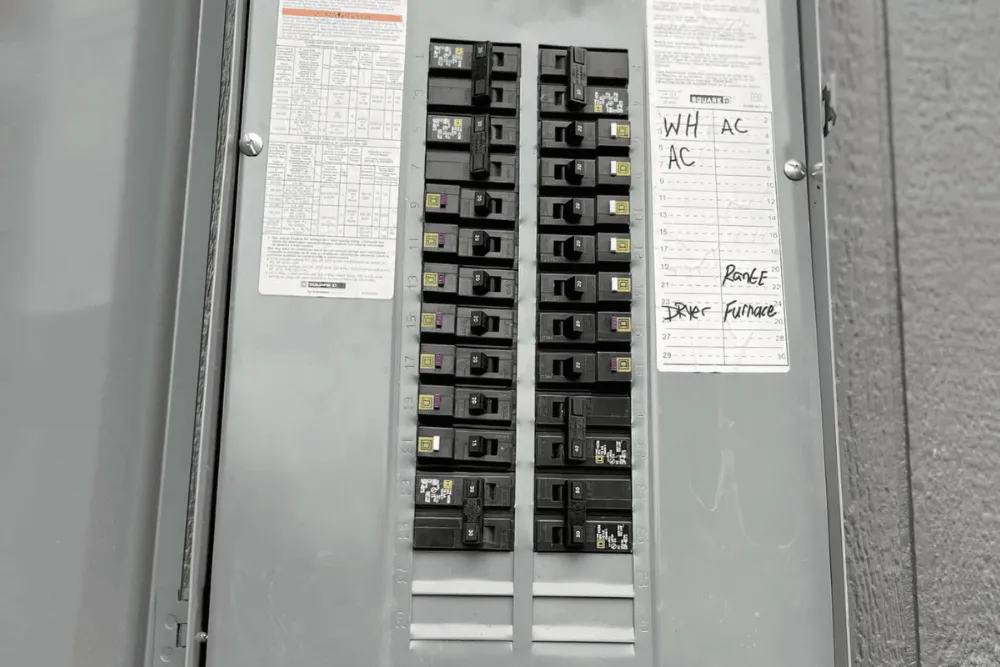
Wiring. The Department of Energy says a professional installer wires a dedicated circuit for the fan, and the Building America guide says to confirm a circuit is available before installation and to wire the fan and its controls to the manufacturer’s instructions. In practice that means a licensed electrician checks the panel for space and capacity, runs the circuit to the attic, and installs the wall switch, speed control, or timer. HomeAdvisor notes that electrical work, a new circuit, or a new switch raises labor costs, and that electrical permits run $10 to $500 depending on location.
Winter sealing. A fan opening is a large hole in the ceiling. The Department of Energy recommends a tight sealing winter cover, and the Building America guide notes that insulated fans with motorized dampers that open when the fan runs and close when it stops are made to fit between standard 16 or 24 inch joists.
What Changes the Price in West Texas
The national ranges above apply here, but a few local factors push a given job up or down.
- Your nights. A whole house fan only helps when the outside air is cooler than the inside air. The Building America guide says these fans suit places where summer nights drop below about 67 degrees with a day to night swing of about 25 degrees, and it warns against running the fan when outdoor air is warmer than indoor air. Watch your own evening temperatures before you buy.
- Attic access and framing. A roomy attic with easy access keeps labor down. Low clearance, a joist in the way, or a finished ceiling that needs drywall work adds time.
- Existing vents. Many homes have attic vents sized only for normal attic ventilation. Adding vent area is a separate line item.
- Panel and circuit. A panel with open space near the attic access is a quick job. A full panel or a long wire run costs more, and older panels may need attention first.
- Gas appliances. A furnace or water heater in the attic or living space may call for an interlock or other changes before the fan can be used safely.
How to Keep the Cost Down
- Size the fan to the house. Match airflow to your floor area and ceiling height instead of buying the largest unit on the shelf.
- Pick the spot with wiring in mind. A central hallway location close to the attic access and a short run from the panel keeps labor down.
- Check the vents first. Have your attic vent area measured before you order, so the venting cost is in the quote and not a surprise.
- Bundle the electrical work. If you also need a ceiling fan installed or a breaker replaced, doing it on the same visit saves a second trip charge.
- Get a written, itemized quote. Ask for the fan, labor, vents, wiring, drywall, and permit listed separately so quotes are easy to compare.
Frequently Asked Questions About Whole House Fan Costs
How much does it cost to install a whole house fan?
HomeAdvisor and Angi put the typical installed cost at $900 to $2,400, with a national average of about $1,700. Fixr lists $900 to $2,600. A basic unit can come in as low as about $800, and a variable speed system with smart controls can reach about $3,600.
Does a whole house fan need a dedicated circuit?
The U.S. Department of Energy says a professional installer wires a dedicated circuit for the fan. The installer should also confirm the panel has room for it and follow the fan maker’s wiring instructions for the switch, speed control, or timer.
What is the difference between a whole house fan and an attic fan?
A whole house fan pulls air through the living space from open windows and pushes it out through the attic. An attic fan only vents hot air out of the attic itself. HomeAdvisor lists an attic fan at $370 to $910 installed, and our attic fan cost guide covers that job in detail.
How much attic venting does a whole house fan need?
The Department of Energy gives a rule of thumb of about 1 square foot of net free vent area for every 750 CFM of fan capacity, which often means 2 to 4 times the normal attic vent area. Screens and louvers reduce net free area, so screened vents need more total area.
How much does a whole house fan cost to run?
Fixr says these fans draw about 120 to 600 watts and puts nighttime use at roughly $0.16 to $0.88 a day. Angi estimates $0.01 to $0.05 an hour. Your actual cost depends on the fan and your electric rate.
Is a whole house fan safe with a gas furnace or water heater?
It can be, with precautions. The Department of Energy warns that running the fan without enough open windows can backdraft gas appliances and pull carbon monoxide indoors. Always open windows first, and ask your installer about an interlock if you have a furnace that could run at the same time.
Thinking about a whole house fan? Call Hooked Up Electric at 325-442-5594 or request a free quote online. We serve homeowners from our offices in Abilene, San Angelo, Midland, and Lubbock. For other electrical budgets, see our guides to what an electrician costs and panel upgrade costs.
Sources: HomeAdvisor, Whole House Fan Cost (updated June 2026); Angi, Whole House Fan Cost (updated September 2026); Fixr, Whole House Fan Installation Cost (updated January 2026); U.S. Department of Energy, Energy Saver: Whole House Fans; Building America Solution Center (Pacific Northwest National Laboratory), Whole House Fans guide (updated September 2022).