Summary:
Whole-House Surge Protection: The First Line of Defense
A surge is a brief spike in voltage. Lightning does not have to hit your house to cause one; a strike on or near a power line can send a surge into the homes on that line. Smaller surges also come from switching on the grid and from large motors inside the home cycling on and off.
A whole-house surge protective device (SPD) is installed at the main panel and diverts surge energy to ground before it reaches your circuits. The National Electrical Code has required a Type 1 or Type 2 SPD on services supplying homes since the 2020 edition (section 230.67), so new services and service replacements get one. Many older homes have none.
Point-of-use surge strips still have a job. A panel SPD handles the large surge coming in on the service, and a quality strip at the TV, computer or other sensitive equipment handles what is left. No device can promise protection from a direct strike on the house, which is why surge protection works together with grounding. Ask us about adding surge protection at your panel.
Grounding and Bonding Give Surges a Safe Path
A surge protector can only work if the home’s grounding system is sound. The grounding electrode system (ground rods or other electrodes) and the bonding of metal water and gas piping give fault and surge current a path away from your wiring. In older homes, grounding connections can be loose, corroded or missing, and bonding is sometimes disconnected during plumbing repairs. An electrician can check and correct these during an inspection; our electrical inspection cost guide explains what an inspection covers.
Your Panel and Outdoor Equipment in Wet Weather
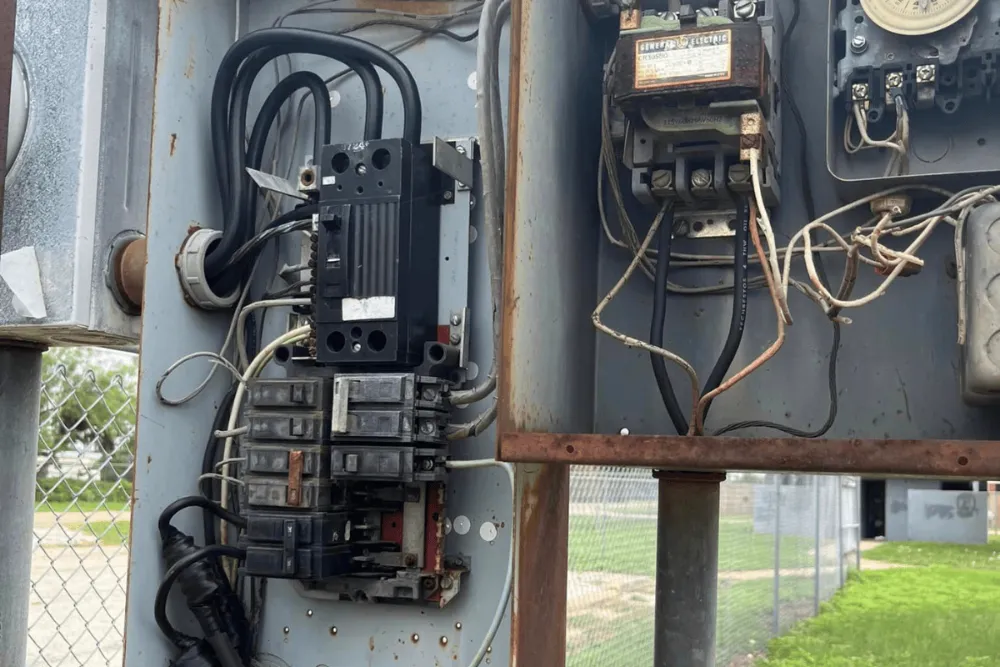
Water and electricity do not mix. Outdoor panels, meter bases and disconnects rely on intact enclosures, seals and covers to keep rain out. Rust inside a panel, water stains, or breakers that trip after heavy rain are signs that moisture is getting in. If any electrical equipment has been under water, do not turn it back on. Have it checked by a licensed electrician first, because flood-damaged breakers, outlets and wiring often have to be replaced. Our panel upgrade cost guide explains what a replacement involves.
Backup Power Done Safely
Long outages are when people take risks with generators. Two rules matter most.
- Never plug a generator into a wall outlet or wire it straight into the panel. This backfeeds the utility line and can injure or kill line crews and neighbors. A transfer switch or a listed interlock installed by a licensed electrician isolates your home from the grid while the generator runs.
- Never run a portable generator indoors or in a garage. The U.S. Consumer Product Safety Commission warns that portable generators produce deadly carbon monoxide and should be run outside only, at least 20 feet from the house, with the exhaust pointed away.
A standby generator with an automatic transfer switch starts on its own when utility power fails and shuts down when it returns. Our whole-house generator cost guide covers sizes and prices.
Battery Backup for Critical Devices
An uninterruptible power supply (UPS) keeps a modem, router, security panel or desktop computer running through short outages and gives you time to shut equipment down properly. Runtime depends on the battery size and the load. If someone in the home relies on powered medical equipment, plan for a longer outage with a generator or a larger battery system, and let your electric provider know about the equipment.
Weather-Resistant Outlets and Covers
The National Electrical Code requires GFCI protection for outdoor receptacles, and receptacles in damp or wet locations must be the weather-resistant (WR) type. An outlet in a wet location also needs an in-use cover that stays weatherproof with a cord plugged in. Cracked covers, missing gaskets and outlets that trip every time it rains are worth fixing before storm season.
A Storm Season Checklist for Your Electrical System
- Ask whether your panel has a whole-house surge protective device.
- Have the grounding and bonding checked, especially in an older home.
- Look for rust, water stains or damaged covers on outdoor electrical equipment.
- Test GFCI outlets with their test button.
- If you own a portable generator, have a transfer switch or interlock installed before you need it.
- Unplug sensitive electronics when a severe storm is close, if it is safe to do so.
Hooked Up Electric serves Abilene, San Angelo, Midland, Lubbock and the surrounding West Texas communities, and emergency calls are answered 24/7. Contact us or call 325-442-5594 to have your system checked before the next storm.
Sources: Insurance Information Institute (Triple-I), 2025 lightning claims report, June 2026; NFPA 70, National Electrical Code, sections 230.67, 210.8 and 406.9; U.S. Consumer Product Safety Commission portable generator safety guidance.