Summary:
Most Taylor County homeowners don’t start thinking seriously about a whole home generator until the power’s already out. Maybe it was Uri in 2021, sitting without heat for days while temperatures dropped. Maybe it was a summer storm that knocked out the grid and left you sweating through a West Texas July with no AC and a refrigerator full of food slowly going bad. Whatever the moment was, it tends to stick.
The good news is that whole-home standby generators have gotten better, more reliable, and more straightforward to install than most people realize. Here’s what you actually need to know before making a decision.
Whole Home Generator Installation: What the Process Actually Involves
A whole home generator isn’t something you plug in and forget about. It’s a permanently installed system — connected to your home’s electrical panel and your fuel supply — that monitors the grid and activates automatically the moment power goes out. No running outside, no extension cords, no manual startup. The transfer switch detects the outage and switches your home over to generator power within seconds.
That automatic function is the core of what makes standby generators different from the portable units most people are familiar with. And getting that function right is almost entirely dependent on the quality of the installation. The equipment matters, but the wiring, the transfer switch, the fuel connection, and the panel integration are what determine whether the system actually performs when you need it.
Whole House Generator Installation: From Site Visit to Final Test
The installation process has more steps than most people expect, and that’s a good thing. Each step exists for a reason, and skipping any of them tends to create problems down the line — either with performance, safety, or code compliance.
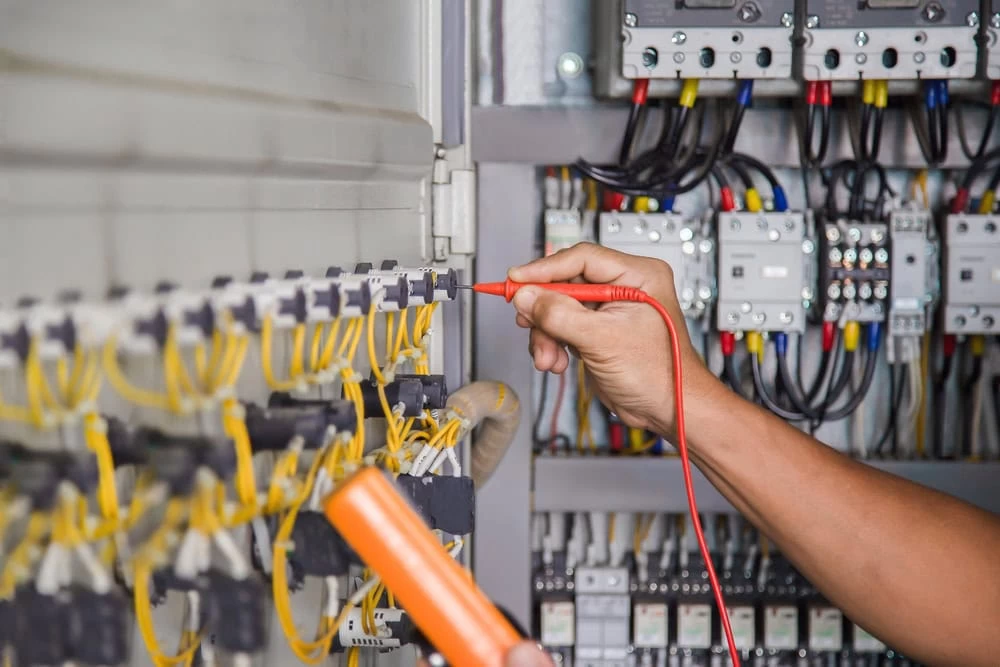
It starts with a site assessment. Before any equipment is ordered or any work begins, a licensed electrician needs to evaluate your home’s electrical panel, assess where the generator will be placed, and calculate the electrical load your home actually draws. That last part — the load calculation — is what determines the right generator size. Undersizing is one of the most common mistakes in generator installation, and it leads to systems that overload and shut down during peak demand, which is exactly when you need them most.
Once the site assessment is complete and the equipment is selected, permits get pulled. In Texas, an electrical permit is required for generator installation, and it must be pulled by a licensed electrical contractor. This isn’t optional, and it’s not a formality — it’s what ensures the work gets inspected and that your installation is legally protected. Homeowners who skip permits often find out the hard way when they go to sell the house or file an insurance claim.
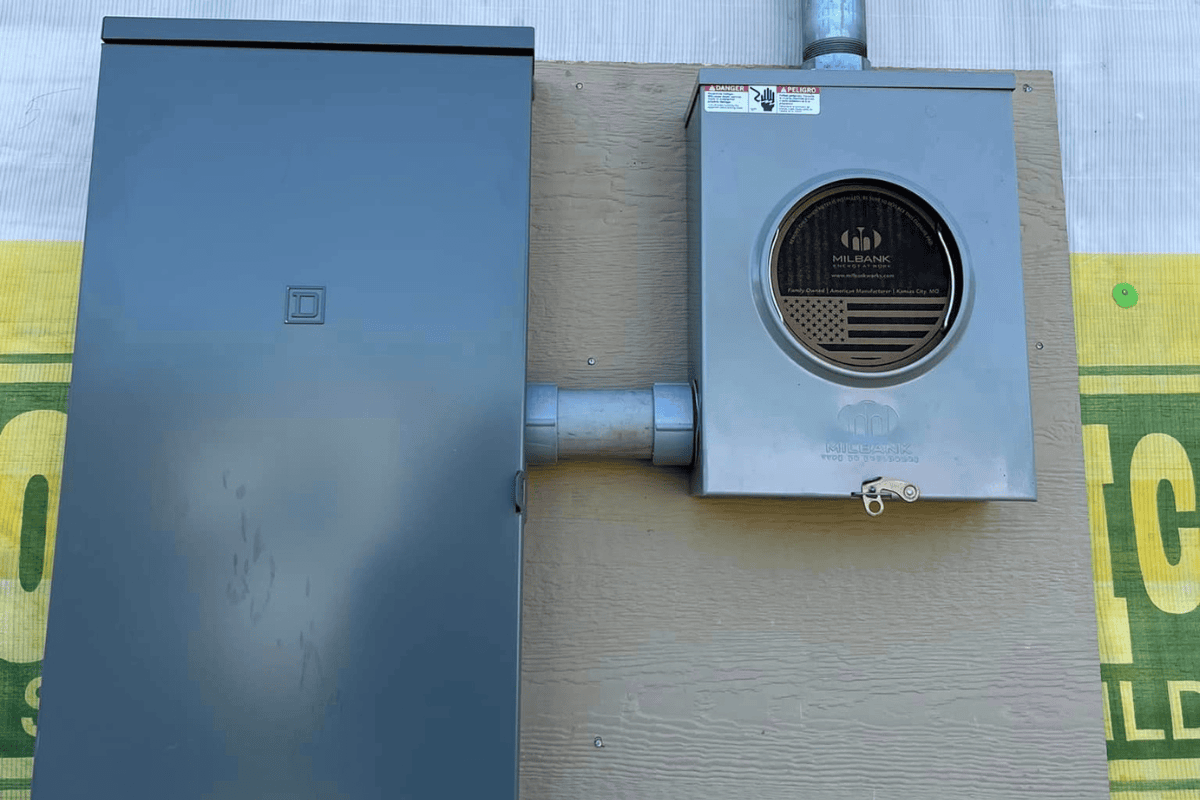
Installation day itself typically involves setting the generator on a concrete pad, connecting the fuel line (either to your natural gas supply or a dedicated propane tank), wiring the automatic transfer switch, and integrating everything with your home’s main electrical panel. The transfer switch is the critical piece — it’s what prevents back-feeding electricity into utility lines, which is a serious safety hazard for utility workers and a code violation. Once everything is connected, the system goes through a commissioning test to confirm it activates properly, runs under load, and transfers back to grid power cleanly when utility power is restored.
The whole process, from permit to final test, typically takes one to two days for a standard residential installation. More complex homes — larger square footage, older panels, or properties that need a panel upgrade to support the generator — may take a bit longer.
Home Generator Installation: Does Your Electrical Panel Need an Upgrade First?
This is the question most homeowners don’t think to ask until they’re already mid-project. Not every home’s electrical panel is equipped to support a whole-home standby generator without some modifications, and finding that out late in the process can add time and cost that nobody planned for.
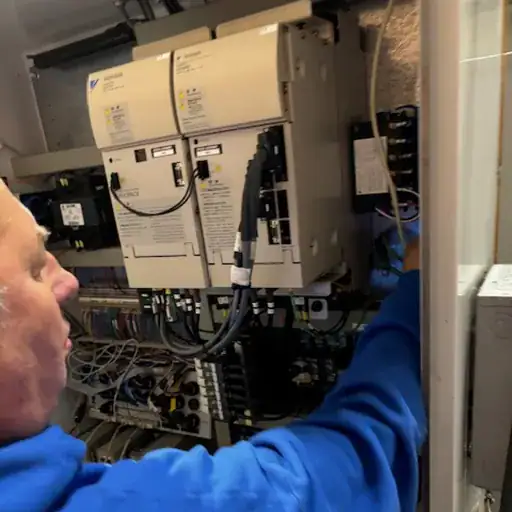
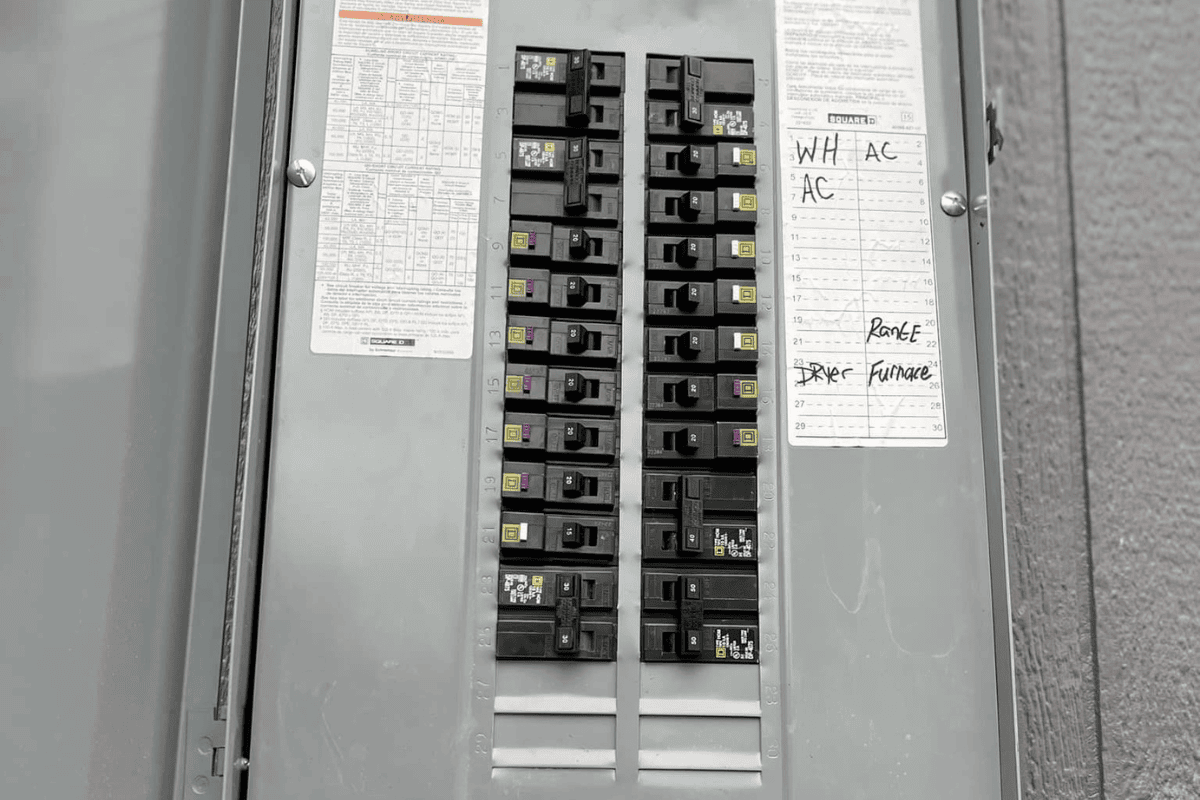
Older panels — particularly those in homes built before the 1990s — may not have sufficient capacity to handle the additional load, or they may not be compatible with the type of transfer switch the installation requires. In some cases, the panel itself is outdated enough that it represents a safety issue independent of the generator project.
A proper site assessment will catch this before any equipment is purchased. If your panel needs upgrading, that work should be done as part of the same project, by the same licensed electrician who’s handling the generator installation. Splitting it between contractors, or trying to work around a panel that isn’t quite right, tends to create problems — code issues, failed inspections, or a system that technically runs but doesn’t perform reliably.
The other factor worth understanding is the transfer switch itself. There are two main types: a whole-house transfer switch, which transfers your entire home’s electrical load to the generator, and a load-center transfer switch, which transfers only selected circuits. Which one makes sense depends on the size of generator you’re installing and how much of your home you need to power. A generator sized to run your whole house needs a transfer switch rated to match — and that rating has to be verified against your panel’s capacity. It sounds technical, but it’s exactly the kind of thing a licensed electrician sorts out during the assessment phase so you’re not guessing.
For Taylor County homes on rural properties — places outside Abilene proper, out toward Merkel, Lawn, or Buffalo Gap — this step matters even more. Rural properties often have well pumps, outbuildings, or agricultural equipment on the same electrical system, and those loads have to be accounted for in the sizing calculation. A generator that powers your house but can’t run your well pump isn’t much use when the grid goes down.
Whole Home Generator Installation in Taylor County: Permits, Codes, and What to Expect Locally
Texas has specific licensing requirements for electrical work, and generator installation is no exception. The Texas Department of Licensing and Regulation requires that all electrical work — including generator installation and the associated panel and transfer switch work — be performed by a licensed electrician. Permits must be pulled by a licensed electrical contractor before work begins, and the installation is subject to local inspection.
This matters for Taylor County homeowners because it directly affects who you hire. An unlicensed contractor who skips permits might charge less upfront, but the liability lands on you — failed inspections, fines, voided insurance coverage, and complications when you sell. Hiring a licensed electrician who pulls permits and schedules inspections isn’t just the right call; it’s the only call that protects your investment.
What Does a Whole Home Generator Cost in Taylor County, TX?
Cost is usually the first real question people have, and it deserves a straight answer. For a complete whole-home standby generator installation in Taylor County — meaning the unit, installation labor, permits, transfer switch, and startup testing — you’re typically looking at $13,000 to $20,000. That range reflects real-world, full-service installation costs, not the stripped-down figures you sometimes see quoted online that exclude labor, permits, or the transfer switch.
The spread within that range comes down to a few variables: the size of the generator (measured in kilowatts, which is determined by your home’s load calculation), the fuel type, whether your panel needs upgrading, and the complexity of the installation site. A smaller home with a straightforward panel and access to natural gas will come in toward the lower end. A larger home on a rural property that needs a panel upgrade and a propane tank installation will trend higher.
On the fuel question: natural gas is generally the preferred option if your home has access to a gas line, because it connects directly to the supply and provides essentially unlimited runtime without any fuel storage or refilling. Propane is the practical alternative for homes that don’t have gas line access — which includes a fair number of properties in rural Taylor County, out past the city limits of Abilene. Propane requires a dedicated storage tank and periodic refills, and fuel costs can add up during an extended outage. Both are viable; the right choice depends on what’s available at your property.
It’s also worth knowing that a properly installed whole-home generator can add 3% to 5% to your home’s resale value. That doesn’t make the purchase cost disappear, but it does change the math a little — especially if you’re planning to stay in the home long-term or are thinking about eventual resale in a market where buyers increasingly care about resilience and reliability.
Taylor County Homeowners Ask: Real Questions About Standby Generators
**How quickly does a standby generator kick on when the power goes out?** Most properly installed whole-home standby generators transfer to backup power within 10 to 30 seconds of detecting an outage. You might notice the lights flicker briefly — that’s the transfer switch doing its job. After that, the generator runs your home as if nothing happened. For households with medical equipment, home offices, or refrigerated medications, that fast switchover is the whole point.
**Do I need to do anything to maintain the generator once it’s installed?** Not much on a day-to-day basis. Standby generators run a brief self-test cycle automatically — usually once a week — to confirm the engine, battery, and fuel system are operational. Beyond that, you’re looking at professional maintenance once a year, which typically runs $200 to $600 depending on the system. Think of it like an annual service for your HVAC: it’s not optional if you want the system to perform reliably, but it’s not a burden either.
**Is a whole home generator worth it in Taylor County specifically?** That’s the honest question, and the honest answer is: for most Taylor County homeowners, yes. West Texas sits on ERCOT’s isolated grid, which means when demand spikes or infrastructure fails, there’s no easy path to import power from neighboring states. Uri proved that in February 2021, when more than 4.5 million Texas homes lost power and some went days without heat. That wasn’t a fluke — Texas had major grid failures in 1989 and 2011 as well. Add in the summer storm exposure, the 96-degree July highs that make AC a health issue rather than a comfort issue, and the longer restoration times that rural areas outside Abilene tend to experience, and the case for backup power gets pretty clear. If you have a well pump, a home office, a family member who depends on medical equipment, or livestock operations on your property, the calculation tips even further in Taylor County.
**Can I just use a portable generator instead?** You can, but it’s not the same thing. A portable generator requires manual startup, external fuel storage, and constant monitoring. It can’t power your whole home automatically, it poses carbon monoxide risks if used improperly, and it’s a real burden to manage during a multi-day outage — especially in winter conditions. A lot of the homeowners who call us about standby generators already own a portable unit and are tired of dealing with it. The upgrade tends to make sense once you’ve actually been through an extended outage with a portable.
Ready to Install a Whole Home Generator in Taylor County? Here's Your Next Step.
If you’ve made it this far, you probably already know whether a whole-home generator makes sense for your situation. The bigger question is usually who to trust with the installation — and that comes down to licensing, experience, and whether the contractor will handle the permits, do the load calculation properly, and give you a straight number before any work starts.
We’re Hooked Up Electric, based in Merkel and serving Taylor County. Our team is licensed, experienced, and we pull all required permits for every installation we do. We’ll assess your panel, size the system correctly for your home, and walk you through the full cost before you commit to anything.
If you’re ready to get a real answer about what a whole home generator would cost and what the process looks like for your specific property, give us a call at 325-660-4493. Free estimates, no pressure, no runaround.