Summary:
Published cost guides put hot tub electrical installation at about $1,900 to $4,200, with an average of $2,300, per Angi and HomeAdvisor. Jacuzzi estimates $600 to $2,200 or more for the electrical work, and HomeGuide lists $800 to $1,600 for a new circuit with up to 100 feet of wiring. Distance from the panel and whether you need a subpanel decide most of the difference. These are national ranges for budgeting, not a quote.
Most full size hot tubs do not plug into a regular outlet. They run on a hardwired 240 volt circuit with ground fault protection and a disconnect near the tub, and that work is priced separately from the tub, the delivery, and the pad it sits on.
This guide lays out the published numbers, what each one covers, and what to ask before you accept a quote. Hooked Up Electric is a licensed Texas electrical contractor with offices in Abilene, San Angelo, Midland, and Lubbock.
Hot Tub Electrical Installation Cost at a Glance (2026)
Here is what published guides report for the job as a whole and for each part of it.
| Item | Published range | Source |
|---|---|---|
| Full electrical installation, typical range | $1,900 to $4,200 (average $2,300) | Angi, HomeAdvisor |
| Electrical work, manufacturer estimate | $600 to $2,200 or more | Jacuzzi |
| New circuit, wiring, and outlet or subpanel, up to 100 feet of wiring | $800 to $1,600 | HomeGuide |
| Connecting to existing wiring | $150 to $500 | HomeGuide |
| Each additional 25 feet of wire run | $100 to $300 | Jacuzzi |
| Subpanel, if the main panel lacks capacity | $400 to $1,800 (HomeAdvisor); $500 to $1,200 (Jacuzzi) | HomeAdvisor, Jacuzzi |
| Trenching | $200 to $600 | Jacuzzi |
| Panel service upgrade to 200 to 300 amps | $1,400 to $2,800 | HomeGuide |
| Electrician labor | $50 to $100 an hour | Angi, HomeAdvisor |
Why the ranges differ. These sources are not pricing the same job. Angi and HomeAdvisor publish the same figures, and Angi says the range depends on how close the tub is to existing outlets and whether a subpanel is needed. HomeGuide’s $800 to $1,600 covers a new circuit with up to 100 feet of wiring. Jacuzzi’s estimate starts lower, and its own worked examples came to $1,400 for a 220V circuit with a 40 foot run and $1,800 for a longer run to an elevated deck. Angi and HomeAdvisor label their figures 2025; Jacuzzi labels its figures 2026 estimates.
120V Plug and Play vs. 240V Hardwired Tubs
The first question is which kind of tub you are buying, because it decides how much electrical work the job needs.
- 120V plug and play. Jacuzzi says these compact and entry level models typically use a GFCI protected outdoor outlet on a dedicated 15 to 20 amp circuit. If that outlet is already in the right place, there may be little or no electrician cost, though Jacuzzi still wants a licensed professional handling the connections. If it is not, you are paying for a new outlet and circuit, and our guide to GFCI outlet installation costs covers that work. The tradeoff is heat: Jacuzzi lists these heaters at about 1 to 1.5 kW, and heating can take 8 to 12 hours.
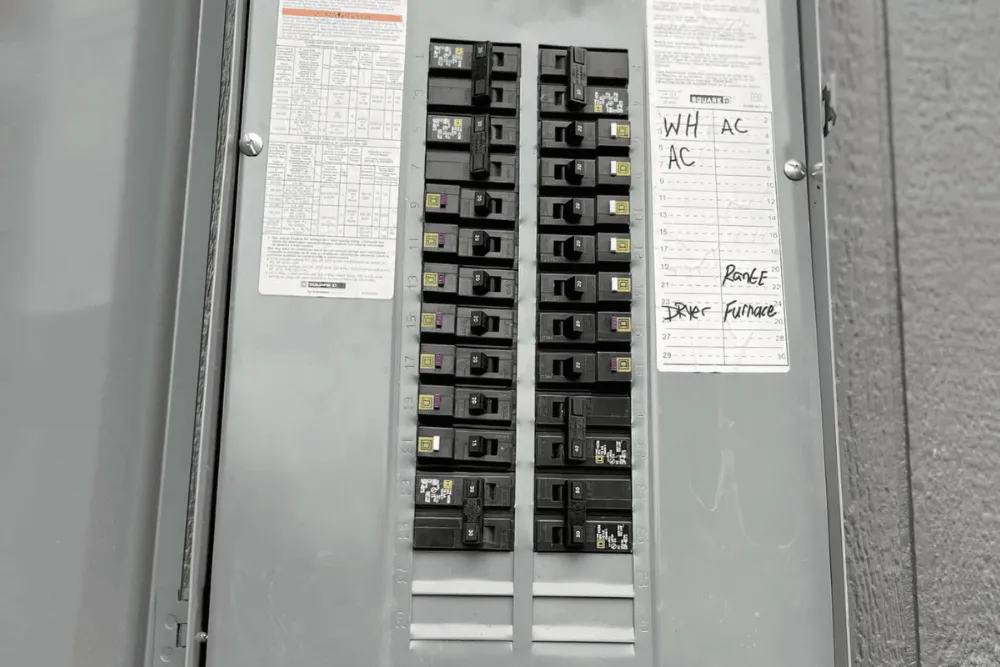
- 240V hardwired. Jacuzzi calls this the standard for most of its full size tubs, with heaters of about 4 to 5.5 kW. A dedicated 2-pole 50 amp GFCI breaker is typical, though some models need 40 or 60 amps. HomeAdvisor says most hot tubs need a dedicated 50 to 60 amp circuit.
Size matters too. HomeAdvisor says tubs for two to four people usually need less electrical capacity, tubs for five or six often need standard 240V service, and tubs for seven or more often need higher amperage and possibly a subpanel.
You will see 220V, 230V, and 240V used for the same thing. Jacuzzi says to treat all three as a 240V circuit for installation. The number that matters is on the tub’s data plate and in the owner’s manual, so get that before anyone prices the job. Our 240V outlet installation cost guide shows how a similar circuit is priced.
What Drives the Bill: Distance and Panel Capacity
Once you have a 240V tub, the biggest swings come from how far the circuit has to travel and whether your panel can carry it.
- Length of the run. Jacuzzi estimates about $100 to $300 for every additional 25 feet. Angi’s materials list, which assumes a tub fairly close to the panel, shows why: $480 to $600 for 400 feet of #6 wire and $50 to $120 for 100 feet of 1 inch PVC conduit.
- Trenching. If the conduit goes underground, Jacuzzi estimates about $200 to $600, depending on how difficult the digging is.
- Panel capacity. A subpanel adds $400 to $1,800 per HomeAdvisor, or about $500 to $1,200 per Jacuzzi, and HomeAdvisor notes it is only needed when the main panel lacks capacity. A full service upgrade is a bigger step: HomeGuide lists $1,400 to $2,800 for going to 200 to 300 amps, and Jacuzzi says an upgrade can add $2,000 or more. Our panel upgrade cost guide explains that job in detail.
HomeAdvisor says a standard job takes about one to two days.
Hot Tub Wiring Code and Safety Basics
According to TDLR, Texas adopted the 2026 National Electrical Code as the state electrical code, effective September 1, 2026. Jacuzzi’s wiring guide points to Article 680 of the code (citing the 2023 edition) for spa GFCI protection. The points below come from manufacturers and a published inspection guide. Your local inspector has the final say.
- GFCI protection. Jacuzzi says 240V installs use a GFCI breaker, and that only one GFCI should protect the spa circuit, because stacking them causes nuisance trips. Master Spas also requires GFCI protection and says to test it often.
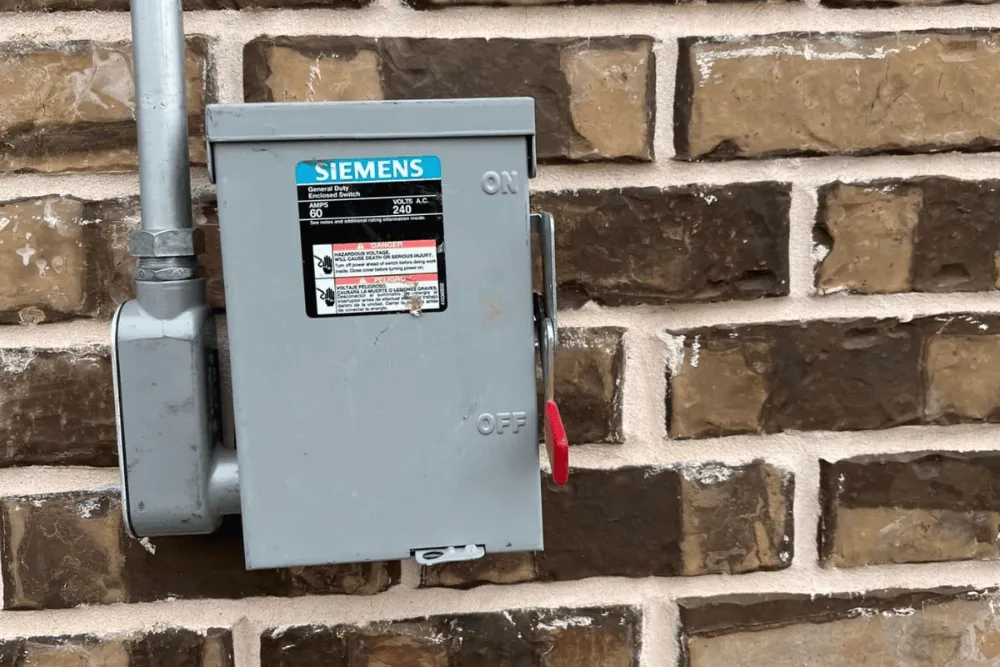
- Disconnect. Jacuzzi and Master Spas both say the disconnect must be at least 5 feet from the tub. Jacuzzi says it should be within line of sight and is typically 5 to 15 feet away. HomeAdvisor gives 5 to 10 feet and notes that local codes may differ.
- Wire. Jacuzzi calls for four conductor copper in conduit: two hots, a neutral, and a ground, with at least 6 AWG copper on a 50 amp circuit. Longer runs may need larger wire to limit voltage drop. It says aluminum and copper clad aluminum are not recommended and are often prohibited by its manuals.
- Underground runs. Jacuzzi says conduit is often 1 inch PVC, typically buried 18 inches or to local code depth. A spa and hot tub code guide posted by Dallas Borough, Pennsylvania, in 2024, based on the 2018 ISPSC and IRC, says no underground wiring may run under a spa or within 5 feet of it, except wiring that supplies the spa.
- Nearby outlets and overhead lines. That same guide says no receptacle may be closer than 6 feet from the inside wall, receptacles 6 to 20 feet away must be GFCI protected, and overhead power lines up to 750 volts must stay more than 22.5 feet from the water. Check these before you pour a pad.
- Bonding. The guide also says fixed metal parts within 5 feet of the inside wall and within 12 feet above the water, such as fences and piping, must be bonded.
This is not a do it yourself project. Jacuzzi warns that improper wiring can void the warranty, violate code, and create shock and fire hazards. Master Spas makes the owner responsible for having a licensed electrician do the installation, and the Electrical Safety Foundation International tells homeowners to have an electrician inspect and upgrade a spa or hot tub.
What Changes the Price in West Texas
We could not find published price figures specific to West Texas, so treat the national numbers as a starting point. These local factors move a job within those ranges:
- Where the tub sits. A tub at the far side of a large lot, or behind a detached shop or garage, means a longer run. Jacuzzi puts that at $100 to $300 per additional 25 feet.
- Hard digging. Walk the route with your electrician and ask whether hard or rocky ground is included in the price.
- Older panels. If an older home’s panel has no room for a 50 amp circuit, a subpanel or service upgrade may come first.
- Pad or deck. Jacuzzi’s two examples show the effect: $1,400 for a 40 foot run to a concrete pad and $1,800 for a longer run to an elevated deck. The pad itself is separate, at $500 to $2,500 per HomeGuide.
- City permits. The City of Abilene says a permit is required for electrical installations, and starting work without one is a code violation that can bring a citation, a stop work order, and an investigation fee equal to the permit fee. A homeowner can get a permit for work at their own house only after providing proof of homestead and passing a homeowner’s electrical test given by a city inspector. TDLR says local authorities handle permit inspections, and that where no permit is required, the work still follows the current state code. In San Angelo, Midland, or Lubbock, check with your city.
How to Keep the Cost Down
- Pick the spot with the panel in mind. HomeAdvisor recommends keeping the tub close to the panel to reduce material costs.
- Get the electrical specs before you buy. Ask for the volts, amps, and breaker size from the data plate or manual, so the quote matches the tub.
- Have the panel checked first. Find out whether you need a subpanel before the tub is ordered.
- Ask for an itemized quote. Have the electrician list the circuit, disconnect, trench, and permit separately. Jacuzzi specifically suggests asking whether permit fees are included.
- Ask about digging the trench yourself. HomeAdvisor and Angi say this can save about $6 per linear foot in labor. Agree on the route and depth with your electrician first, and have buried utilities marked before you dig.
- Group electrical work into one visit. HomeGuide lists a $100 to $200 service call fee covering the first hour, so doing other outdoor or panel work on the same trip can avoid a second call.
Frequently Asked Questions About Hot Tub Electrical Installation Costs
How much does it cost to wire a hot tub?
Angi and HomeAdvisor put the average at $2,300, with a typical range of $1,900 to $4,200. Jacuzzi estimates $600 to $2,200 or more for the electrical work.
Can a hot tub plug into a regular outlet?
Some can. Jacuzzi says compact 120V plug and play models typically use a GFCI protected outdoor outlet on a dedicated 15 to 20 amp circuit. Most full size tubs are hardwired to a 240V circuit and need an electrician.
What size breaker does a hot tub need?
Jacuzzi says a 2-pole 50 amp GFCI breaker is typical for a 240V tub, though some models need 40 or 60 amps. Check the data plate and manual for your model.
How far from the hot tub does the disconnect have to be?
Jacuzzi and Master Spas both say at least 5 feet from the tub, and Jacuzzi adds that it should be within line of sight. Jacuzzi says outdoor disconnects typically end up 5 to 15 feet away.
Do I need a subpanel for a hot tub?
Only if your main panel does not have the capacity. HomeAdvisor lists a subpanel at $400 to $1,800 and Jacuzzi at about $500 to $1,200.
Do I need a permit to wire a hot tub in Texas?
It depends on where you live. Jacuzzi says many jurisdictions require a permit and inspection for a new spa circuit, and the City of Abilene requires a permit for electrical installations. Check with your city before work starts, and ask whether your quote includes the permit fee.
Planning a hot tub? Call Hooked Up Electric at 325-442-5594 or request a quote online. We serve Abilene, San Angelo, Midland, and Lubbock.
Sources: Angi, hot tub wiring cost guide (2025 data); HomeAdvisor, hot tub electrical installation cost guide (2025); HomeGuide, hot tub installation cost guide (undated); Jacuzzi, hot tub installation costs planning guide (2026 estimates) and hot tub wiring and electrical guide (undated); Master Spas, 240V electrical requirements (2023); Dallas Borough, Pennsylvania, spa and hot tub guide (2024); Electrical Safety Foundation International, pool and spa safety (updated August 2021); TDLR, rule adoption notice (September 2026) and Electricians Compliance Guide (undated); City of Abilene, permit FAQ (undated).